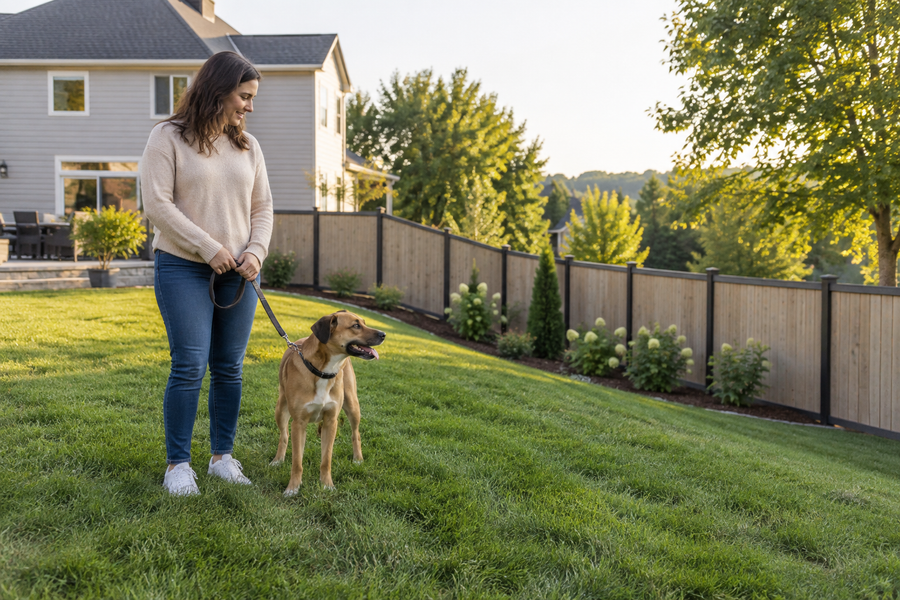
Owning a high-instinct dog on a large property is a unique joy and a profound challenge. You want to give them the space to run and explore, but their innate drive to chase, roam, and follow a scent can be a constant source of worry. How do you provide freedom while ensuring safety? For many, the answer lies in modern technology. A GPS virtual fence offers a revolutionary solution, providing a flexible, reliable boundary that traditional fences simply cannot match, especially for these adventurous breeds.
Know about Your Dog's Instinct to Roam
To effectively contain a high-instinct dog, you must first respect their nature. Breeds like Siberian Huskies, German Shorthaired Pointers, Beagles, and many terriers weren't bred to be couch potatoes. They were bred for a job—to run for miles, to track scents with unwavering focus, or to pursue prey with incredible speed and determination.
When your husky bolts after a squirrel or your hound ignores your calls in favor of an interesting smell, it's not an act of disobedience. It is a powerful, genetic impulse that can override even the best training. On a large property, this instinct is amplified. The abundance of wildlife, new smells, and open space creates a sensory playground that can be irresistible, making reliable containment an absolute necessity.

Why Traditional Fences Fail on Large Properties
For owners of multi-acre properties, conventional fencing methods often prove to be impractical, ineffective, or both.
The most obvious solution, a physical fence, is often the least feasible. The cost to install a traditional fence around several acres of land can run into the tens of thousands of dollars. The project becomes even more complicated and expensive when dealing with uneven terrain, wooded areas, or water features like creeks and ponds. Furthermore, high-instinct dogs are notorious escape artists, fully capable of digging under, climbing over, or chewing through a standard fence.
In-ground "invisible" fences, which use a buried wire, present their own set of challenges on large properties. The installation is a massive, labor-intensive undertaking. More importantly, these systems have a critical flaw when it comes to a determined dog. A high-drive dog in full pursuit of prey will often ignore the static correction and run right through the boundary line. Once they are out, they are hesitant to return, as they now associate the shock with coming back home.

Redefine Boundaries with a GPS Virtual Fence
A GPS virtual fence transcends the limitations of older systems by eliminating the need for any physical installation. It operates using a sophisticated dog tracker GPS collar that communicates with a network of satellites. This technology gives you the power to create a secure boundary of almost any size and shape in minutes.
Using a simple smartphone app, you can draw a custom fence directly onto a satellite map of your property. This means you can easily enclose a 10-acre pasture, exclude a garden or pond, or follow the natural contours of your land. This level of flexibility is impossible with a physical or buried-wire fence. You can even create multiple, smaller fences within your property—a small "potty break" zone for late nights and a larger "play" zone for the daytime.
Provide Real-Time Tracking When It Matters Most
This is the single most important feature for an owner of a high-instinct dog: the ultimate safety net. No containment system is 100% foolproof. A determined dog might still occasionally breach a boundary. With a traditional fence, this moment is one of pure panic. With a GPS fence, it's a moment of action.
The collar on your dog is a fully functional, real-time dog tracker GPS. The instant your dog crosses the virtual boundary, you receive an alert on your phone. You can immediately open the app and see their precise location on a map, allowing you to track their movement and retrieve them quickly and safely. This transforms a potentially terrifying situation into a manageable one, providing a level of peace of mind that no other fencing solution can offer.

Give Them Freedom, Keep Your Peace of Mind
Highly instinctual dogs need to be able to exercise their bodies and minds. The ultimate solution for containing highly instinctual dogs within the boundaries of a large ranch will be the GPS fence. It provides the highest levels of flexibility regarding the boundaries you wish to create and the unshakeable guarantee of the functionality of the real-time dog tracker GPS collar. The GPS collar provides you with the ability to provide the best possible life for the canine you care about.
FAQs about GPS Fences
Is a GPS fence effective for dogs with a high prey drive?
Yes, it’s extremely effective, but it has to be combined correctly with proper training. This device is a tool and not a force field. The dog also has to be trained to recognize the warning signals of tones and vibrations before the static shock correction. In the case of a dog that has an overly strong prey drive instinct, the greatest benefit of this device will be its real-time tracking capability as the last fail-safe in case their natural instinct takes over training.
What is the typical battery life for a high-performance dog GPS collar?
The battery will last according to the device model, the usage rate of its location update function, and the strength of the GPS satellite signals available. A high-performance tracker collar intended for large landowners and their high-energy canines can expect battery performance of about 24 to 48 hours before a recharge. All of them also come equipped with "safe zone" power-conserving functionality and will send notifications regarding battery depletion through the user's smartphone.
How do I train my dog to understand the virtual fence?
The training phase: This plays an important role and involves easy steps. To begin, you create warning signals along the boundary line using flags. The next step involves walking the dog toward the boundary line using the leash. Once the warning sound is emitted, teach the dog to turn back toward the center of the boundaries using rewards. This has to be accomplished over a period of days while taking short sessions that are positive. The aim of this phase is to teach the dog to turn back because of the warning sign, but not as a form of punishment.