Quick answer: Teach recall where success is easy, reward generously every time your dog arrives, and add distractions slowly. Until recall is dependable, use a leash or long line in unfenced areas—never test it around traffic or other hazards.
“Come” can be one of the most important words your dog learns. It helps you bring them away from a dropped snack, an open gate, or a distracting squirrel. It also asks your dog to stop doing something they may enjoy and choose you instead, so the goal is to make coming to you consistently worthwhile.
Reliable recall is built through hundreds of easy, rewarding repetitions—not one dramatic test at the dog park.
Choose a cue and protect its meaning
Pick one short word, such as “come,” “here,” or a whistle. Use it in a cheerful, consistent tone. Once you choose it, avoid repeating it over and over. Saying “come, come, come” while your dog ignores you teaches them that the first few calls do not matter.
If your current cue has become background noise, start fresh with a new word. For the first few weeks, use it only when you can help your dog succeed and follow it with something they truly enjoy.
Separate attention from recall: your dog's name can mean “look toward me,” while “here” means “come all the way to me.” SATELLAI's guide to dog names and attention during training explains that distinction.
Start indoors with almost no distraction
Begin in a quiet room when your dog is nearby and likely to respond. For a completely new cue, first encourage a few easy approaches with your movement, then say the cue as your dog starts toward you. Once the association is familiar, use the sequence below.
- Say their name once to get their attention.
- Move backward a few steps, open your arms, and say your cue in a warm voice.
- The instant your dog starts moving toward you, praise them.
- When they reach you, give a high-value reward: several small treats, a favorite toy, play, or access to something they want.
- Let them go back to what they were doing whenever it is safe.
That last step matters. If “come” always ends the fun, your dog may begin to avoid it. Sometimes call them, reward them, clip the leash briefly, then release them to sniff or play again.
Make the reward worth the choice
At home, a piece of kibble may be enough. Outside, it may not compete with birds, dogs, scents, or motion. Save special rewards—tiny pieces of food your dog loves, a tug toy, or a short game—for recall practice.
Reward every successful response while you are teaching. Once recall is strong in many places, you can vary the reward type, but coming to you should never become disappointing. Praise, affection, a toss of a toy, or a chance to return to sniffing can all be part of the payoff.
Gradually add distance and distraction
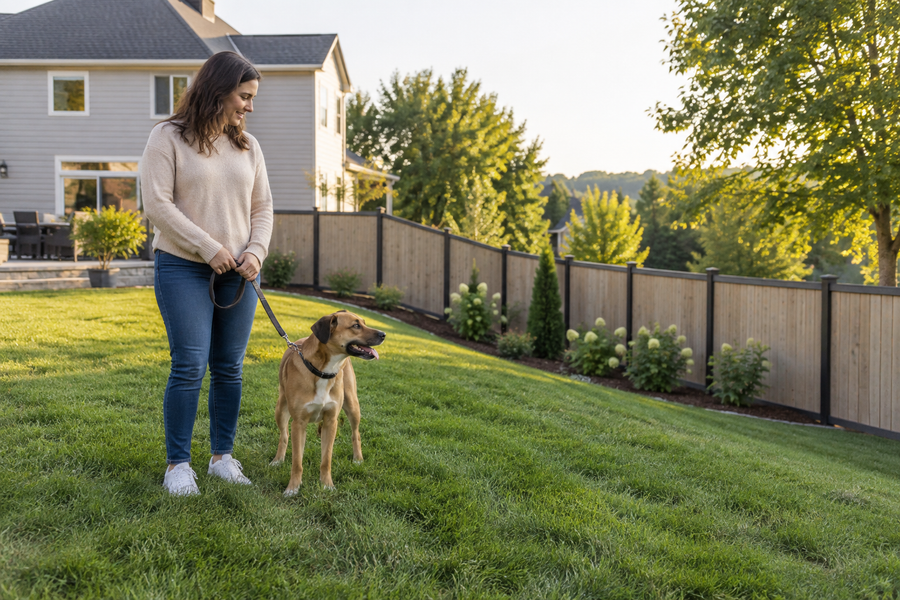
Change only one challenge at a time. First increase distance in the same calm room. Then practice in another room, a quiet hallway, a fenced yard, or on a long line in a low-distraction outdoor space.

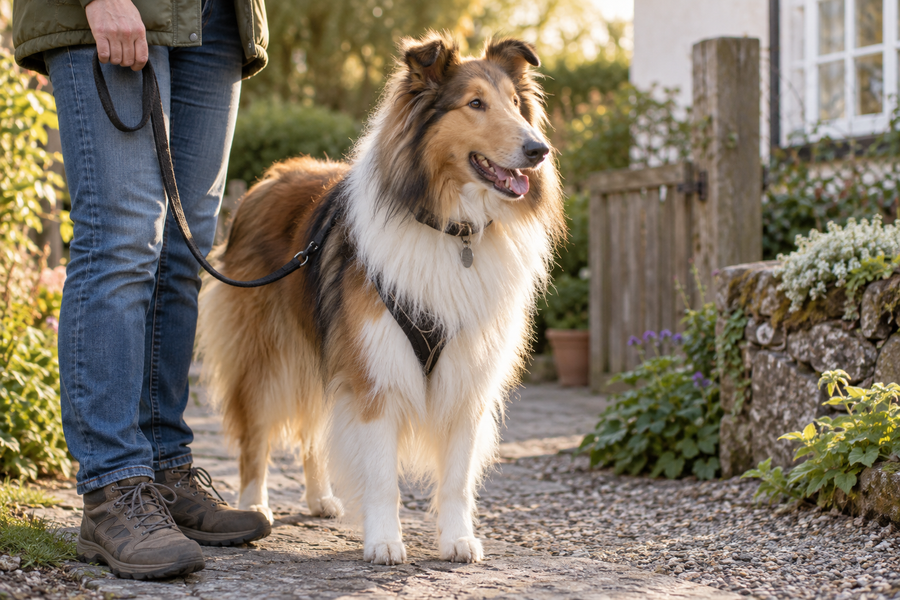
If your dog hesitates or does not respond, the environment is too difficult for that stage. Do not scold or chase them. Move closer, reduce distractions, and reward the next easy success. A long line attached to a well-fitted harness gives your dog room to explore while keeping everyone safe.
How to decide when recall is ready for a harder setting
Use a simple practice log: location, approximate distance, distraction, and whether your dog arrived after one cue. A useful training target is four successful responses out of five across several short sessions before adding one small challenge. This is a practice guideline, not proof that off-leash activity is safe.
| Current practice | Next manageable step | If your dog struggles |
|---|---|---|
| A few steps apart indoors | Add a little distance in the same room | Move closer |
| Across a quiet room | Try another quiet room | Return to a familiar location |
| Quiet fenced yard | Add one mild distraction at a distance | Remove the distraction |
| Calm outdoor long-line practice | Repeat in another quiet outdoor space | Reduce distance and reward earlier |
Keep hold of the long line without wrapping it around your hands or body. Manage excess length so it does not tangle around feet, and avoid letting your dog sprint into the end. A long line is a backup, not a way to reel the dog in.
The AKC recall guide provides further practice ideas. If responses disappear outdoors, review why dogs ignore commands outside before increasing distance.
Recall games that build enthusiasm
Games keep recall from feeling like a quiz.
Find me
With your dog in another room, hide somewhere easy, call once, and celebrate when they find you. Keep the first hiding places simple.

Catch me
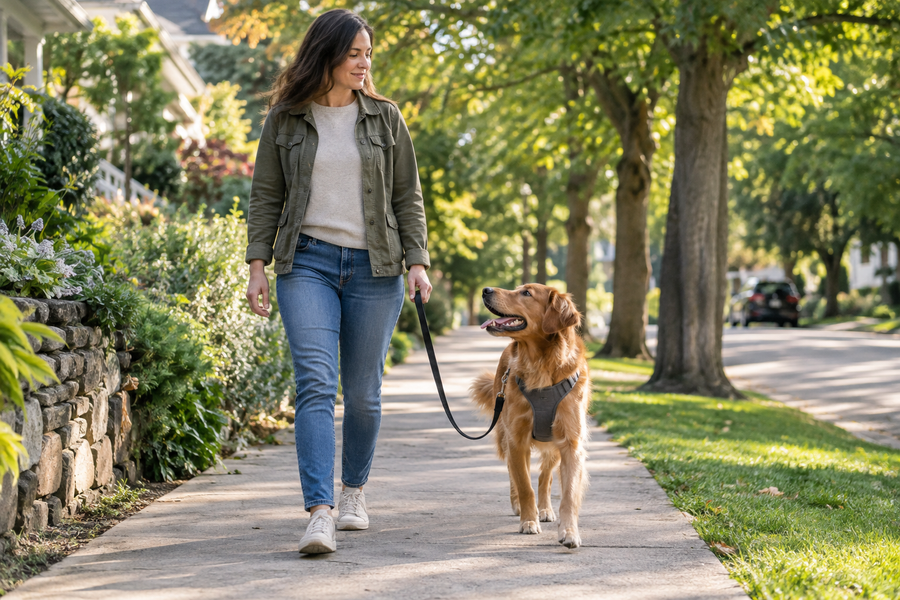
On a regular leash in a safe area, get your dog’s attention, move backward or jog a few steps, say the cue, and reward when they catch up. Make sure they are already aware of you so the leash never jerks them.
Family ping-pong
Two people stand several feet apart and take turns calling the dog. Each person rewards the arrival. Stop while your dog is still eager rather than practicing until they are tired or bored.
Hand target to recall
Teach your dog to touch their nose to your open palm, then use the target after the recall cue. A clear destination can make the final step easier for some dogs.
Finish within easy reaching distance
A dog who returns but stays just out of reach needs practice with the last part of recall. In a quiet room, reward close to your legs. Separately pair a brief, gentle touch to the harness with a treat, releasing immediately. Build toward clipping on the leash without grabbing or chasing.
If your dog dodges your hand, return to an easier handling step. The goal is a comfortable arrival, not just running in your direction.
The AKC discussion of making your dog want to come when called covers why the arrival should remain rewarding.
Avoid common recall mistakes
Do not use your cue to call your dog for a bath, nail trim, crate time, or the end of every fun outing unless you are prepared to make the arrival rewarding. If you must do something your dog dislikes, call them with a different casual phrase when possible.
Never punish a dog for coming slowly, taking a detour, or needing help. If they eventually reach you and are scolded, they learn that reaching you is risky. Reward the arrival, then make the next practice easier.
During practice, avoid calling when you cannot safely manage the situation. Repeatedly practicing a failed recall in an unfenced area makes the cue weaker and may put your dog at risk.
Safety first: when is off-leash time appropriate?
No recall is perfect in every situation. Keep your dog leashed near roads, wildlife, crowds, and other hazards. Any off-leash activity needs a suitable environment and must follow local rules; training success does not remove those risks.
A fenced area or a long line is not a failure—it is responsible management. It protects your dog while training catches up with the environment.
GPS tracking can add location information, but it cannot physically prevent a dog from reaching a road. Before adding a wearable, review GPS collar fit and safety; keep recall practice on a leash or within secure physical boundaries. The reward-based approach here follows AVSAB's humane training guidance.
When recall suddenly gets worse
Adolescence, a new environment, changes in routine, and more interesting distractions can all affect recall. Go back a few steps and rebuild. If a dog who normally responds becomes withdrawn, confused, hard of hearing, or reluctant to move, arrange a veterinary check. Pain and health changes can affect training performance.
Frequently asked questions
How long does it take to teach a dog to come when called?
Most dogs can begin learning the cue in a few short indoor sessions, but reliable recall around distractions takes ongoing practice. Progress depends on the dog, the environment, the rewards, and how consistently the skill is practiced.
What should I do if my dog ignores me?
Do not repeat the cue or chase them. Use a leash or long line to prevent rehearsal of running off, then practice at an easier level with better rewards. Ask for professional help if safety is becoming a concern.
Can I use a whistle instead of a word?
Yes. A whistle can be clear and easy to hear at a distance. Pair it with great rewards just as you would a verbal cue, and use the same signal consistently.
Editorial note
This article offers general training guidance. For a dog who runs toward traffic, wildlife, or other serious hazards, use secure management and seek in-person support from a qualified, reward-based trainer.