Quick Answer
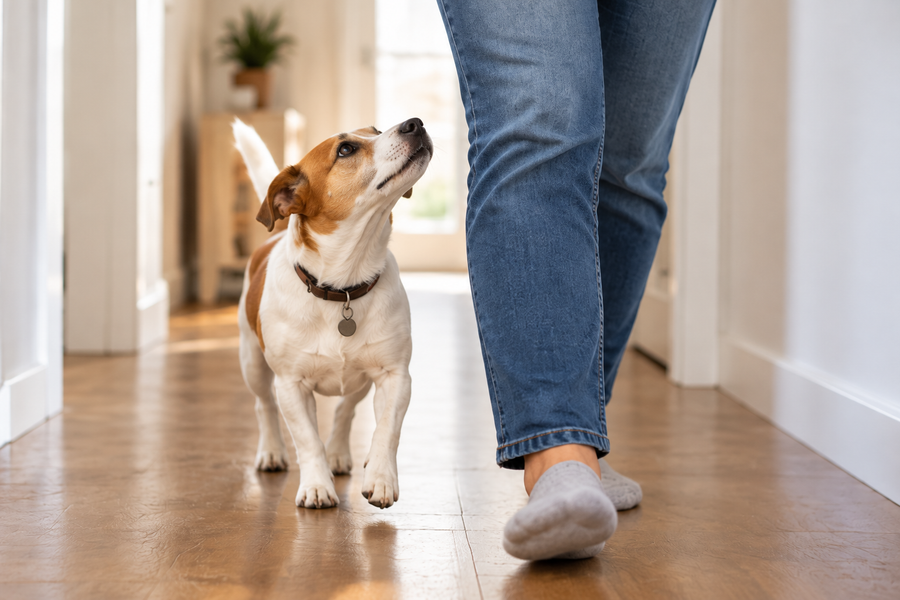
Dogs usually jump on people because they are excited, want attention, or have learned that jumping gets a response. Some dogs also struggle to control themselves during high-energy greetings. The most effective approach is to prevent repeated jumping, avoid accidentally rewarding it, and consistently reinforce a calmer behavior such as keeping four paws on the floor or sitting before greeting someone.
If your dog jumps on you when you come home, launches themselves at visitors, or tries to greet strangers with both front paws off the ground, you are dealing with one of the most common dog behavior problems.
Jumping may seem harmless when a dog is small, but it can become uncomfortable or unsafe as they grow. A large dog can scratch someone, knock over a child or older adult, or turn an otherwise friendly greeting into a stressful interaction.
The behavior usually makes more sense once you ask a simple question: What does the dog get from jumping? In many cases, the answer is attention, access to a person, excitement, or some combination of the three. Understanding that makes it much easier to teach a better greeting habit.
Why Do Dogs Jump on People?
There is no single explanation that applies to every dog. Age, temperament, training history, environment, and the way people respond can all influence jumping behavior.
1. Your Dog Is Excited to See Someone
For many dogs, jumping is simply part of an overexcited greeting. A door opening, a family member returning home, or a friendly stranger approaching on a walk can quickly raise arousal levels.
A dog that has not yet learned how to regulate that excitement may jump because it is the fastest way they know to get closer and start an interaction. This is especially common in puppies, adolescent dogs, and energetic dogs that are still developing impulse control.
2. Jumping Gets Attention
Dogs repeat behaviors that produce useful outcomes. If jumping makes people look at them, talk to them, touch them, or play with them, the behavior may become stronger over time.
The tricky part is that humans can reward jumping without realizing it.
- Pushing the dog away: Physical contact may feel like interaction or play.
- Repeatedly saying “No” or “Off”: Your dog is still receiving your voice and attention.
- Petting the dog while they are upright: This directly rewards the position you are trying to change.
- Allowing jumping sometimes: Inconsistent responses can make the behavior more persistent.
This is why simply becoming louder or more forceful often does not solve the problem. The dog needs to learn which behavior does make attention happen.
3. Your Dog Has Not Learned a Different Way to Greet
People often focus on telling a dog what not to do without showing them what they should do instead. If jumping has always been part of the greeting routine, the dog may have no alternative behavior to fall back on when they become excited.
Teaching a sit, a calm stand, or simply “four paws on the floor” gives the dog a much clearer rule.
Why Does My Dog Jump in Some Situations but Not Others?
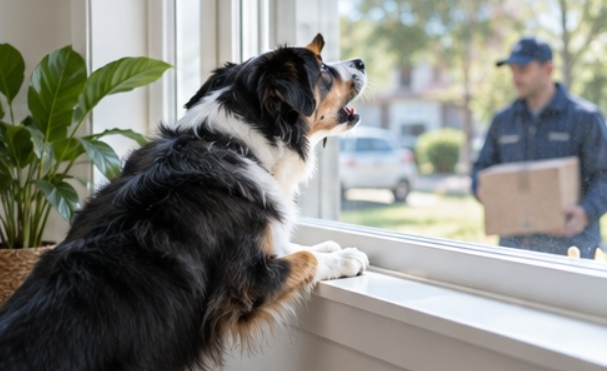
Context matters. A dog may greet family members calmly but lose control when visitors arrive, or behave well indoors but jump on strangers during walks.
| Situation | What May Be Driving the Jumping | Better Approach |
|---|---|---|
| Visitors at the Door | High excitement, novelty, and immediate access to a new person | Create distance and reward calm behavior before allowing a greeting |
| You Coming Home | Anticipation, excitement, and a history of enthusiastic reunions | Keep the first few moments calm and greet once all four paws are down |
| Strangers on Walks | Social excitement or frustration about reaching the person | Increase distance and reward calm attention before approaching |
| Children | Fast movement, noise, and increased excitement | Use close adult supervision and structured greetings |
If excitement around people also makes your dog difficult to handle on walks, work on leash behavior separately rather than trying to solve everything during the greeting itself. Our guide to how to stop dog leash pulling explains how distance, attention, and consistent reinforcement can make walks easier to manage.
How to Stop a Dog From Jumping on People
The goal is not simply to suppress jumping. You want your dog to discover that calm behavior is the fastest and most reliable way to get what they want.
Step 1: Make Four Paws on the Floor the Default Rule
Start with one simple household rule: people interact with the dog when all four paws are on the floor.
If your dog jumps, calmly pause the interaction. Avoid pushing them down, wrestling with them, or turning the moment into a dramatic correction. Once their paws return to the floor, re-engage and reward the calmer position.
At first, the reward can be as simple as eye contact, quiet praise, petting, or a small treat. What matters is that the timing clearly connects the reward with the behavior you want.
Step 2: Manage High-Excitement Situations
Training is much harder when your dog is already overwhelmed with excitement. Management helps prevent repeated practice of the unwanted behavior while your dog is learning.
- Keep your dog on leash when visitors first enter.
- Use a baby gate or exercise pen to create space around the doorway.
- Ask visitors not to immediately lean over, pet, or excite your dog.
- Reward your dog before they reach the point where they are unable to respond.
Environmental management is not a substitute for training. It simply gives your dog more opportunities to practice successfully. You can find more ideas in our guide to dog-proofing and environmental management.
Step 3: Teach an Alternative Greeting
A sit is a popular alternative because sitting and jumping cannot happen at the same time. However, a dog does not need to perform a perfect sit every time to earn attention. Calmly standing with four paws down can also be a perfectly acceptable greeting.
Start in a quiet environment. Approach your dog, reward calm behavior, step away, and repeat. Once the pattern is easy, practice with another familiar person.
The lesson should become predictable: staying down makes people come closer; jumping makes the greeting pause.
Practice With Visitors
Real visitors are usually much more exciting than normal training sessions, so introduce them gradually.
- Start with someone your dog already knows.
- Keep enough distance that your dog can still respond to you.
- Have the person approach while your dog remains calm.
- If your dog jumps, pause the approach rather than correcting the dog physically.
- Continue once all four paws are back on the floor.
Over time, your dog learns that controlling their own body keeps the social interaction moving forward.
What Should You Avoid When a Dog Jumps?
Physical punishment is unnecessary for teaching polite greetings. Techniques such as kneeing a dog in the chest, harsh leash corrections, or deliberately frightening the dog may increase stress without clearly teaching the behavior you actually want.
The American Veterinary Society of Animal Behavior supports reward-based approaches to dog training and behavior modification. Veterinary behavior resources from Purdue University College of Veterinary Medicine can also help owners better understand canine behavior and the human-animal bond.
For everyday jumping, a combination of management, consistent consequences, and reinforcement of calm behavior is generally clearer for the dog than punishment.
Why Isn't the Training Working Yet?
One of the biggest reasons jumping persists is inconsistency. Your dog may behave differently depending on who is greeting them because each person has unknowingly taught a different set of rules.
- One family member allows jumping. The behavior can remain rewarding even if everyone else discourages it.
- Visitors immediately pet the dog. A single exciting greeting can reinforce the old habit.
- Training only happens when guests arrive. Practice should begin in easier situations.
- The dog is already too excited to think. More distance and better management may be needed.
- Rewards come too late. Reinforcement should follow the calm behavior, not the jump immediately before it.
Progress also varies from dog to dog. There is no reliable universal timeline for eliminating jumping. Age, previous reinforcement, temperament, household consistency, and the situations in which jumping occurs all affect how quickly behavior changes.
When Should You Get Professional Help?
Friendly jumping on its own is often manageable at home. Professional help becomes more useful when jumping occurs alongside growling, lunging, guarding, snapping, severe fear, or an inability to settle around people.
A qualified trainer or veterinary behavior professional can help identify what is driving the behavior and build a plan around your dog's individual triggers.
Frequently Asked Questions
Why does my dog jump on me when I get home?
Your arrival is an exciting event, especially if reunions have historically included immediate petting, talking, or play. Over time, your dog may learn that jumping is simply part of the routine. Keep arrivals calm and reward your dog once all four paws are on the floor.
Why does my dog jump on strangers but not family?
New people can create more excitement because they bring unfamiliar scents, voices, and movements. Strangers may also be more likely to accidentally reinforce the behavior by reaching toward the dog or responding enthusiastically.
Should I ignore my dog when they jump?
Removing attention can be useful, but ignoring jumping alone does not tell your dog what to do instead. Pair it with reinforcement for four paws on the floor, sitting, or another calm greeting behavior.
Should I teach my dog to sit instead of jump?
A sit is a useful option because it gives your dog a clear alternative behavior. However, calm standing can work too. The best greeting behavior is one your dog can perform reliably even when excited.
How long does it take to stop a dog from jumping?
There is no fixed training timeline. Some dogs improve quickly once everyone responds consistently, while strongly established habits can require much more repetition. Focus on gradual improvement rather than a specific number of days or weeks.
For a broader explanation of reward-based learning, read our guide to positive reinforcement dog training.