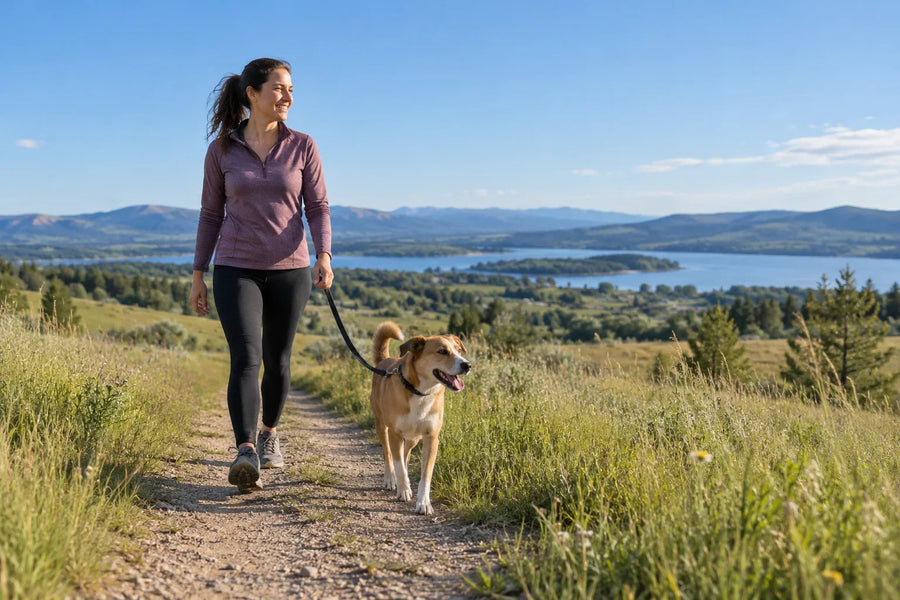
An active dog needs a balance of exercise, things to explore and learn, food that fits their needs, and time to rest. The right balance depends on age, health, fitness, and the activities you do together.
If your dog brings you a toy right after a walk, another hard workout isn't always the answer. Look at the whole day: what your dog did, how they felt afterward, and whether they had a quiet place to settle.
Why Is My Dog Restless After a Walk?
Restlessness can mean several things. A dog might need more suitable activity, be overtired, feel bored or excited, or be physically uncomfortable. Dogs Trust recommends considering exercise, enrichment, the resting environment, and possible health concerns when a dog struggles to settle. Dogs Trust guidance on restlessness
Notice when it happens. Does your dog pace after a busy outing? When the house gets noisy? While repeatedly changing resting spots or favoring a leg? Those patterns give you a better starting point than adding another run.
New or persistent trouble settling, especially with signs of discomfort, deserves a vet visit. If medical concerns have been addressed and the behavior continues, a qualified reward-based behavior professional can help with an individual plan.
For related questions, see our guide to changes in your dog's sleep.
How Much Exercise Does an Active Dog Need?
There's no universal number of minutes. Start with your dog's age, health, current fitness, and the activity. A walk with plenty of sniffing and a session of fast fetch can take the same amount of time but have very different demands.
Before changing things, keep a simple record for a typical week. Include walks, play, training, outings, and rest. These notes give you a starting point for planning the next week.
Write down:
- Activity: What did your dog do, and for how long?
- Setting: What were the weather, terrain, and distractions like?
- Response: Did your dog move comfortably and settle afterward?
- Later changes: Any stiffness, appetite change, or unusual reluctance the next day?
Before adding sustained running, repeated jumping, or demanding sport, get a plan that fits your dog—especially a puppy, senior, or dog with a medical condition. The American Animal Hospital Association (AAHA) emphasizes care that accounts for life stage, size, lifestyle, breed, and health. AAHA life-stage guidance
If your dog is large, our large dog care guide covers growth, body condition, and mobility.
Build a Balanced Day
Give activities different jobs. A walk can provide movement and exploration. Training can build a useful skill. A simple food search lets your dog use their nose. Rest gives them a break from the day's demands.
| Part of the day | An option to try | Keep it manageable |
|---|---|---|
| Movement | A familiar walk that fits your dog | Choose a route you can shorten |
| Exploration | Time to sniff safe areas | Let your dog pause |
| Learning | Brief reward-based cue practice | Start with few distractions |
| Problem-solving | A supervised food search or suitable puzzle | Make the first task easy |
| Rest | A quiet, comfortable place to lie down | Give your dog space to settle |
You don't have to fit every option into every day. Choose a few your dog enjoys and that you can keep up with. Dogs Trust describes scent games, food puzzles, and training as useful activities for dogs. Dogs Trust activity suggestions
The table offers planning ideas, not a prescribed exercise schedule.
Try Simple Enrichment at Home

You don't need much equipment to get started. Put a few pieces from your dog's measured food allowance in easy-to-see spots on a clean, safe floor. Invite your dog to find them. If they enjoy it, make the search a little harder without turning it into a frustrating puzzle.
You can also hide a familiar toy in an easy spot or practice a useful cue in a quiet part of the house. Supervise new activities and choose toys that fit your dog's chewing habits.
Count food used in games toward the day's intake. Dogs Trust recommends accounting for enrichment food rather than adding it on top of regular meals. Dogs Trust enrichment guidance
For a dog who gets very excited, practice a calmer finish: end the game, offer water, and make a peaceful resting area available. Reward relaxed behavior in an easy setting. If settling remains difficult, get individual help rather than repeatedly making the activity harder. Battersea guidance on teaching calm behavior
Make Weekend Plans Fit the Week
A long Saturday hike is a big change for a dog whose weekdays are mostly quiet. Prepare with an appropriate conditioning plan, and choose a route that fits current fitness.
Think about three kinds of day:
- A typical day: Familiar activity, a little training or enrichment, and rest.
- An outing day: Suitable activity, water, breaks, and a way to head home early.
- A quieter day: Comfortable movement, easy enrichment, and fewer demanding sessions.
These are planning options, not a fixed schedule. A quieter day doesn't have to mean no movement. If illness or injury is involved, follow your vet's restrictions.
After an outing, watch everyday movements: getting up, turning, walking to the door, and settling. Limping, pain, or an unexplained drop in stamina needs a vet's attention. Don't use another hard session to see whether the problem disappears.
Count Training Treats, Too
Training rewards, food puzzles, and chews all belong in the food plan. AAHA recommends that a complete and balanced diet provide at least 90% of total calories, with treats and other extras generally limited to 10%. AAHA feeding guidance
Here's a math example: if a vet has set a 1,000-calorie daily target, 10% is 100 calories of extras. That isn't a calorie recommendation for your dog; it shows how the allowance works.
Set aside the day's rewards before training. If several people work with your dog, share the allowance. Adjust portions with your vet using weight, body condition, diet, and actual activity. A number from a tracker shouldn't determine the meal by itself.
Get Ready for Outdoor Adventures

Before you leave, check the weather, route, water supply, equipment fit, identification, and a way to turn back early. Carry drinking water for your dog and check their paws after rough terrain.
Heat can change the plan quickly. Short-muzzled dogs and dogs with excess weight or heart or breathing conditions are among those at increased risk. Heavy panting, drooling, and reluctance to continue may mean a dog is overheating. Cornell heat-safety guidance
Weakness, confusion, trouble breathing, or collapse requires urgent care. Move your dog out of the heat, begin cooling with cool water and airflow, and seek emergency veterinary help if you suspect heatstroke. Cornell heat-safety guidance
A route your dog handled in cool weather may be too demanding on a hotter day. Adjust early. Practice recall and leash skills in suitable settings, follow local rules, and use secure handling around roads and wildlife.
Where GPS and Activity Tracking Fit
SATELLAI offers live GPS tracking, location history, and records of activity and rest. They can add useful details to the notes you keep about daily care and outings. SATELLAI GPS features · SATELLAI activity features
If activity rises on an outing day, note the route and conditions. If the next day looks different, record movement, appetite, and how your dog settles. These are ways to organize observations, not a method for diagnosing illness.
Compare your dog with their own usual pattern. A tracker doesn't prescribe exercise, diagnose pain, or replace supervision.
Frequently Asked Questions
Can enrichment replace all physical exercise?
Enrichment and physical activity meet different needs. Include opportunities to explore and learn alongside suitable movement. Follow your vet's plan if health problems limit exercise.
My dog still wants to play after a walk. Should I do more?
Look at the full day before adding another strenuous session. Consider activity, enrichment, rest, and comfort. A calm transition or easy sniffing game may help; persistent restlessness or discomfort needs individual attention.
How much exercise should an active dog get?
Use a plan based on age, health, fitness, and activity type. Review the current routine and your dog's response before increasing demanding exercise.
What can I do when an outdoor plan falls through?
Try a safe food search, suitable puzzle, or short reward-based training session, with breaks. If illness or injury caused the change, follow the activity restrictions your vet provided.
Build a day your dog can enjoy and recover from, with activities that fit your dog, a clear food allowance, and room to rest.
Still choosing a companion? Compare dog breeds for active owners, then review health testing when choosing a dog.
Sources and Editorial Notes
This AI-assisted draft uses the veterinary and animal-welfare resources linked above. It hasn't been reviewed by a veterinarian. The activity table, weekly log, and calorie calculation are editorial examples, not a tested exercise program or a feeding prescription.
This guide was prepared for SATELLAI, which sells dog GPS collars and trackers. Brand features come from SATELLAI's documentation; the linked veterinary sources support health statements.