Halloween safety for dogs starts with four steps: secure the candy, give your dog a quiet retreat, keep them away from open exterior doors, and skip any costume they find uncomfortable. Use a leash outdoors and check their identification before the festivities begin. If your dog may have swallowed chocolate or xylitol, contact a veterinarian immediately, even if they seem normal.
The candy bowl is ready, the porch is decorated, and someone has already rung the doorbell wearing a giant dinosaur costume. For your dog, Halloween can turn a familiar evening into a confusing series of sounds, strangers, and open doors. A little preparation makes it easier to include your dog in the parts they enjoy while giving them space from the rest.
Halloween Dog Safety at a Glance
| Situation | What to do | When to change the plan |
|---|---|---|
| Candy within reach | Put treats and collected candy in closed, inaccessible containers. | Suspected chocolate, xylitol, or unknown candy ingestion: call a veterinarian. |
| A Halloween costume | Try it briefly at home and check movement, vision, breathing, and loose parts. | Remove it if your dog freezes, pulls away, or tries to escape it. |
| Doorbells and visitors | Prepare a familiar quiet room before the first arrival. | Increase distance from the activity if your dog cannot settle. |
| Repeatedly opening the front door | Keep your dog behind a closed interior door; assign someone to manage access. | Use another arrangement if the barrier cannot contain your dog safely. |
| An evening walk | Choose a quiet route with a leash, current ID, and reflective visibility. | Head home if your dog appears overwhelmed. |
Keep Halloween Candy Away From Your Dog
Chocolate belongs in a closed container your dog cannot access. Its theobromine and caffeine can cause poisoning, and the risk depends on the type and amount eaten as well as your dog's size. Dark chocolate, baking chocolate, and cocoa powder are generally more concentrated than milk chocolate. Even chocolate with a low theobromine content can cause digestive problems, so avoid treating any variety as a suitable dog snack. VCA's veterinary guide to chocolate poisoning explains these differences.
Sugar-free does not mean dog-safe. Some candies, gum, and other foods contain xylitol, a sweetener that can cause a dangerous fall in blood sugar in dogs. Check the ingredient list rather than relying on the front of the package; xylitol may also be described as birch sugar. The FDA's xylitol safety guidance recommends contacting a veterinarian, emergency clinic, or animal poison control center right away if exposure is suspected.
Give candy its own storage routine: one closed container for the treats you hand out and another for the candy children bring home. Ask everyone to unpack trick-or-treat bags at a table, then put them away before leaving the room. Collect dropped wrappers and use a trash can your dog cannot open, since swallowed packaging can cause digestive problems or a blockage.

What Should You Do if Your Dog Eats Halloween Candy?
Call your veterinarian or an emergency veterinary clinic promptly if your dog eats chocolate, a xylitol-containing product, or candy with unknown ingredients. Do not wait for symptoms before asking for help. Keep the packaging and be ready to describe your dog's weight, what they ate, approximately how much is missing, and when it happened. Let the veterinary team direct treatment; do not try to make your dog vomit unless they specifically instruct you to do so. In the U.S., ASPCA Poison Control is also available at (888) 426-4435.
If your dog has trouble breathing, collapses, becomes unresponsive, or has seizures, seek emergency veterinary care immediately. You can ask another adult to call the clinic while you arrange transport. The ASPCA's guidance on suspected poisoning explains why professional advice should come before home treatment.
Are Halloween Costumes Safe for Dogs?
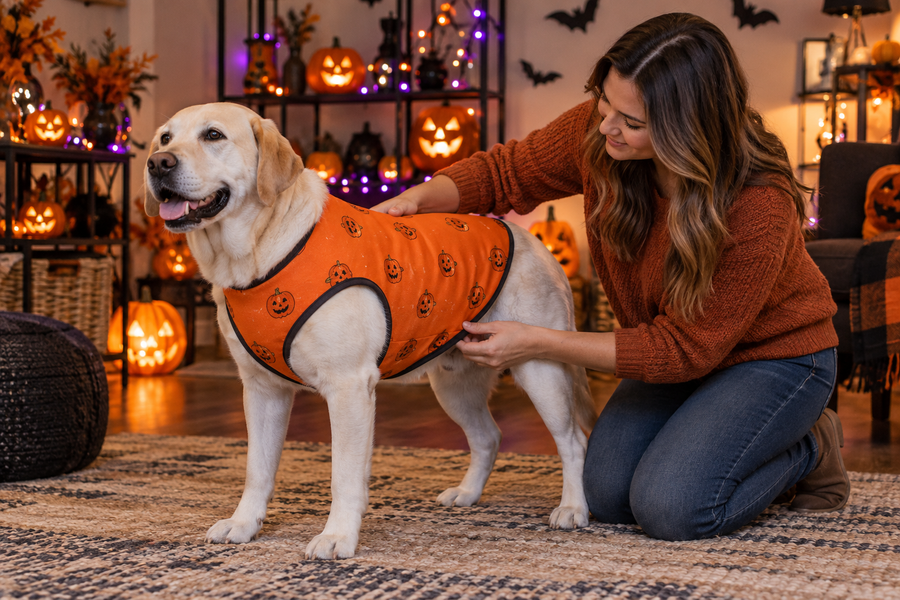
A costume is optional, even if you have planned the perfect matching outfit. The ASPCA's Halloween safety recommendations advise against dressing pets who do not enjoy it. An outfit should allow normal movement, clear vision, and unrestricted breathing, with no small pieces your dog can chew off. Check it before Halloween and remove it if your dog seems uncomfortable.
Try any outfit briefly at home, where there is no crowd or pressure to finish a photo. Watch your dog rather than the camera: do they move normally, or do they freeze, pull away, or keep trying to escape the clothing? If the outfit is unwelcome, skip it. A familiar collar, a comfortable bandana under supervision, or a photo beside decorations may be all the celebration your dog wants.
How to Help a Dog With Halloween Doorbell Stress
Arrange your dog's evening before the first knock. Choose a familiar room away from the entrance and set it up with water, bedding, and a toy they already use safely. VCA's Halloween pet safety guidance suggests a secure area away from visitors and background sound, such as a fan or television, to help mask the activity. A crate is an option only if your dog is already comfortable relaxing in it.
Assign one person to manage the front door and make sure everyone knows where the dog is staying. A simple note on the quiet room's door can remind guests and children to leave it closed. If your layout allows, consider handing out candy outside while another adult stays with your dog indoors. Check on your dog during the evening and adjust the arrangement if they are not settling.
Pay attention to changes from your dog's usual behavior. Pacing, trembling, repeated lip licking, panting without an obvious heat or exercise explanation, and attempts to hide can indicate stress, especially when they appear together around visitors. These behaviors need context; a single yawn does not establish anxiety. Give your dog distance from the activity and avoid forcing greetings. For persistent or severe distress, ask your veterinarian for an individual plan; VCA's guide to stress signals offers more background.

How to Prevent Your Dog From Escaping on Halloween
Plan for the moment someone opens the door with their hands full. Keep your dog behind a securely closed interior door before answering visitors, and check that any gate or barrier suits your dog's ability to climb or jump. Explain the arrangement to everyone in the household. Do not depend on a distracted person holding your dog's collar while candy is being handed out.
Check that your dog's ID tag shows a current phone number and that their microchip registration has up-to-date contact information. A microchip helps identify a dog when it is scanned; it does not transmit a live location. SATELLAI's guide to GPS trackers, microchips, and Bluetooth tags explains how these tools serve different purposes.
Where a GPS Collar Fits Into Your Safety Plan
A GPS device can add location information to your preparations. SATELLAI Dog Collar Go offers GPS tracking and customizable virtual boundaries with escape alerts. Before the holiday, charge the device, check the fit, and test your app notifications according to its setup instructions. Tracking and alerts depend on factors such as signal, connectivity, and battery status, and a virtual boundary does not physically stop a dog from leaving. Continue using closed doors, a leash outdoors, and supervision.
Should You Take Your Dog Trick-or-Treating?
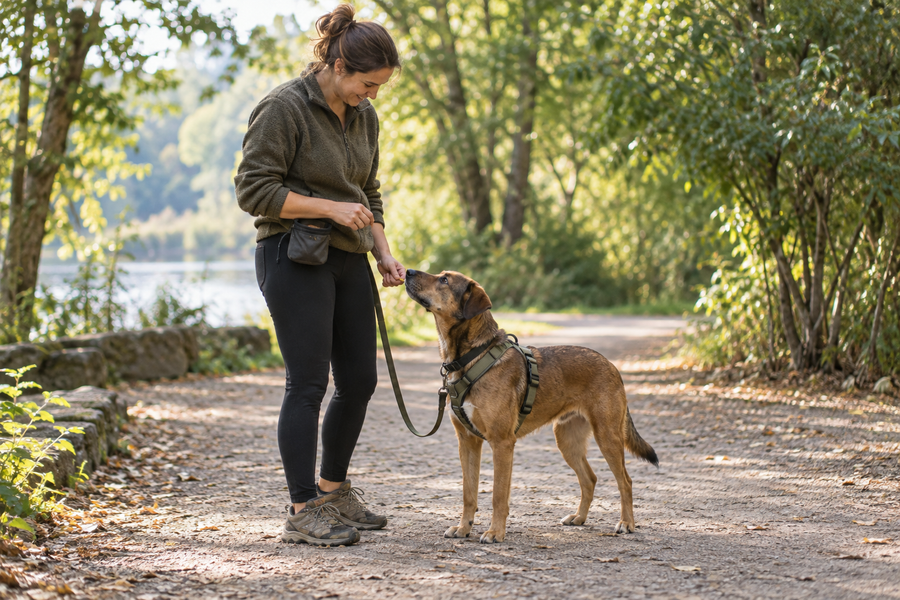
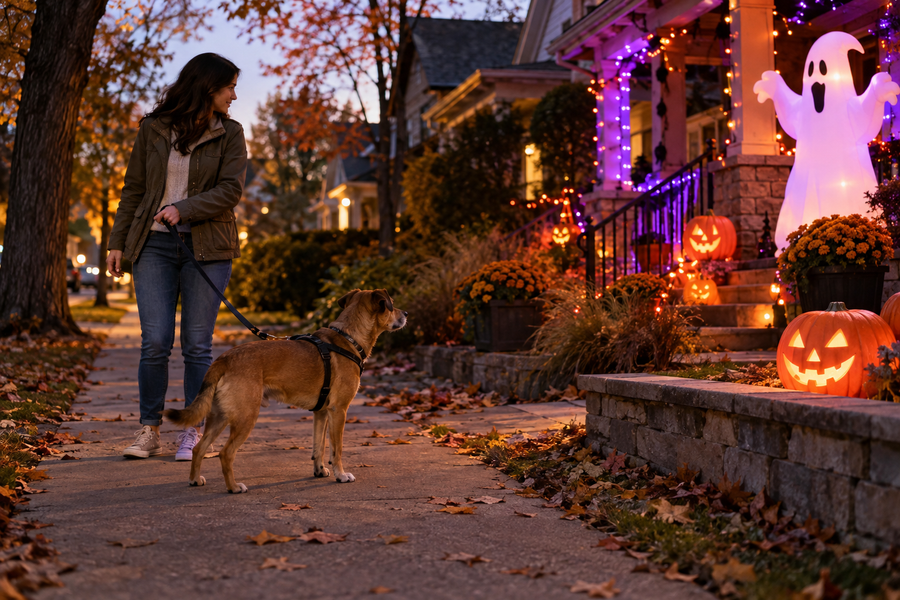
Schedule your dog's main walk before the busiest trick-or-treating period if possible. For a later bathroom break, choose a familiar, quieter route, use a secure leash and well-fitted walking gear, and add reflective visibility after dark. Watch for dropped candy along the sidewalk. Leave crowded porches and unfamiliar costume greetings out of the route if your dog finds them unsettling.
You can also plan a small celebration at home: a short photo session, a familiar food puzzle, or a few minutes of favorite games. Put the candy away first and keep your dog's usual routine in mind. There is no need to make the evening an endurance test. If your dog is ready to rest, let the celebration continue without them.

Check Decorations From Your Dog's Level
Look around the decorated rooms for items your dog could reach or knock over. Candlelit pumpkins create a burn and fire risk, while artificial cobwebs and small props can tempt chewing or swallowing. Consider battery-operated lights instead of open flames, but keep the lights, batteries, and wiring inaccessible too. Move decorations away from your dog's bed, walking paths, and play area so they can use those spaces normally.
Your Halloween Dog Safety Checklist
- Store outgoing and collected candy in secure containers.
- Save your veterinarian's and emergency clinic's contact details.
- Prepare a familiar quiet room before visitors arrive.
- Tell the household who is managing the dog and the front door.
- Check ID tags, microchip contact details, and walking gear.
- Charge and check any GPS device you already use.
- Try optional clothing in advance and skip it if unwelcome.
- Plan a quieter walk and check floors for candy and wrappers afterward.
Frequently Asked Questions
Can Dogs Eat Any Halloween Candy?
Keep human Halloween candy away from dogs. Chocolate and xylitol-containing products are particular poisoning concerns, and packaging can also cause harm if swallowed. Offer a familiar dog treat instead. If your dog gets into the candy, check the ingredients and contact your veterinarian for advice.
How Can I Help My Dog With Halloween Doorbell Stress?
Set up a familiar quiet space away from the entrance before trick-or-treating starts. Keep visitors out of that room, offer water and familiar bedding, and check whether your dog is settling. If this arrangement is not enough or your dog has a history of severe distress, speak with your veterinarian about a suitable plan.
Why Does My Dog Freeze When I Put on a Halloween Costume?
Freezing may be a sign that your dog is uncomfortable with the outfit or situation; it does not necessarily mean they are calmly posing. Remove the costume and watch how they behave without it. Choose a celebration that allows your dog to move freely and opt out.
Should I Wait for Symptoms if My Dog Eats Chocolate?
No. Contact your veterinarian promptly with the chocolate type, estimated amount, time of ingestion, and your dog's weight. Signs can take hours to appear, so normal behavior immediately afterward does not establish that the exposure is safe. Follow the veterinary team's advice.
Should I Take My Dog Trick-or-Treating?
A busy trick-or-treating route may be overwhelming for a dog who dislikes crowds, unfamiliar sounds, or costumes. A quieter walk and a comfortable evening at home can be a better choice. If you go outdoors, keep your dog securely leashed, identifiable, and visible, and leave if they appear uncomfortable.
Does a GPS Collar Replace a Microchip?
No. A GPS device provides location information when its operating conditions are met, while a registered microchip provides identification when scanned. Use current ID tags and microchip registration alongside any tracker. Physical barriers and supervised leash use remain part of the plan.
A good Halloween plan leaves room for your dog's preferences. Prepare the house before visitors arrive, let comfort guide costume decisions, and keep the usual safeguards in place. A familiar evening with a few festive touches can be just as enjoyable as joining every activity.
This article provides general safety information, not an individual diagnosis or treatment plan. Suspected poisoning, swallowed objects, or severe distress require advice from a veterinarian. Safety recommendations draw on the linked ASPCA, FDA, and VCA guidance; SATELLAI product information comes from the official product page.