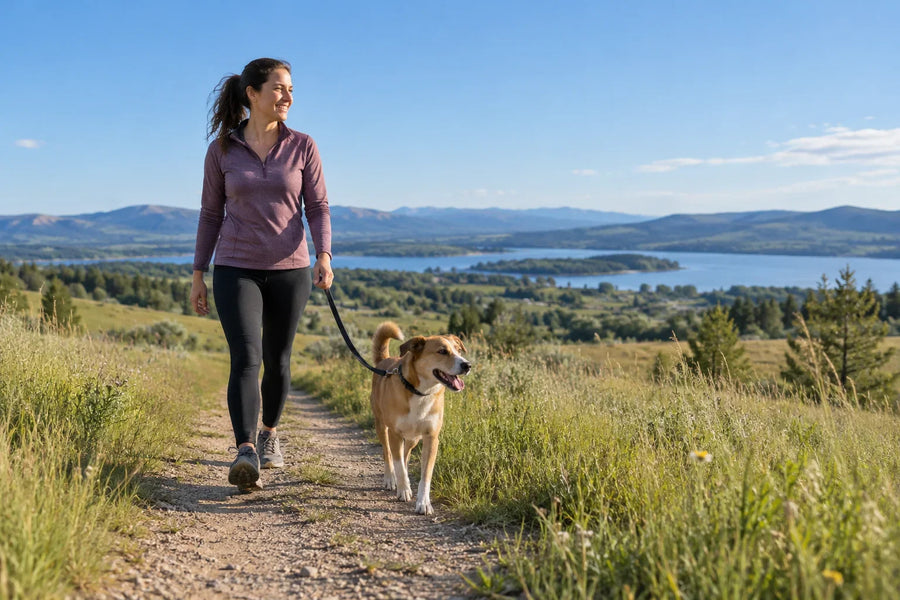
Dogs on farms get to experience the freedom that city pets can only imagine. They get land to range around on and tasks to perform. There's fresh air to breathe, too. While this liberty offers numerous benefits to these canines, it does present numerous dangers too. Farm dogs can easily get into busy countryside roads or get injured inside distant pastures or attacked by predators. Farm dogs used to go missing when their masters would search for hours, calling for them. These days, GPS dog collars have transformed how we protect these animals.

1. Choose and Configure the Right GPS Collar
Before you can rely on technology to protect your dog, you need to ensure you have the right hardware for the job. Farm environments are harsh. They are wet, muddy, and often vast. A standard tracker designed for a suburban poodle simply won't survive a week on a working farm.
Select a Device Built for Rural Terrain
When selecting GPS collars for farm use, durability is non-negotiable. Look for a device that is 100% waterproof, not just water-resistant. Your dog will likely cross creeks, run through wet tall grass, or work in the rain. The device needs to withstand full submersion.
Battery life is the second critical factor. On a farm, you cannot charge a collar every few hours. You need a device that lasts several days to a week on a single charge. Additionally, consider the connectivity type. Most trackers use cellular networks. If your farm has spotty cell service, you may need a radio-frequency tracker or a satellite-based collar, which functions independently of cell towers.

Test Signal Strength Across Your Land
Once you have the device, do not put it on the dog immediately and assume it works. You need to map out the connectivity zones on your property. Take the collar for a walk around your perimeter without the dog. Check the app on your phone to see if the location updates differ in the dense woods compared to the open fields.
If you find "dead zones" where the signal drops, note them mentally. Knowing these blind spots is crucial if you ever need to track a missing dog. It helps you understand where the tracker might stop updating, giving you a starting point for a physical search.
2. Master Real-Time Tracking and Boundaries
The primary function of GPS collars is to tell you where your dog is right now. However, modern devices offer much more than just a dot on a map. To truly protect your farm dog, you need to utilize the proactive safety features that prevent them from getting lost in the first place.
Utilize Live Tracking for Instant Awareness
Most of the time, your GPS app will update the dog's location every few minutes to save battery. However, if a storm is rolling in or you hear gunshots from hunters nearby, you need immediate data. This is where "Live Tracking" mode comes in.
Learn how to toggle this feature quickly. It updates the location every few seconds, allowing you to watch your dog's movement in real-time. This is essential if you are driving to catch up to a wandering dog or trying to recall them from a dangerous area. On a large farm, seeing the direction the dog is heading allows you to intercept them rather than chasing behind them.
Set Virtual Fences for Specific Zones
You cannot build a physical fence around 500 acres, but you can build a virtual one. Geofencing is a feature that allows you to draw boundaries on the map app. When your dog crosses these lines, you get an instant alert on your phone.
Create a "Safe Zone" around the barn and house. If the dog leaves this area, you know they are roaming. More importantly, create "No-Go Zones" around dangerous areas, such as a nearby highway, a swamp, or a neighbor’s property who doesn't like dogs. These alerts give you a head start to call the dog back before they get into trouble.
3. Monitor Health Through Activity Data
Farm dogs are tough. They often hide pain or illness until it is severe. This survival instinct can make it difficult for owners to realize something is wrong. GPS collars act as a health monitor, providing data that can reveal issues your dog isn't telling you about.

Watch Activity Levels for Sudden Drops
Your dog probably has a pattern or schedule that it keeps to. It checks the fence every morning, sleeps at noon, and follows your tractor when you head out in the evening. Your dog’s collar measures this activity level. It can determine your dog’s “normal.”
If you find your dog’s activity level decreasing with a sharp drop in daily activity, investigate it at once. For example, if your dog normally travels five miles daily but only managed one mile yesterday, it could mean your dog has a thorn in its paw or could be suffering from ticks or injuries sustained while approaching livestock.
Analyze Rest Patterns for Signs of Discomfort
Sleep quality matters just as much as exercise. The collar monitors how much your dog sleeps and how restless they are at night. A farm dog that is suddenly pacing at 2:00 AM or waking up frequently may be suffering from arthritis pain, skin irritation, or anxiety.
By reviewing this data, you can catch chronic issues early. For example, if you notice your aging farm dog is sleeping less soundly, it might be time to introduce joint supplements or provide a warmer, softer bed in the barn.

4. Ensure Safety Beyond the Farm Fence
While the farm is their primary domain, farm dogs often travel. They might ride in the truck to the feed store, accompany you on camping trips, or visit the vet. A lost dog in unfamiliar territory is a nightmare scenario, but your GPS device provides security here as well.
Use the Collar for Temporary Safety While Traveling
When you take your dog off the property, their risk of getting lost increases because they don't know the landmarks. GPS collars work anywhere there is coverage, not just on your home Wi-Fi.
Before you leave the farm, ensure the collar is fully charged. When you arrive at a campsite or a new location, use the app to check the local signal strength immediately. If your dog gets spooked by a strange noise and bolts in a new environment, the tracker is your only reliable link to finding them.
Activate Light and Sound for Night Recoveries
It becomes difficult to track your missing dog at night when it goes into thick bushes. There exist many smart collar models with LED lights or buzzers that can be triggered remotely using your mobile phone.
If it shows that your dog is located inside a thick cornfield at night, switch on the light function. It serves as a beacon that makes it easy to find your dog because of its brightness. The sound function can assist you in finding your dog if it’s stuck inside a ravine or under fallen fences when it cannot bark.
5. Review Data to Prevent Future Risks
The real value of data comes with a focus on the long game. Rather than considering historical trends visible within your app, you can begin to spot patterns, allowing you to make your farm environment more secure going forward. Do not just react to emergencies; be proactive before those scenarios occur.
Identify Potential Hazards via Heat Maps
Most GPS devices offer what’s called a “heat map,” which reveals where your dog tends to hang out. Take a look at this every week. You could find that your dog tends to visit a particular part of your perimeter fence.
It might mean there's damage to your fence, which requires repairs. It could also mean there’s a badger set or other wildlife that your dog is gravitating towards, with particular attraction to that part of your property. It’s important to evaluate these zones to determine if there’s risk associated with rusty barbed wire or toxic plants, which need to be addressed before your dog ends up injured.
Plan for a Safer, Healthier Future
Use these insights about your dog’s health to modify your care as the dog ages. For example, if your dog’s statistics show that your dog’s mileage of walking distance has been decreasing every year, your dog is slowing down with age. Now comes an opportunity to tweak their diet to keep off excess pounds or modify their activity schedule. Maybe your senior pet just needs to retire from cow herding and find a new role—that of Front Porch Guardian? Your objective set of numbers provided by your pet’s collar will now enable you to make cool-headed decisions for your devoted employee.

FAQ about GPS Collars and Cell Service
Q1: Do GPS collars work without cell service?
Usually, common GPS trackers need cellular connectivity to transmit your position info to your mobile phone. If your farm receives absolutely no cellular service, you need to find radio-frequency trackers that can function even without cellular access.
Q2: Is there a monthly fee for GPS collars?
Yes, almost every cell-based collar system comes with a monthly subscription service plan. That cost covers telecommunication data access within the collar via SIM cards, just like how cellular telephone services work. Radio frequency-based collars require more money at first but don’t cost anything afterwards.
Q3: Can I track my dog if I am in another state?
Yes. So long as you have battery power and reception on your dog’s collar and your phone has Internet access, you can track your dog’s position from anywhere in the world.
Q4: How durable are these collars for real farm work?
It depends on the brand. Look for IPX7 or IP67 waterproofing. These ratings mean that it can withstand immersion in 1 meter of water for 30 minutes. Do not choose splash-proof trackers if you want to track your farm dogs; they cannot withstand exterior elements anyway.