Traveling with a dog can turn an ordinary trip into a shared adventure, but it also adds decisions that human travelers do not face. You need to know whether your dog is comfortable traveling, which records are required, how they will be restrained, where they can stay, and what you will do if they become sick or escape in an unfamiliar place.
The safest plan is not the one with the most gear. It is the one built around your individual dog, your transportation method, and the rules at your destination. This guide explains how to travel with a dog by car or plane, what to prepare for domestic or international trips, and how identification and GPS tracking can support—not replace—hands-on safety.
Important: Travel rules can change, and health needs vary by dog. Verify current requirements with your veterinarian, carrier, lodging provider, destination government, and official U.S. agencies before every trip.
Quick Answer: How Do You Travel Safely With a Dog?
Safe dog travel starts before departure. Confirm that your dog is healthy and behaviorally ready, update their ID tag and microchip registration, check destination and carrier rules, and practice with the crate, harness, or carrier they will use. Pack food, water, medication, records, cleanup supplies, and a familiar resting item.
During the trip, keep your dog physically secured, control temperature, offer appropriate breaks, and watch for stress or illness. At the destination, inspect the room or yard before allowing exploration and keep your dog leashed until the area is proven secure. A GPS tracker can provide added location awareness, but it cannot replace a leash, secure enclosure, current ID, registered microchip, or supervision.
First Decide Whether Your Dog Should Travel
Not every dog enjoys travel, and leaving a dog with a trusted sitter may be the kinder option. Consider your dog’s health, age, temperament, past travel experience, and the demands of the itinerary.
Ask your veterinarian before traveling if your dog has heart or breathing disease, seizures, significant mobility problems, pregnancy, recent surgery, uncontrolled anxiety, or another condition that could be affected by temperature, altitude, motion, confinement, or delayed access to care. Puppies may face vaccination and age restrictions, while older dogs may need shorter travel periods, more comfortable footing, and easier bathroom access.
Behavior matters too. A dog who panics in a crate, becomes carsick on short drives, reacts strongly to strangers, or cannot settle in new environments needs preparation—not a surprise eight-hour journey. Practice the travel routine in small steps. Let the dog rest in the stationary car or carrier, take short positive trips, and gradually increase duration while watching body language.
Do not give sedatives, anti-nausea medication, or calming products without veterinary guidance. A veterinarian can determine whether medication is appropriate and explain how to test it safely before travel day.
Check Health Records, Identification, and Travel Rules
Your dog travel checklist should begin with paperwork because some requirements take weeks or months to complete.
For travel within the United States
Carry a copy of vaccination records, your veterinarian’s contact information, prescription details, and a recent photo of your dog. Update the physical ID tag and confirm that the phone number in the microchip registry is current.
Rules are not identical across the country. USDA APHIS explains that destination states and territories may set animal-health requirements, including health certificates, vaccinations, testing, or treatments. Check the receiving jurisdiction rather than assuming that a road trip is exempt.
For international dog travel
Start early. USDA APHIS advises U.S. travelers to contact a USDA-accredited veterinarian as soon as they decide to travel internationally. Depending on the destination, a dog may need a specific microchip, vaccination sequence, laboratory test, parasite treatment, import permit, or USDA-endorsed health certificate. Requirements and timing windows can change.
If your dog will enter or return to the United States, check the CDC dog-import requirements for the exact travel history and vaccination situation. As of August 2026, every dog entering or returning to the U.S. needs a CDC Dog Import Form receipt. Dogs arriving from high-risk countries for dog rabies may need additional documents and designated entry arrangements.
Save digital copies, but carry any originals required by officials. Also verify airline, hotel, rental-car, campground, and transit policies separately; a government health certificate does not guarantee that a carrier will accept the dog.
Dog Travel Essentials: What to Pack
Pack one accessible dog bag rather than spreading supplies among several suitcases. Include:
- regular food in labeled portions, plus enough for delays;
- water and portable food and water bowls;
- all daily medications in original containers;
- vaccination and health records;
- a fixed-length leash, well-fitted harness, collar, and current ID tag;
- waste bags, towels, wipes, and an absorbent pad;
- bedding or a familiar blanket;
- a recent printed photo of your dog;
- a pet first-aid kit recommended by your veterinarian;
- an appropriate crate, carrier, or vehicle restraint;
- destination-specific weather gear when needed.
Avoid changing food immediately before or during a trip unless medically necessary. Keep medication, records, water, and cleanup items where you can reach them without unloading the entire vehicle. If you use a tracker, charge it before departure and pack its charger.

Traveling With Dogs by Car
A loose dog can distract the driver and may be injured during sudden braking or a collision. Place dogs in the rear seating area, away from front airbags, and use an appropriately sized secured crate or a vehicle safety harness designed for canine travel. The American Veterinary Medical Association advises against allowing a dog to ride on the driver’s lap or in the front passenger seat when airbags are present.
Before a long trip, make short practice drives. On travel day, keep the vehicle comfortably ventilated and stop often enough for your dog’s age, health, hydration, and bathroom needs. Clip the leash to the harness before opening a door at a rest area. Gas stations and highway shoulders are poor places to discover that a frightened dog can back out of loose equipment.
Never let a dog ride loose in an open pickup bed or hang their head far outside a window. Never leave a dog alone in a parked vehicle; dangerous heat or cold can develop even when the stop seems brief. If your dog drools heavily, repeatedly swallows, whines, vomits, or becomes unusually restless, pull over safely and reassess.
For a detailed vehicle-preparation and rest-stop workflow, use SATELLAI’s dog road trip safety checklist.

Flying With a Dog
Airline policies differ by route, aircraft, dog size, carrier size, breed, weather, and destination. Some dogs may qualify to travel in a carrier in the cabin; others may face cargo restrictions or may not be accepted. Check the exact airline policy before buying a nonrefundable ticket, then confirm the dog’s reservation directly with the carrier.
Measure the dog and carrier carefully. The dog should be able to stand, turn, and rest comfortably within the carrier permitted for that travel method. Introduce the carrier at home through meals, treats, and short periods of relaxed confinement. Do not wait until the airport to close the door for the first time.
Ask your veterinarian whether flying is appropriate, particularly for dogs with breathing, heart, temperature-regulation, or severe anxiety concerns. Discuss feeding, water, medication, and bathroom timing for the specific flight. Do not sedate a dog for air travel unless the veterinarian responsible for that dog specifically directs it.
Arrive with extra time, keep documents accessible, and use a secure harness and fixed leash when the dog must leave the carrier during screening. Confirm where pet-relief areas are located at departure, connection, and arrival airports. For international flights, airline rules are additional to—never a substitute for—government import and export requirements.

Book Truly Dog-Friendly Lodging
“Pet-friendly” does not always mean your dog qualifies. Before booking, confirm species, weight, breed, and number limits; pet fees and deposits; rules about leaving dogs unattended; available relief areas; and whether crates are required. Save the policy or confirmation in writing.
When you arrive, keep your dog leashed while you inspect the room. Check for open balcony gaps, loose screens, accessible trash, dropped medication, cleaning chemicals, pest bait, exposed cords, and space behind furniture. Place the bed or crate in a quiet corner and maintain familiar feeding and walking times.
Use the door latch and a “do not disturb” sign when appropriate, but do not rely on a sign alone. If staff may enter, secure the dog or coordinate a time when you can be present. Never tie a dog to hotel furniture, restaurant railings, or a vehicle while unattended.
Help Your Dog Settle at the Destination
New environments contain unfamiliar doors, smells, people, animals, traffic patterns, and escape routes. Begin with a short leashed walk and give your dog time to observe. Avoid immediately adding a crowded patio, dog park, or full day of activities.
At a rental home or campsite, inspect gates, fencing, and ground-level openings before assuming the space is secure. Ask whether pesticides, wildlife, toxic plants, standing water, or local hazards are present. Keep the first meals and sleep schedule close to the routine at home.
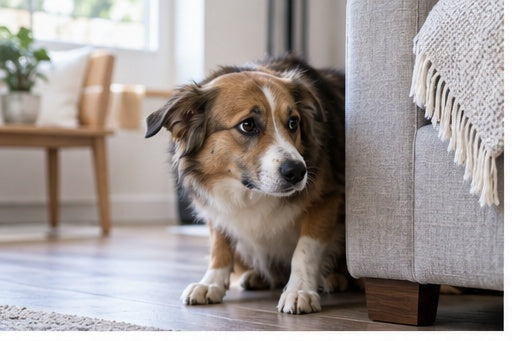
Watch for stress signals such as persistent panting when it is not hot, trembling, hiding, pacing, refusing food, repeated diarrhea, inability to sleep, or escalating reactivity. Reduce stimulation and provide a quiet retreat. Contact a veterinarian if signs are severe, persistent, or accompanied by pain, vomiting, breathing difficulty, weakness, collapse, or another concerning change.
Use GPS Tracking as a Backup Layer
Travel creates high-risk transition moments: car doors open at rest stops, hotel staff enter rooms, gates have unfamiliar latches, and a normally reliable dog may react differently in a new place. Current ID and a registered microchip remain essential. A connected GPS tracker can add escape alerts and help you follow location if the dog gets away.
For everyday city, hotel, park, and road-trip use, a lightweight option such as SATELLAI Collar Go can provide location tracking and app-based virtual-boundary alerts where supported cellular service and satellite visibility are available. Set up the device and test coverage before the trip, not at the first rest stop.
A virtual boundary is not a physical fence. It cannot block a dog from traffic, wildlife, water, or another property. Keep the leash attached in unsecured areas and supervise directly. Battery level, fit, connectivity, terrain, buildings, and environmental conditions can all affect real-world performance. If your dog is prone to bolting, review why escapes happen and build a layered plan with this guide to dogs that keep escaping.
Prepare for Lost-Dog and Medical Emergencies
Before leaving, save the phone number and address of a general veterinary clinic and a 24-hour emergency hospital near your destination. If the route is remote, identify options along the drive as well. Keep your regular veterinarian’s number, insurance information, medication list, and records available offline.
If your dog gets loose, do not immediately chase if that makes them run farther. Alert nearby staff, secure other pets, check the tracker if one is attached and connected, and use a calm familiar cue. Share a current photo and verified contact information with local animal control, shelters, microchip registry, and veterinary clinics. Treat live location as sensitive information and share it only with people helping recover the dog.
Seek urgent veterinary care for difficulty breathing, collapse, severe weakness, repeated vomiting, a swollen abdomen, uncontrolled bleeding, suspected toxin exposure, heat-related signs, major injury, or inability to urinate. Travel plans can be changed; delaying emergency care can make the outcome worse.
Final Dog Travel Safety Checklist
Before departure, confirm these points:
- My dog is healthy and behaviorally prepared for this trip.
- ID tags and microchip contact information are current.
- Destination, airline, border, lodging, and carrier rules are verified.
- Required original documents are packed and digital backups are saved.
- The crate, carrier, or vehicle restraint fits and has been practiced at home.
- Food, water, medications, records, cleanup supplies, and comfort items are accessible.
- Emergency veterinary contacts are saved.
- My dog will remain physically secured during transit and transitions.
- Any GPS device is charged, tested, and used only as a backup layer.
The Bottom Line
Learning how to travel with a dog safely means planning around the dog in front of you—not copying someone else’s itinerary. Confirm health and legal requirements early, practice the travel setup, use physical restraint, protect routines, and prepare for unexpected delays or emergencies.
When documents, identification, hands-on supervision, and technology each have a clear role, traveling with a dog becomes safer and less stressful for everyone.
Frequently Asked Questions
What documents do I need when traveling with a dog?
Requirements depend on the destination and transportation provider. Common items include vaccination records, a health certificate, microchip information, and import or export documents. Check the receiving state or country, airline, USDA APHIS, and CDC rules for the exact trip.
How often should I stop when traveling with a dog by car?
There is no universal interval for every dog. Plan regular water, bathroom, and movement breaks based on age, health, temperature, medication needs, and trip length. Puppies, seniors, and dogs with medical conditions may need more frequent stops.
Is it safe to fly with a dog?
Flying may be appropriate for some dogs but not others. Risk depends on health, breed, stress tolerance, carrier fit, route, weather, and whether travel is in-cabin or under another airline program. Ask your veterinarian and confirm the airline’s current policy before booking.
What should be included in a dog travel checklist?
Pack food, water, bowls, medication, health records, a fixed leash, harness, current ID, waste bags, bedding, a recent photo, a first-aid kit, and the required crate or carrier. Add destination-specific weather and legal items.
Can a GPS dog tracker replace a leash or microchip while traveling?
No. GPS can add location awareness and escape alerts, but it depends on the device, battery, fit, coverage, and satellite conditions. A leash provides physical control, while a registered microchip provides permanent identification if the collar is lost.
Editorial Sources
- American Veterinary Medical Association: Traveling with your dog or cat
- USDA APHIS: Domestic and international pet travel
- USDA APHIS: Pet travel process overview
- USDA APHIS: Interstate pet travel
- CDC: Bringing a dog into the United States
- CDC: Frequently asked questions on dog importation
- Cornell University College of Veterinary Medicine: Traveling safely with your dog
This article is educational and does not replace advice from a veterinarian who has examined your dog. Travel regulations and carrier policies can change; verify official requirements for every trip.