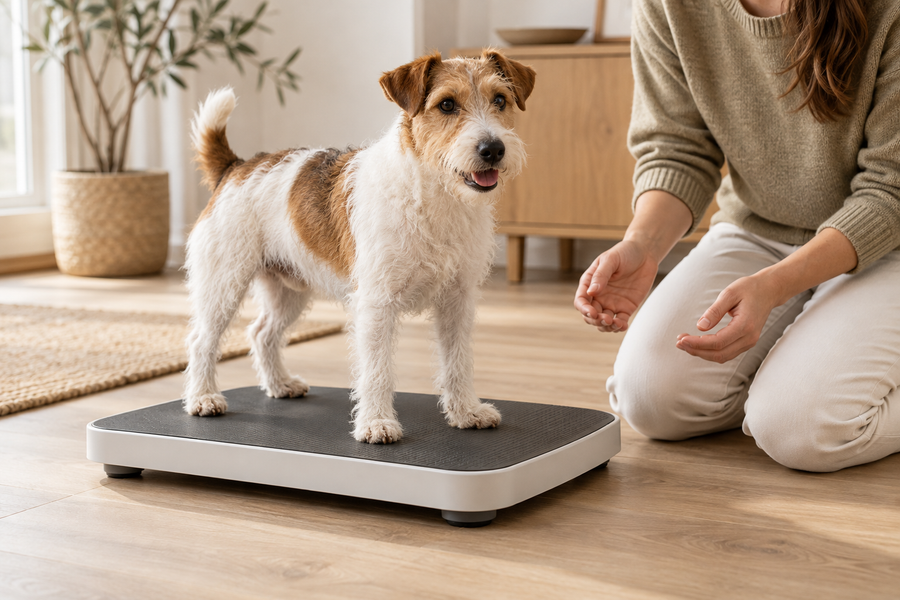
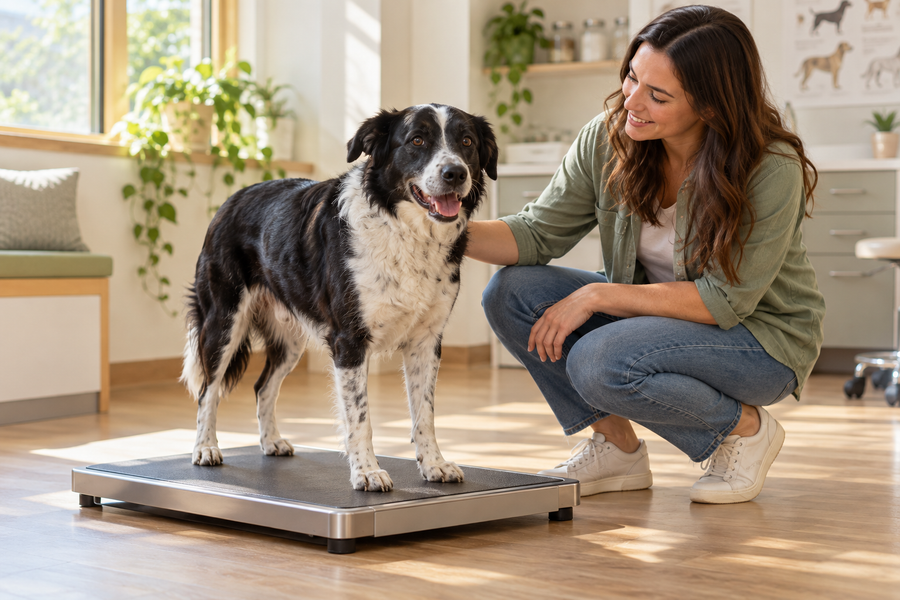
A dog may be underweight if the ribs, spine, or hips are unusually prominent, with little tissue covering them. Naturally lean dogs can look different, so assess both shape and recent weight changes. Unexpected weight loss needs veterinary advice even if your dog still eats well or has not become visibly thin.
This article separates three questions: whether your dog has low body fat, whether muscle may be changing, and whether their weight is falling without an explanation. Those questions can lead to different next steps.
How can you tell if your dog is too skinny?
Notice the ribs, spine, and hips while your dog stands comfortably. Very prominent bones, little soft tissue over the chest, or a waist that looks unusually drawn in may suggest that they are below ideal condition. PDSA's body shape guidance also notes that some naturally lean breeds can show ribs without being underweight.
A long coat makes touch especially useful. Gently feel rather than pressing or trying to produce a particular outline. Stop if your dog seems uncomfortable.
Then compare with the same dog at an earlier time. Has the harness become looser? Are the hips more noticeable? Has a previously stable weight started to decline? Bring those observations to your clinic even if you cannot assign a confident body condition score.
Underweight, weight loss, and muscle loss: what is the difference?
Body condition scoring assesses fat coverage. Muscle condition scoring assesses muscle tissue. A dog can lose muscle while still carrying excess body fat, so a soft or rounded body does not rule out muscle loss.
| Term | What it describes | What to record |
|---|---|---|
| Underweight body condition | Less body fat than ideal for the individual dog. | Rib coverage, outline, and a professional BCS assessment. |
| Unintentional weight loss | A decrease in measured weight without a planned reason. | Earlier and current readings, dates, and scale used. |
| Possible muscle loss | A change in muscle tissue that requires a separate assessment. | Changes in shape, strength, or movement to discuss with the vet. |
The WSAVA muscle condition chart explains why both assessments matter. Ask your veterinarian to check muscle condition if you notice a change in your dog's shape, strength, or movement. A body condition tool cannot make that assessment for you.
Our nine-point BCS guide explains the fat-coverage assessment. The SATELLAI Dog Weight & Body Condition Check can help you organize a home observation for a fully grown adult dog, but it cannot determine why a dog is thin or losing weight.
Why is my dog losing weight even though they are eating?
Sometimes the explanation involves how food is offered or eaten. A new routine, competition at the food bowl, or an unnoticed change in portions may affect intake. Other explanations require a medical assessment.
VCA's veterinary guidance on abnormal weight loss describes causes involving appetite, difficulty eating, digestion, nutrient absorption, and underlying illness. A dog who still eats enthusiastically can still have a health problem. Appetite alone does not establish whether the weight loss is harmless.
You do not need to work out the cause before calling the clinic. What helps most is a clear description of the change and when it began.

When does an underweight dog need a veterinarian?
Arrange an assessment if your dog appears underweight or is losing weight unexpectedly. Tell the clinic if you have also noticed vomiting, diarrhea, altered thirst, changes in appetite, or reduced energy. PDSA advises owners to seek veterinary advice for unexplained weight loss, particularly when the change is rapid.
Do not wait to reach a particular percentage of weight loss or a very low BCS. Also avoid assuming that getting thinner is simply part of growing older.
If your dog is struggling to breathe, collapses, or seems severely weak, seek urgent veterinary help. Those signs take priority over completing a weight check.
What should you record before the appointment?
Write a short timeline rather than trying to remember everything during the appointment. Include:
- The last weight you trust, the date, and the scale used.
- When you first noticed the change in shape or fit of the harness.
- What food is offered, the measured amount, and how much is left.
- Any new food, medication, supplement, household change, or feeding competition.
- Changes in chewing, stool, vomiting, drinking, energy, or activity.
Photograph the food packaging if you are unsure of the recipe name. Keep any weight readings you already have, including the units. Our home weighing and tracking guide offers a simple record format; collecting a record should not delay an appointment.
Should you feed an underweight dog more food?
Ask your veterinary team what to feed while you wait for the assessment. Increasing portions does not address every cause of low weight. Adding large amounts of rich food or building a homemade supplement plan can also make the situation harder to assess.
For a markedly thin or unwell dog, ask specifically for a supervised feeding plan. The aim is to support recovery while addressing the reason for the change.

Frequently asked questions about underweight dogs
Is my dog too skinny if I can see their ribs?
Visible ribs alone do not establish that a dog is underweight. Coat and natural build affect appearance. Look at fat coverage, other bony areas, and weight history together. A new change, increasingly prominent bones, or falling weight is a reason to contact your veterinarian.
Can a dog be underweight even when eating normally?
Yes. A normal or increased appetite does not rule out problems with digestion, nutrient absorption, or another health issue. Tell your veterinarian about the weight change and any other symptoms. Do not assume that enthusiasm for meals means the weight loss is harmless.
Is weight loss normal in an older dog?
Noticeable or unexplained weight loss in an older dog should be assessed. Record the change and ask the veterinary team to evaluate body fat, muscle, and health. Age alone is not a sufficient explanation for a dog becoming progressively thinner.
Should I use an online breed chart as a target?
A breed chart cannot establish an underweight dog's individual target or the cause of weight loss. A veterinarian can set a goal after assessing the dog. Read how much your dog should weigh for the difference between a broad reference range and a veterinary target.
This guide is educational. Unexplained weight loss needs veterinary assessment; a home body condition result cannot identify its cause.