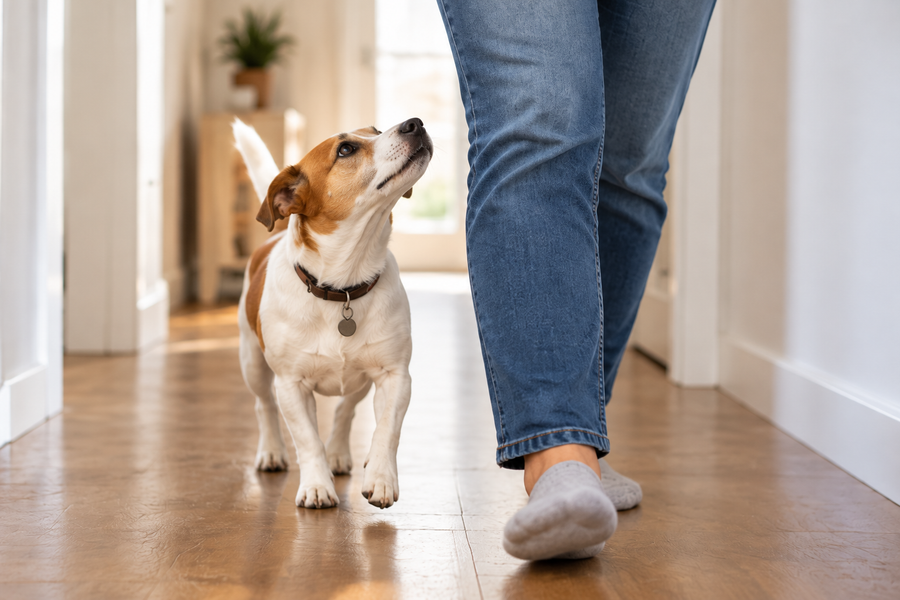
Small dogs can be surprisingly fast, and their size can make them harder to spot when they slip through a gate, run into tall grass, or disappear around a corner. A GPS dog collar can help an owner check location, receive escape alerts, and respond sooner—but only if the device is light enough, fits securely, and works with the dog's normal routine.
The best GPS dog collar for a small dog is not simply the smallest tracker on the shelf. You need to compare the dog's body weight and neck size with the manufacturer's requirements, then consider device weight, attachment method, tracking frequency, battery life, cellular coverage, and subscription cost.
SATELLAI Collar Go is designed for dogs weighing 4 kg (8.8 lbs) or more. It weighs 1.7 oz (47 g) and includes M and L bands. The tracker can also be attached to a compatible personal collar or harness no more than 25 mm (about 0.98 in) wide. This flexibility can help some small dogs whose necks fall outside the included M band's 13–18-inch range, but it does not remove the product's 8.8-pound minimum-weight guidance.
Quick Answer
When choosing a GPS collar for a small dog, check these factors in order:
- Minimum supported dog weight
- Measured neck circumference
- Complete device weight—not just the band
- Whether the tracker fits the included band or your own collar or harness
- Live-tracking update frequency and local cellular coverage
- Battery life in the tracking mode you expect to use
- Water resistance, escape alerts, and night-safety features
- Hardware price plus the required telecom plan
Collar Go can suit many small dogs at or above 8.8 lbs, including some Bichons, Beagles, Boston Terriers, and Miniature Schnauzers. It should not be presented as suitable for every toy breed or every dog below 8.8 lbs.
Why Small Dogs Need a Different GPS Collar
The main job of a GPS tracker is the same for any dog: determine location and send useful information to an app. The buying priorities change when the dog is small.
Device Weight Matters More
A few ounces may feel insignificant to a person, but the same device can sit very differently on an 11-pound dog than on a 70-pound dog. A tracker that swings, rotates beneath the neck, or bumps the chest may be distracting even when the band technically fits.
There is no single device-to-body-weight percentage that guarantees comfort for every dog. Body shape, neck length, coat, activity level, and attachment position also matter. Use the manufacturer's minimum weight as the first filter, then observe the individual dog while walking, sitting, eating, and resting.
Choosing your own lighter collar changes the band, but it does not reduce the 1.7-ounce tracker weight. The complete setup still needs to remain stable and comfortable.
A Secure Fit Is More Important Than a “Small” Label
Small dogs have different proportions. A compact, muscular Boston Terrier may have a wider neck than a slender Miniature Pinscher of similar weight. Long coats can also make a neck appear larger than it is.
Measure the dog's actual neck rather than relying on breed examples. The American Kennel Club recommends a proper collar fit that allows fingers beneath the collar without leaving enough room for it to slip off. Review the AKC collar-fitting guidance before selecting a size.

Small Dogs Can Slip Through Smaller Openings
A loose gate, damaged fence panel, open door, or gap beneath a fence may be enough for a small dog to escape. Compact dogs can also become difficult to see in bushes, tall grass, crowded parks, or unfamiliar neighborhoods.
GPS tracking does not prevent these situations, but live location and escape alerts may help an owner notice the problem earlier. The tracker should be combined with identification, training, supervision, and appropriate physical containment.
Is SATELLAI Collar Go Suitable for Small Dogs?
For many—but not all—small dogs, yes. The most important qualification is the official minimum weight.
The table below reflects official SATELLAI product information available in August 2026. Check the current product page and manual before purchasing because specifications and service availability can change.
| Feature | SATELLAI Collar Go specification | Why it matters for a small dog |
|---|---|---|
| Recommended dog weight | 4 kg / 8.8 lbs and above | Excludes many very small toy dogs |
| Device weight | 1.7 oz / 47 g | Must remain stable and comfortable on the individual dog |
| Included band sizes | M: 13–18 in; L: 17–26 in | M can fit many small-to-medium necks, but not every small dog |
| Personal collar compatibility | Collar or harness up to 25 mm wide | Allows use of a familiar, correctly sized band |
| Device dimensions | 2.68 × 1.31 × 0.90 in | Helps owners judge bulk as well as weight |
| Maximum battery life | Up to 4.5 days | Actual runtime depends on tracking mode and conditions |
| Live Tracking Mode | Location updates every 2–3 seconds | Useful when actively searching for a moving dog |
| Normal Mode | Updates every 1 minute | Balances routine awareness and power use |
| Power Saving Mode | Updates every 10 minutes | Extends battery life but provides less frequent updates |
| Water and dust resistance | IP68 | Useful for rain, wet grass, and everyday outdoor activity |
The SATELLAI Collar Go product page provides the current feature and specification details.
Can Collar Go Attach to Your Dog's Existing Collar?
Yes. Collar Go uses a removable tracker and backplate system. You can use the included band or mount the backplate to a compatible personal collar or harness.
According to the official setup instructions, a personal band must be 25 mm or less in width. In simplified terms, the process is:
- Release and rotate the tracker to remove it from the backplate.
- Secure the backplate to the compatible collar or harness using the attachment strap.
- Reinsert and rotate the tracker until it locks into place.
- Fit the collar or harness correctly and confirm the tracker stays stable during movement.
Always follow the current product manual rather than relying only on a summary. The official Collar Go FAQ provides the complete installation sequence.
Why This Feature Is Useful for Small Dogs
Using a personal collar or harness may help when:
- The included M band is longer than the dog's normal collar
- The dog already has a comfortable, well-fitted collar
- The owner prefers a softer or narrower material
- A harness provides a more stable attachment point for that dog's body shape
- The owner wants to keep the dog's identification tag and familiar gear together
However, compatibility does not automatically mean suitability. The dog must still meet the minimum-weight guidance, the band must remain within the supported width, and the mounted tracker must not interfere with normal movement.
Which Small Dogs May Be a Good Fit?
Breed examples are only a starting point. Adult dogs within the same breed can vary considerably in weight and neck circumference.
Bichon Frise
Many adult Bichons meet the 8.8-pound minimum, but some have necks below the included M band's 13-inch lower limit. A compatible personal collar may solve the band-size issue, provided the dog meets the weight guidance and the attachment remains secure.
Beagle
Most adult Beagles exceed the minimum weight and often fall within the included M range. Their interest in scents can make escape alerts and live tracking useful, but GPS should not replace a leash, recall training, or a secure yard.
Boston Terrier
Many Boston Terriers meet the weight requirement, although neck shape and breathing considerations make proper fit especially important. Avoid any setup that appears to restrict normal breathing or creates pressure during walks.
Miniature Schnauzer
Many adult Miniature Schnauzers are above 8.8 pounds. Measure through the coat where the collar rests and recheck the fit after grooming.
Chihuahua, Yorkshire Terrier, Maltese, or Pomeranian
Some individuals may meet the minimum weight, but many do not. Do not recommend Collar Go solely because the dog belongs to a small breed. Confirm current body weight, neck circumference, band compatibility, and comfort first. For a dog below 8.8 pounds, choose a tracker whose manufacturer explicitly supports that lower weight.
GPS Features That Matter for Small Dogs
Live Tracking and Update Frequency
“Real-time” does not mean the same update interval on every device. Collar Go offers three tracking modes, including 2–3-second updates in Live Tracking Mode. Faster updates can help when actively following a moving dog, while less frequent modes can conserve battery during normal routines.
For a basic explanation of satellite positioning and wireless data transmission, read What Is a GPS Dog Collar?.
Cellular Coverage and GPS Limitations
GPS or another global navigation satellite system calculates location, while a supported cellular connection typically sends that location to the owner's phone. A device may determine a position but still be unable to deliver a timely app update when cellular service is weak.
The U.S. government's GPS accuracy guidance explains that buildings, bridges, trees, indoor use, and reflected signals can reduce positioning accuracy. No consumer GPS collar can promise perfect performance in every environment.
Escape Alerts and Virtual Boundaries
Collar Go allows owners to create virtual boundaries and receive app alerts when a dog leaves a designated area. This can be useful around a home, vacation property, campsite, or unfamiliar neighborhood.
A virtual boundary is an alerting tool, not a physical fence. It cannot physically stop a dog from crossing a road, leaving a yard, or entering another unsafe area. Read Do GPS Dog Collars Work? for a fuller explanation of performance and limitations.
Night Safety Light and Two-Way Audio
Small dogs can be especially difficult to see after dark. Collar Go includes an adjustable light and reflective material to improve visibility. Its two-way audio feature can also let an owner speak through the device or play a recorded voice command.
These features can support a response, but they do not guarantee that a frightened, distracted, or untrained dog will stop or return.

Battery Life and Charging Habits
Collar Go lists up to 4.5 days of maximum battery life and a full charging time of about two hours. Actual runtime can change with live tracking, signal conditions, temperature, audio, lighting, and other active features.
Build a charging routine before the battery becomes critically low. A discharged tracker cannot send current location information or escape alerts.
Waterproofing and Cleaning
IP68 water and dust resistance is valuable for small dogs that walk in rain, run through wet grass, or encounter mud. It does not eliminate the need for care. Inspect the tracker, backplate, strap, and charging area regularly and follow the manufacturer's cleaning instructions.
GPS Tracker vs. AirTag for a Small Dog
An AirTag is smaller and does not require a cellular subscription, which can make it appealing for a small collar. However, it is a Bluetooth item finder rather than a dedicated GPS pet tracker. It relies on nearby Apple devices to report location and does not provide the same dedicated live tracking, escape alerts, activity monitoring, or virtual boundaries.
For a dog that may run through a quiet neighborhood, rural area, or park away from nearby devices, a cellular GPS tracker can provide more purpose-built recovery features when supported coverage is available. See our complete GPS dog tracker vs. AirTag comparison.
Subscription Costs Should Be Part of the Comparison
Collar Go uses LTE connectivity and requires an active telecom plan to unlock connected features. Review the current plan price, billing period, coverage, renewal terms, location history, and live-tracking access before purchasing.
Compare total ownership cost, not only the hardware price. A tracker that appears inexpensive may cost more over several years, while a longer plan may reduce the monthly rate but require a larger upfront payment. Learn more in Why Does a Dog GPS Tracker Need a Subscription?.
How to Measure and Test the Fit
- Weigh your dog using a recent, reliable measurement.
- Have the dog stand naturally.
- Wrap a soft tape around the normal collar position.
- Compare the measurement with the included band range.
- If using a personal collar or harness, confirm that it is no more than 25 mm wide.
- Attach the tracker according to the current manual.
- Confirm that the collar is secure without restricting breathing or movement.
- Observe the dog walking, sitting, eating, drinking, and lying down.
- Recheck the skin and coat during the first several days of use.
Remove the setup and reassess it if you notice persistent rubbing, redness, hair loss, restricted movement, repeated scratching, or unusual discomfort.

Small-Dog GPS Collar Buying Checklist
Before buying, confirm:
- The dog meets the manufacturer's minimum weight
- The complete tracker weight feels appropriate for the individual dog
- The measured neck fits the included band or a supported personal band
- A personal collar or harness is within the supported width
- The backplate stays secure during normal movement
- The tracker has supported cellular coverage in your usual locations
- Tracking intervals are clearly explained
- Battery life fits your charging routine
- Water resistance matches your dog's lifestyle
- Escape alerts and virtual boundaries meet your actual needs
- You understand the required telecom-plan cost
- The tracker will supplement—not replace—identification and supervision
Frequently Asked Questions
What is the best GPS dog collar for small dogs?
The best option is light enough, correctly sized, supported for the dog's body weight, and capable of delivering useful location updates in the owner's area. Collar Go can suit many dogs at or above 8.8 pounds, especially when lightweight daily tracking and compatibility with a personal collar are priorities.
Can Collar Go fit a dog with a neck smaller than 13 inches?
The included M band starts at 13 inches. The tracker can also attach to a compatible personal collar or harness no more than 25 mm wide, which may help with a smaller neck. The dog must still meet the official minimum-weight guidance, and the mounted device must remain secure and comfortable.
Can I attach Collar Go to my dog's existing collar?
Yes, provided the collar is compatible with the backplate system and no more than 25 mm wide. Follow the current installation instructions and verify that the tracker locks securely into place.
Is Collar Go suitable for a Chihuahua or Yorkie?
It depends on the individual dog's weight and fit. Many Chihuahuas and Yorkshire Terriers weigh less than the 8.8-pound minimum, so Collar Go should not automatically be recommended for these breeds.
Is a 1.7-ounce GPS tracker too heavy for a small dog?
There is no universal answer based on device weight alone. Start with the manufacturer's minimum dog weight, then evaluate neck size, body shape, attachment stability, and the dog's comfort during normal activity.
Does a small-dog GPS collar work without cell service?
Satellite positioning may calculate location, but a connected pet tracker generally needs supported cellular service to send that location to an app. Updates and alerts may be delayed or unavailable in weak-coverage areas.
Does Collar Go require a subscription?
Yes. An active telecom plan is required to access connected services such as live tracking, location history, virtual boundaries, and escape alerts. Check current plan details before purchasing.
Is a GPS tracker a replacement for a microchip or ID tag?
No. A GPS tracker provides location information while it is attached, charged, and connected. A microchip provides permanent identification when scanned, and an ID tag helps someone contact the owner directly. These tools work best together.
Final Verdict
SATELLAI Collar Go can be a strong GPS option for small dogs weighing at least 8.8 pounds, particularly when owners want a 1.7-ounce tracker that can attach to an included band or a compatible personal collar or harness. Its live tracking, escape alerts, multiple tracking modes, night light, IP68 resistance, and up to 4.5-day maximum battery life support everyday use.
It is not the right choice for every toy dog. Measure and weigh the individual dog, confirm the 25 mm attachment limit, and watch how the complete setup moves on the body. The best small-dog GPS collar is the one that provides useful tracking without compromising fit, comfort, or responsible supervision.