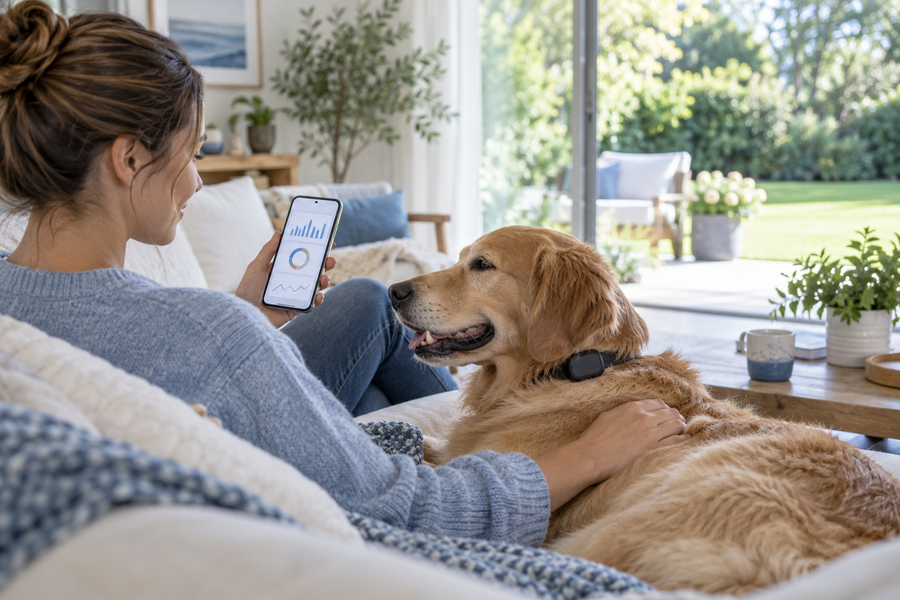
The best virtual dog fence for renters should match the property, the dog and the lease without requiring permanent construction. A landlord may prohibit digging, a vacation property may not allow modifications, and a renter may not want to invest thousands of dollars in a fence that stays behind after the lease ends.
A portable boundary can help, but “wireless” does not automatically mean appropriate. A GPS fence has no physical barrier, a radio fence may be limited to a fixed shape, and a lightweight exercise pen may suit only certain dogs and supervised situations.
Quick answer: For a renter with a compatible medium-to-large dog and at least 0.5 acre of usable space, SATELLAI Collar is the strongest SATELLAI option because its custom-shaped GPS fences require no buried wire or base station. For apartments, small yards or dogs that only need exit notifications, SATELLAI Collar Go is more suitable as a tracker with virtual-boundary alerts—not as active containment. Halo and SpotOn are established portable GPS-fence alternatives, while exercise pens and long lines remain safer choices for some small spaces.
Editorial disclosure: SATELLAI publishes this article and sells two products discussed below. Product positioning is based on public specifications reviewed in September 2026, not undisclosed hands-on testing. Always confirm lease rules, regional feature availability and the current product manual.
How We Evaluated Temporary Boundary Options
We compared installation requirements, minimum usable area, portability, collar fit, connected-feature costs and what happens when a dog reaches or crosses the boundary. Because a rental property can be small, shared or close to hazards, we also included physical and supervised alternatives when an electronic boundary would not provide an adequate safety margin.
Best Temporary Boundary Options at a Glance
| Option | Best for | Permanent installation | Important limitation |
|---|---|---|---|
| SATELLAI Collar | Custom GPS boundaries on larger temporary properties | None | Intended for areas of at least 0.5 acre and compatible medium-to-large dogs |
| Halo Collar 5 | Portable GPS fencing with guided training | None | Requires proper fit, training and ongoing charging |
| SpotOn GPS Fence | Dedicated GPS fencing for open properties | None | Higher upfront cost; fit and minimum-property guidance matter |
| SATELLAI Collar Go | Escape alerts at apartments and smaller homes | None | Alerts the owner; it does not automatically correct or contain the dog |
| Portable exercise pen | Small supervised outdoor setups | None or minimal | Can be climbed, moved or tipped by some dogs |
| Long line | Supervised exercise and recall practice | None | Requires an attentive handler and safe handling technique |
1. SATELLAI Collar — Best for Custom Rental-Property Boundaries
SATELLAI Collar is designed for larger outdoor areas where an owner wants to draw a custom boundary instead of installing wire. It supports unlimited custom-shaped virtual fences, no-go zones, live GPS tracking, escape alerts, configurable boundary feedback and Doggie-Talkie.
That combination is relevant to renters because the digital boundary can be changed or removed in the app. Nothing must remain in the ground when the household moves.
However, the product is not intended for every rental. Its virtual-fence area should be at least 0.5 acre, and the integrated collar is designed for compatible medium-to-large dogs with necks of approximately 14–30 inches. A narrow townhouse yard beside a road is not automatically a safe GPS-fence location simply because the app can draw a line there.
2. Halo Collar 5 — Best for a Guided Portable System
Halo emphasizes portable GPS fences, on-collar boundary processing and a structured training program. Its current guidance recommends a minimum fence size of 30 × 30 feet, with part of that space used by the warning area. It can make sense for renters who want a mature training ecosystem and expect to recreate fences at several locations.
Compare current minimum fence dimensions, collar fit, subscription requirements and how the system behaves without cellular service. Manufacturer accuracy claims are not a substitute for testing the exact property.
3. SpotOn GPS Fence — Best Dedicated Large-Area Alternative
SpotOn focuses primarily on GPS containment and can store multiple custom fences. Current setup guidance says fences should be at least 80 feet wide at their narrowest point and recommends additional distance from hazards. It is relevant for renters using large open vacation properties, rural leases or seasonal homes where a physical fence is impractical.
Its higher purchase price means it is best considered when fencing—not broader health or lifestyle monitoring—is the main goal. Owners should also check whether live tracking and escape alerts require an optional plan.
4. SATELLAI Collar Go — Best for Alerts in Smaller Rentals
SATELLAI Collar Go supports unlimited customizable virtual boundaries without the 0.5-acre minimum associated with the full Collar. When the dog leaves a designated area, the owner receives an app alert and can open Live Tracking.
This is location awareness, not active containment. Collar Go does not automatically apply sound, vibration or static feedback when a dog crosses the boundary. It is the more suitable SATELLAI option for apartments, city neighborhoods, daily walks and temporary stays where the owner primarily wants an early warning.
Collar Go is intended for dogs weighing at least 8.8 lb. The U.S. device weighs about 1.7 oz / 47 g and fits compatible collars or harness neck straps.
5. Portable Exercise Pens — Best Physical Option for Small Areas
A securely anchored exercise pen creates a visible physical barrier and may be more appropriate than GPS in a compact patio or campsite. Choose height, panel strength and spacing for the individual dog, and never assume a lightweight pen can contain a climber, jumper or determined digger.
Rental permission may still be required if stakes enter the ground. Use the pen only on a stable surface and supervise the dog.
6. Long Lines — Best for Supervised Temporary Freedom
A properly handled long line gives a dog more movement while maintaining a physical connection to the handler. It is often the safest temporary option near hazards or during early boundary training.
Attach a long line to an appropriate harness rather than allowing it to tighten around the neck at speed. Avoid tangling, roads, crowded dog parks and unattended tethering.
Why GPS Fences Appeal to Renters
No buried wire
The owner creates a boundary in an app instead of trenching the yard. This avoids one of the most common conflicts with leases and landscaping rules.
Boundaries can move
A saved home fence can be replaced or supplemented with a fence at another compatible property. This is useful for relocations, extended stays and repeat visits.
Custom shapes
GPS systems can often follow irregular property shapes more closely than circular radio fences. Even so, leave a generous buffer inside legal property lines and far away from roads, pools, cliffs or neighboring land.
Location recovery after a crossing
A system that also provides live GPS can help the owner respond if the dog leaves the selected area. A conventional physical fence cannot report where the dog went after a gate is left open.
Read how a GPS dog fence works before deciding which technology fits your property.
What Renters Must Check Before Buying
1. Your lease and local rules
“No installation” does not mean “no permission required.” Review restrictions on outdoor pet use, unattended dogs, stakes, flags, common areas and noise. A digital boundary does not grant access to land outside the lease.
2. Available safe space
Measure the usable area after removing hazards and safety buffers. The advertised property size is not the same as the safe fenceable area.
3. GPS conditions
Buildings, trees, bridges, indoor use and reflected satellite signals can reduce positioning accuracy. GPS.gov documents these common limitations. Test the entire boundary at different times before normal use.
4. The dog—not just the property
Consider neck size, body weight, temperament, recall, reactivity and history of chasing or escaping. A fearful new dog or a dog that bolts through cues may need physical containment and direct supervision.
5. Internet and cellular coverage
GPS calculates location; a mobile network commonly sends that location and alerts to the app. Check coverage at every temporary property and understand which boundary functions continue offline.
6. Subscription and charging
Connected features may require a telecom plan. Battery life also changes with tracking mode, signal quality and use. Review the total cost and build charging into the travel routine.
For a product-level explanation, see GPS tracker vs. virtual fence.
How to Introduce a Temporary Boundary
- Walk the property without the dog and identify roads, water, wildlife routes and other hazards.
- Draw the boundary well inside the safe area.
- Test location behavior while carrying the collar or walking the dog on leash.
- Add visual boundary flags where practical.
- Introduce the dog to the boundary on leash in short sessions.
- Pair the warning cue with turning back toward the safe area and a reward.
- Increase distraction gradually rather than testing with the hardest trigger first.
- Continue supervising until the dog shows a consistent response.

The AKC’s recall guidance emphasizes that returning on cue must be deliberately trained. A voice cue, tone or virtual boundary cannot create reliable recall by itself.
When a Virtual Fence Is the Wrong Choice
Do not rely on a GPS fence as the main boundary when:
- The safe area is immediately beside fast traffic, deep water or a cliff.
- The property is too small to leave an adequate GPS buffer.
- Signal tests are inconsistent around buildings or dense cover.
- The dog shows severe fear, panic or repeated breakthrough behavior.
- The rental has shared outdoor space where other animals or people can enter.
- The lease or local rules prohibit the planned use.
A virtual fence cannot keep wildlife, loose dogs or strangers out. It also cannot physically stop your dog from crossing the line.
Frequently Asked Questions
Can renters install a wireless dog fence?
Often, but permission depends on the lease and technology. A GPS fence requires no buried wire, yet outdoor-use rules and training flags may still be regulated. Ask the property owner when the agreement is unclear.
Will a GPS dog fence work at a vacation rental?
It may work on a sufficiently large property with supported GPS and cellular conditions. Recreate and test the boundary at every new location; never assume a fence saved elsewhere transfers safely.
What is the best SATELLAI product for an apartment?
Collar Go is generally the better fit because it offers lightweight tracking, virtual-boundary exit alerts and no minimum boundary size. Its boundary is an awareness tool, not active containment.
Can a virtual dog fence replace a physical fence?
It can support some routines where physical fencing is impractical, but it does not create a physical barrier or guarantee containment. Use supervision, a leash where required, identification and training as additional layers.
Do temporary GPS fences need Wi-Fi?
Not necessarily for satellite positioning, but connected app features generally need supported cellular or network access. Offline boundary behavior differs by product, so confirm it before traveling.
Final Verdict
For renters with compatible dogs and large temporary properties, SATELLAI Collar offers flexible custom-shaped boundaries without digging or wire. Halo and SpotOn are established dedicated alternatives. For apartments, small homes or owners who mainly need an alert when a dog leaves an area, Collar Go is the more appropriate SATELLAI choice.
The best temporary boundary is not always electronic. In small or hazardous spaces, a secure exercise pen, long line or ordinary leash may provide the clearer safety margin. Choose the method that fits the dog, the property and the lease—not simply the option marketed as wireless.
External Sources
- GPS.gov, GPS Accuracy.
- American Kennel Club, How to Train Your Dog to Come When Called.