Quick Answer
Dogs often follow their owners because people are an important source of safety, attention, food, activity, and social connection. Some dogs are naturally more people-oriented, while others learn that staying close often leads to something rewarding. Following you around the house is usually normal. It becomes more concerning when your dog cannot relax without you, shows distress when you leave, or suddenly becomes much more clingy than usual.
You walk into the kitchen and your dog follows. You move to your desk and they settle beside your chair. You head toward the bathroom and suddenly you have a four-legged shadow waiting outside the door.
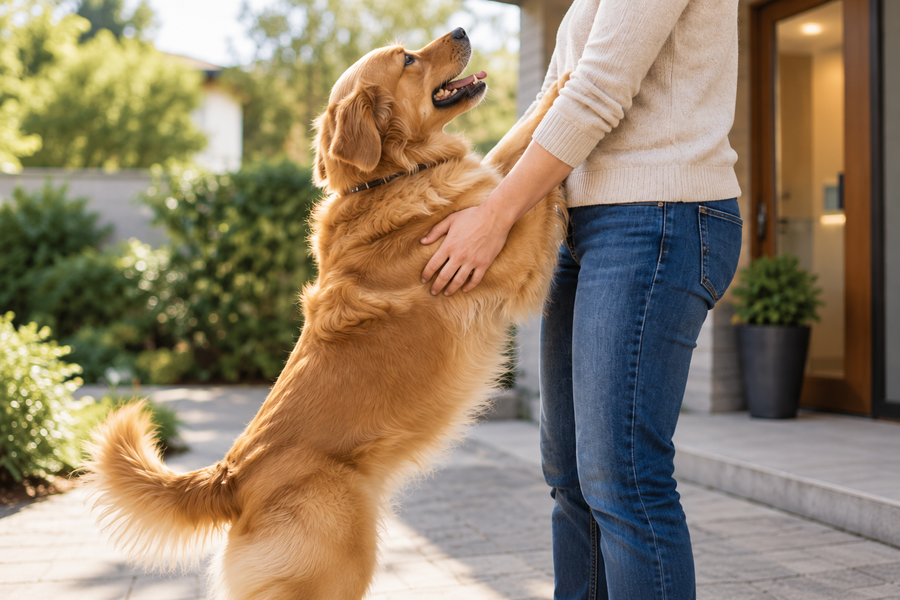
Dogs that stay especially close to their owners are sometimes called “Velcro dogs.” The nickname can make the behavior sound unusual, but in many cases there is nothing wrong with it. Dogs are highly attentive to the people they live with, and following you can become part of their everyday routine.
The more useful question is not simply, “Why does my dog follow me?” It is “What happens when my dog cannot follow me?” A dog that prefers your company but can still relax independently is very different from a dog that becomes distressed whenever you disappear.
Why Does My Dog Follow Me From Room to Room?
There is rarely one single explanation. Social attachment, learning history, temperament, daily routine, and the dog's environment can all contribute.
1. Your Dog Likes Being Near You
Dogs form strong social relationships with familiar people. You provide food, play, walks, comfort, access to interesting places, and a predictable part of your dog's daily life. Staying close therefore makes sense even when your dog is not actively asking for anything.
A dog that follows you into another room and then simply lies down nearby may be showing ordinary social attachment rather than dependency.
2. You Frequently Lead to Something Rewarding
Dogs are excellent at noticing patterns. Think about what often happens after you stand up: you might walk toward the food cabinet, pick up a leash, open the backyard door, grab a toy, or head somewhere interesting.
After enough repetition, your movement itself becomes worth paying attention to. Your dog may follow because experience has taught them that there is a reasonable chance something good is about to happen.
This also explains why some dogs appear almost instantly when someone walks toward the kitchen but remain asleep when that same person moves around elsewhere in the house.
3. Some Dogs Are Naturally More People-Focused
Breed background can influence behavior, although it never determines exactly how an individual dog will act. Dogs developed to work closely with humans may pay particularly close attention to where people are and what they are doing.
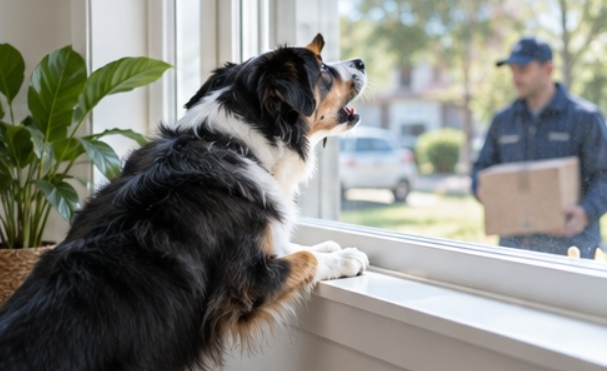
- Herding breeds: Dogs such as Border Collies and Australian Shepherds were selected for close responsiveness to handlers and movement.
- Working breeds: Many working dogs have a history of cooperating closely with people.
- Companion breeds: Dogs bred primarily for companionship may strongly prefer being physically close to their family.
These are tendencies, not rules. Personality, early experiences, household routines, training, age, and environment can matter just as much as breed.
4. Your Dog May Be Bored
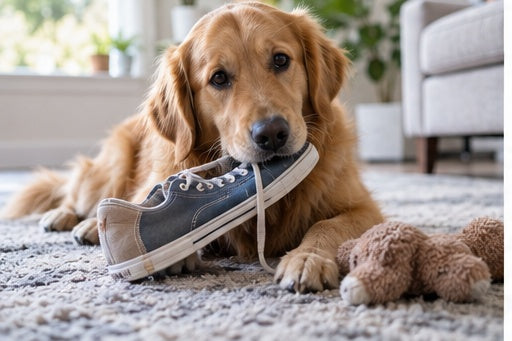
In a quiet home, you may simply be the most interesting thing happening. If a dog has limited opportunities to sniff, explore, play, chew, solve problems, or interact with the environment, following a person from room to room can become an easy source of stimulation.
Adding purposeful enrichment can give your dog more choices throughout the day. Our guide to mental stimulation activities for dogs covers simple ways to make everyday life more engaging.
5. Your Routine Has Changed
Dogs often notice changes that humans consider minor. A new work schedule, moving home, travel, visitors, construction noise, a new baby, or another pet joining the household can temporarily make some dogs stay closer to familiar people.
Increased following during a transition does not automatically indicate anxiety. Look at the dog's overall ability to eat, sleep, play, explore, and settle normally.
Is a Velcro Dog the Same as a Dog With Separation Anxiety?
No. A dog can follow you everywhere and still be perfectly comfortable when left alone.
This distinction is important because following behavior is easy to notice while you are home, while separation-related distress occurs when access to an important person is reduced or removed.

| Normal Close-Following Behavior | Possible Separation-Related Distress |
|---|---|
| Relaxed while staying near you | Pacing, panting, drooling, or persistent agitation when separated |
| Can sleep or rest independently | Unable to settle after you leave |
| Sometimes chooses food, toys, or sleep instead of following | Repeated barking, whining, or howling during separation |
| Handles ordinary alone time without obvious distress | Scratching, digging, or damaging doors and other exit areas |
Veterinary behavior resources from VCA Animal Hospitals describe signs such as vocalization, destructive behavior, pacing, salivation, restlessness, and other distress associated with separation. In other words, being your shadow while you are home does not by itself establish that a dog has separation anxiety.
If your dog struggles when left alone, our guide to dog separation anxiety and ways to manage it covers the issue in greater depth.
How Can You Tell Whether Your Dog Is Just Attached or Actually Distressed?
Pay attention to what happens after a door closes or you leave the house rather than focusing only on how often your dog follows you.
A relaxed dog may watch you leave, move to a favorite sleeping spot, chew a toy, look out a window, or settle down within a short period. A dog experiencing separation-related distress may remain highly aroused and have difficulty returning to a normal resting state.
If you are unsure what happens while you are away, recording your dog can provide useful information. Video can help you see whether your dog settles normally or whether distress behaviors continue after your departure. VCA veterinary behavior guidance also notes that observing or recording behavior while the dog is alone can help distinguish separation-related problems from behaviors that occur for other reasons.
Why Is My Dog Suddenly Following Me Everywhere?
If your dog has always been close to you, that may simply be part of their personality. A sudden change deserves more attention.
Behavior is part of a dog's overall health picture, and increased clinginess does not always have a purely behavioral explanation.
Changes in Vision or Hearing
Senior dogs with reduced vision or hearing may stay closer to familiar people because proximity helps them navigate an environment that has become less predictable.
Pain or Physical Discomfort
Dogs do not all respond to discomfort in the same way. Some withdraw, while others seek more contact or behave differently around family members. If clinginess appears alongside changes in appetite, sleep, movement, posture, or activity, a veterinary check is sensible.
Age-Related Cognitive Changes
Older dogs can experience changes in orientation, sleep patterns, activity, and social behavior. Increased wandering, anxiety, confusion, or changes in interaction may sometimes occur as part of broader age-related cognitive changes.
The American Veterinary Medical Association recommends paying attention to behavioral changes in senior pets because changes in behavior can sometimes accompany health or cognitive issues.
Stressful or Unfamiliar Changes
Moving, houseguests, a changed schedule, a new pet, or unusual household noise can also make some dogs seek more reassurance from familiar people.
A temporary increase in closeness during a major change is not necessarily a problem. The pattern becomes more important if the behavior persists, gets progressively stronger, or appears with other signs of distress or illness.
How to Help a Velcro Dog Become More Independent
If your dog is happy and relaxed, there is no need to turn normal affection into a training problem. The goal is not to make your dog care less about you. It is to make sure they can also feel comfortable when you are not directly beside them.

Create a Comfortable Place to Relax
Give your dog a bed, mat, or quiet resting area that is genuinely comfortable and located somewhere they already enjoy spending time.
Reward your dog when they choose to settle there. Over time, the area can become valuable in its own right rather than simply being somewhere the dog is sent away from you.
Notice and Reward Independent Behavior
Owners often reward attention-seeking without noticing moments of independence. If your dog decides to lie across the room, stay on their bed while you move around, or become absorbed in a toy, those are useful behaviors to reinforce too.
A quiet piece of food, gentle praise, or access to an enrichment activity can help independent choices become more rewarding.
Give Your Dog Something Else to Do
Sniffing walks, food puzzles, short training sessions, safe chews, play, and opportunities to explore can reduce the need to rely on your movements as the main source of entertainment.
Mental enrichment is especially useful for dogs that seem to follow simply because nothing else in the environment is holding their attention.
Practice Short, Comfortable Separations
For a dog that is relaxed but accustomed to following everywhere, start very small. Ask them to settle with something enjoyable, briefly step away, and return while they are still comfortable.
Increase distance or duration gradually rather than suddenly expecting a dog that follows you all day to remain alone for a long period.
If very brief separation already causes intense distress, the issue should not be treated as ordinary clinginess. Consider discussing the behavior with a veterinarian or appropriately qualified behavior professional.
Should You Stop Your Dog From Following You?
Usually, no.
If your dog follows you because they enjoy your company but can still rest alone, engage with toys, explore independently, and cope normally when you leave, there is little reason to discourage the behavior.
Close attachment becomes more important to address when the dog appears unable to function comfortably without constant access to you or when the behavior changes suddenly.
A healthy bond does not require constant physical proximity. Ideally, your dog should feel safe both beside you and during ordinary periods of independence.
Frequently Asked Questions
Why does my dog follow me into the bathroom?
In most cases, your dog is simply continuing the same habit they show elsewhere in the house. If they are used to having access to you, a closed bathroom door can also make them more curious about where you went.
Does my dog follow me everywhere because they love me?
Your relationship is probably part of the explanation, but following behavior is not a simple measurement of love. Routine, reinforcement, curiosity, temperament, boredom, and anticipation of food or activities can all contribute.
Is it unhealthy for my dog to follow me everywhere?
Not necessarily. Following is usually harmless if your dog remains relaxed and can handle ordinary periods of independence. The behavior deserves more attention when separation consistently causes distress.
Why is my older dog suddenly following me?
Senior dogs may stay closer because of changes in hearing, vision, comfort, confidence, or cognitive function. If the change is new or accompanied by other symptoms, talk with your veterinarian rather than assuming it is purely behavioral.
Can following me everywhere cause separation anxiety?
Following you frequently does not mean your dog will develop separation anxiety. The more useful indicator is whether your dog can remain relaxed when you are unavailable. Encouraging comfortable independent rest can still be a useful everyday skill.
How do I teach my dog not to follow me into every room?
Start by making another resting area rewarding. Give your dog something enjoyable there, reward them for remaining settled while you move a short distance away, and gradually increase the difficulty. Avoid suddenly isolating a dog that becomes distressed when separated.