Quick answer: Dogs pull because pulling often gets them where they want to go. Teach that a loose leash makes walks continue, reward check-ins and position near you, and practice first where distractions are low. Use secure, comfortable equipment and avoid leash corrections or painful tools.
Leash pulling is one of the most common walking challenges. It is also understandable: dogs naturally want to move toward smells, people, dogs, and interesting places faster than we do. The solution is not to make walks joyless. It is to show your dog that staying within the leash’s slack is the efficient way to reach good things.
Loose-leash walking does not mean a formal heel. Your dog can sniff and explore, as long as the leash is not tight and both of you can move safely together.
Step 1: Choose comfortable, secure equipment
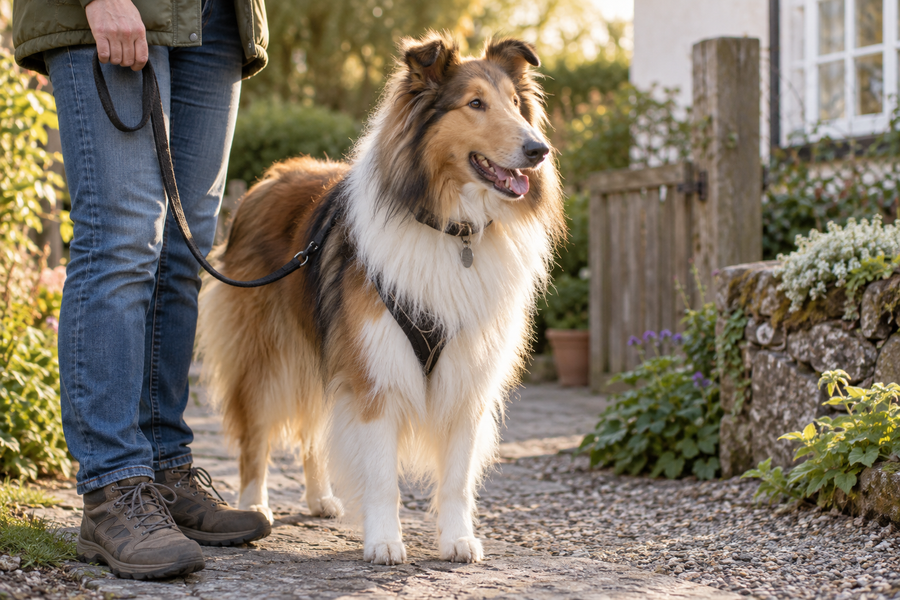
Choose a well-fitted harness or flat collar appropriate for your dog and a standard fixed-length leash. A harness that lets the shoulders move comfortably is often a practical choice for training. Check the fit regularly, especially for growing puppies.
Avoid equipment intended to control behavior through pain, choking, or intimidation. Such equipment can create discomfort and does not teach your dog where you want them to walk. If pulling is strong enough to make walks unsafe, seek help from a qualified reward-based trainer who can assess your dog and equipment in person.
Retractable leashes can make early loose-leash practice harder because pulling often produces more distance and access. Build the skill first on a regular leash in a low-risk setting.
For background on equipment tradeoffs, see the AKC guide to retractable-leash safety. If your dog also wears a tracker, review SATELLAI's collar fit and safety guide; a tracker does not teach loose-leash walking.
Step 2: Teach the starting position indoors
Before asking for a neighborhood walk, show your dog that being near you is rewarding.
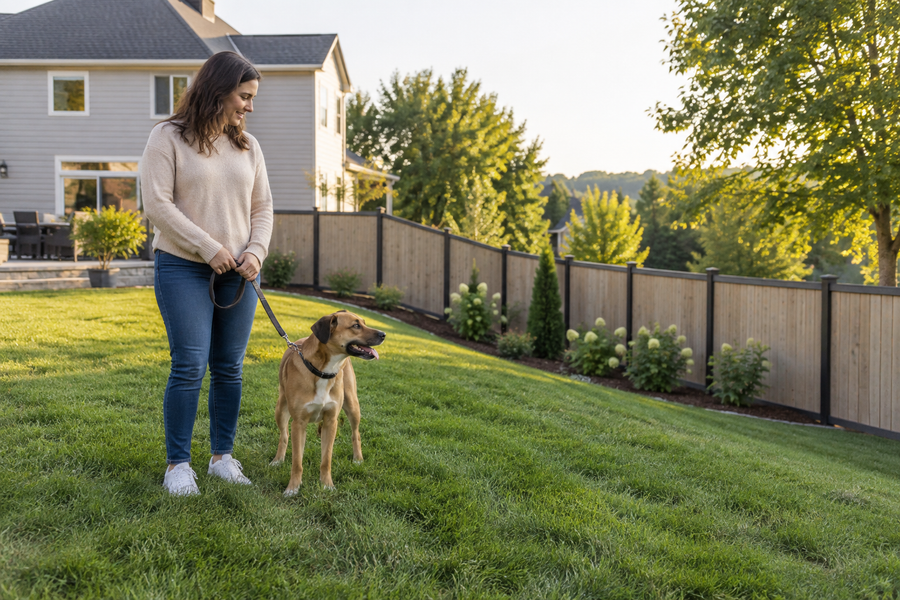
- Stand still with your dog on leash in a quiet room or yard.
- When they look at you or move toward your side, mark it with “yes” and give a treat near your leg.
- Take one step. If the leash stays slack, reward again near your leg.
- Gradually work up to a few steps, then short stretches of walking.
Delivering the reward beside your leg helps make that area valuable. You do not need a perfect position; choose the side that is comfortable and keep your expectations realistic.
The AKC leash-training guide distinguishes everyday loose-leash walking from a formal heel. Keep your goal practical: a comfortable leash and a dog who can respond to you.
Step 3: Reward the loose leash before pulling starts
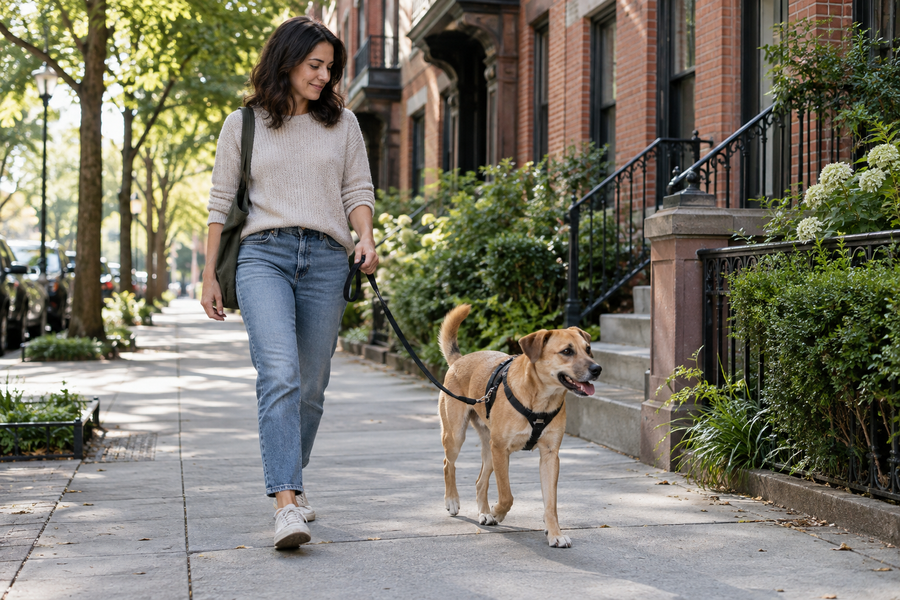
On an actual walk, keep rewards frequent at first. Notice and reward your dog for checking in, choosing to walk near you, or responding to a gentle direction change before the leash tightens.
Sniffing is a powerful reward. When the leash is loose, say a release cue such as “go sniff” and let your dog investigate. This teaches that walking with you is not the opposite of exploration—it is how exploration happens.
Step 4: Pause or reset when the leash gets tight
The simplest response is to stop moving. Do not pull back or scold. Allow a brief opportunity for your dog to turn, step back, or create slack, then mark and reward that choice before walking again. If they remain stuck at the end, create distance from the distraction and reset with an easy attention cue. Do not turn the pause into a prolonged standoff.
Some dogs learn more quickly with a cheerful U-turn: say a cue such as “this way,” turn gently, and reward when your dog follows. The goal is not to drag them away from every interesting thing, but to make paying attention to your movement worthwhile.
At first, you may stop often. Practice in a quiet location and keep sessions brief so neither of you gets frustrated. Consistency matters: if pulling sometimes reaches the exciting destination, it will remain rewarding.
Step 5: Add distractions at a manageable distance
If your dog can walk beautifully in the hallway but pulls toward every dog outside, they are not being stubborn—the outdoor setting is harder. Create more distance from triggers, use better rewards, and practice at quieter times of day.
Do not expect a dog to learn close to something that makes them overexcited or worried. If they are barking, lunging, frozen, or unable to take treats, calmly move away. A skilled trainer can help build a plan for reactivity or intense pulling.
Step 6: Build sniff breaks into the walk
Many dogs pull because the walk moves too quickly past the information they want to investigate. Build short sniff breaks into the route. You can alternate between “with me” for a few steps and “go sniff” for a release.
This approach makes the walk more cooperative. Your dog learns when to stay close and when they have freedom, rather than feeling they must pull to reach every scent.
Troubleshooting the most common walking problems
| Problem | What may be maintaining it | Your next adjustment |
|---|---|---|
| Pulling starts as soon as you leave | The route begins with too much excitement | Practice a few easy steps near home, then offer a sniff break |
| Pulling happens toward one person | Reaching that person has been rewarding | Arrange greetings only after a calm approach |
| Your dog pulls, returns for a treat, then pulls again | You may be rewarding only the recovery | Reward several loose steps before tension develops |
| Your dog stops and refuses to move | Fear, fatigue, discomfort, or interest in a scent may be involved | Check the context; avoid dragging |
| Barking and lunging increase | The distraction may be too close | Create distance and get individualized help if needed |
For more on managing people and other distractions, read why dogs lose focus outside. If your dog seems worried rather than merely eager, check the body-language signs of stress.
What counts as progress?
Choose a short, familiar stretch and note how often the leash tightens. Progress might mean a few more relaxed steps, a quicker turn toward you, or an easier recovery after a distraction. Compare similar settings rather than comparing a quiet yard with a crowded pavement.
Use short training stretches within a walk, with appropriate sniffing and toilet breaks between them. The AKC home-and-backyard exercises provide additional practice ideas.
Common mistakes that slow progress
Avoid long, difficult walks before the skill is ready. A few successful minutes in a calm area can be more useful than thirty minutes of constant tension. Do not repeat a cue while your dog is already pulling; change direction or create space instead.
Make sure everyone who walks the dog uses the same basic rule: loose leash moves forward, tight leash pauses. Inconsistent handling can make the pattern unclear.
Finally, rule out discomfort if pulling is new or your dog resists the harness, limps, coughs, or seems painful. A veterinarian can help assess sudden changes in movement or behavior.
Frequently asked questions
How long does loose-leash training take?
It varies. Many dogs improve with consistent short practice, but changing a habit that has been rewarded for months can take time. Focus on gradual progress: fewer tight-leash moments, quicker check-ins, and calmer recovery from distractions.
Should I stop every time my dog pulls?
Stopping is a useful foundation, especially in easy environments. When you need to leave a difficult situation safely, turn and create distance instead. Training should not trap you in place around a trigger.
Why does my dog pull more at the beginning of a walk?
Dogs are often excited at the start and eager to reach familiar smells. Try a minute of attention games or sniffing near home before heading out, then reward several early moments of slack leash.
Editorial note
This guide provides general training information. Seek veterinary care for sudden pain or mobility changes, and obtain qualified reward-based help when pulling, lunging, or reactivity makes walks unsafe.