A confident dog can sometimes seem nervous almost overnight. They may suddenly refuse to enter a room, jump at ordinary sounds, hide more often, or avoid people and places they used to handle without a problem.
It can feel as though the fear came out of nowhere, but there is usually a trigger or contributing factor. A loud sound may have happened while you were in another room. Your dog may have slipped on the floor, been startled outside, or started feeling discomfort that changes how they move through familiar spaces.
The best first step is not to push your dog through the fear. Instead, slow things down, look for what changed, and pay attention to patterns.
Why Is My Dog Suddenly Scared of Everything?
A dog may suddenly seem afraid of everything because of a frightening experience, a new environmental trigger, noise sensitivity, physical discomfort, illness, changes in vision or hearing, or increased sensitivity with age.
If the behavior is mild and tied to an obvious event, giving your dog time, distance, and a predictable routine may help. If the fear appears suddenly without a clear reason, becomes worse, or comes with changes in appetite, movement, sleep, or normal behavior, contact your veterinarian.
What Sudden Fear Can Look Like
Fear is not always dramatic. Some dogs shake or hide, while others show smaller changes that are easy to miss. A fearful dog may hesitate before entering certain rooms, freeze instead of moving forward, hide behind furniture, startle at familiar sounds, become unusually clingy, pace, refuse food, pant without heat or exercise, or suddenly bark at things they used to ignore.
One sign by itself does not prove that a dog is afraid. Context matters. The most useful clue is often a noticeable change from your dog's normal behavior. If you are seeing several stress-related behaviors together, our guide to signs of stress in dogs can help you read the broader pattern.
1. Something May Have Frightened Your Dog
Dogs can form strong associations after a stressful experience. Something may have fallen nearby, another dog may have rushed toward them, fireworks may have gone off unexpectedly, or your dog may have slipped on a hard floor.
The event does not have to seem serious to you. A dog frightened in one place may later avoid the entire area. For example, a dog that slips in the kitchen may begin hesitating at the kitchen doorway. A dog startled on one block during a walk may resist taking that route again.
If the fear started suddenly, think back to what happened shortly before the behavior changed.
2. A Sound You Barely Notice May Be the Trigger
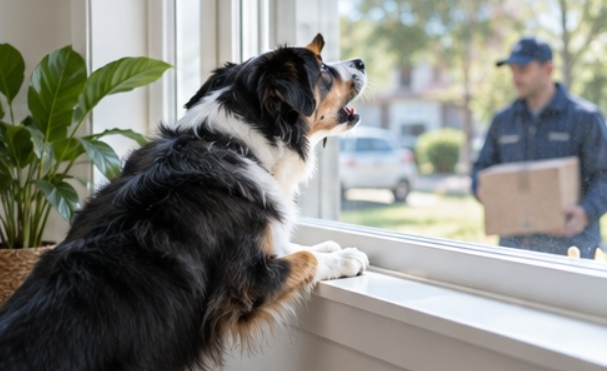
Dogs often notice environmental sounds that people tune out. Construction, alarms, delivery vehicles, appliances, electronic beeps, thunderstorms, fireworks, or a neighbor's renovation can all become meaningful triggers.

If your dog seems fearful only at certain times or in one part of the house, stop and listen. Repeated patterns can reveal a trigger that was easy to overlook at first.
3. The Environment May Have Changed
Dogs often do best when life feels predictable. Moving house is an obvious change, but smaller disruptions can matter too. New furniture, visitors, another pet, a baby, a different work schedule, rearranged rooms, unfamiliar flooring, travel, boarding, or a new walking route may all affect how secure a dog feels.
If your dog is hesitant around something new, let them investigate at their own pace rather than pulling or pushing them closer.
4. Pain Can Look Like Fear
Sudden fear is not always purely behavioral. A dog may seem afraid of stairs when climbing hurts. They may avoid the car because jumping into it is uncomfortable, or pull away from touch because part of the body is sore.
Watch for stiffness, limping, slower movement, reluctance to jump, sensitivity to touch, reduced appetite, unusual tiredness, restlessness, or difficulty getting comfortable. A sudden behavioral change should not automatically be treated as a training problem.
5. Vision or Hearing Changes Can Affect Confidence
A dog that cannot see or hear as clearly may become easier to startle. Someone approaching from the side may seem to appear suddenly, a dim hallway may become harder to navigate, or a noise may become difficult to locate.
This is particularly worth considering in older dogs. If a senior dog becomes noticeably more hesitant, confused, or easily startled, discuss the change with your veterinarian.
6. One Fear Can Spread to Similar Situations
Dogs can begin reacting not only to the original trigger but also to things that resemble it. A dog frightened by a large truck may later become uncomfortable around buses or construction vehicles. A dog startled by one visitor may become cautious around unfamiliar people more generally.
This is one reason forced exposure can backfire. Repeatedly placing a frightened dog in an overwhelming situation does not necessarily teach them that the situation is safe.
What Should You Do When Your Dog Suddenly Gets Scared?
Increase Distance
If you know what is causing the reaction, move farther away. Cross the street, leave the room, close the curtains, or pause the interaction. Distance can quickly lower pressure for many dogs.

Do Not Force Them Toward the Trigger
Dragging or pushing a frightened dog toward something can make the experience more stressful. If your dog wants to move away, allow that whenever it is safe.
Keep the Routine Predictable
Regular meals, walks, rest, play, and bedtime routines can reduce unnecessary uncertainty while you work out what is happening.
Provide a Quiet Retreat
Give your dog access to a calm resting area where they will not be followed or forced to interact. A good safe space should be voluntary. For setup ideas, see how to create a safe space for your dog at home.
Track the Pattern Instead of Guessing
If the trigger is unclear, keep notes for several days. Record when and where the reaction happened, what occurred immediately beforehand, what your dog did, how long the response lasted, whether they would take food, and what helped them settle.
For example, “refused to enter the hallway after the smoke detector beeped and stayed behind the sofa for 15 minutes” is much more useful than “my dog seemed anxious.” Specific observations can help both you and your veterinarian identify a pattern.
Should You Comfort a Scared Dog?
If your dog seeks you out and relaxes with quiet company or gentle contact, you can offer reassurance. You do not need to deliberately ignore a frightened dog.
Follow your dog's response. Some dogs want closeness, while others prefer space. Avoid restraining, hugging, or cornering a dog that is trying to move away.
Can Training Help?
Training can help when a trigger is predictable, but the goal should be to change how the dog feels about the situation rather than simply suppress visible behavior. Gradual desensitization and counterconditioning typically start with a low-intensity version of the trigger that the dog can tolerate.
If your dog is shaking, trying to escape, refusing food, or unable to respond normally, they are likely too overwhelmed for useful training at that moment. Focus on safety and recovery first.
When Should You Call a Veterinarian?
Talk with your veterinarian if the fear starts suddenly without an obvious explanation, becomes progressively worse, affects eating or sleep, occurs alongside pain or physical symptoms, causes panic or escape attempts, or appears in an older dog together with confusion or sensory changes.
Health problems, pain, medication effects, and sensory changes can all influence behavior. A behavior article can help you observe patterns, but it cannot diagnose the cause.
Frequently Asked Questions
Why is my dog suddenly scared for no reason?
There may be a reason you cannot immediately see. Your dog could be reacting to a sound, a frightening experience, physical discomfort, a routine change, or changes in vision or hearing.
Why is my dog suddenly afraid of a room?
Consider whether something recently happened there. Loud sounds, slippery floors, unfamiliar smells, rearranged furniture, or a frightening incident can create a negative association with a particular room.
Can dogs suddenly develop fears?
Yes. New fears can develop after stressful experiences or changes in a dog's environment, health, sensory abilities, or routine.
Should I force my dog to face the fear?
No. Forced exposure can increase distress. Gradual exposure works best when the dog remains calm enough to eat, think, and respond normally.
Will my dog's fear go away on its own?
Some mild fears improve as the dog adjusts or the trigger disappears. Persistent, worsening, or unexplained fear deserves closer veterinary or behavioral attention.
Final Takeaway
When a dog suddenly seems scared of everything, the most useful question is “What changed?” Look for patterns, give your dog more distance when they need it, keep daily life predictable, and avoid forcing interaction with things they fear.
If the change is sudden, intense, or accompanied by physical symptoms, involve your veterinarian. Understanding the reason behind the fear gives you a much better starting point for helping your dog feel secure again.