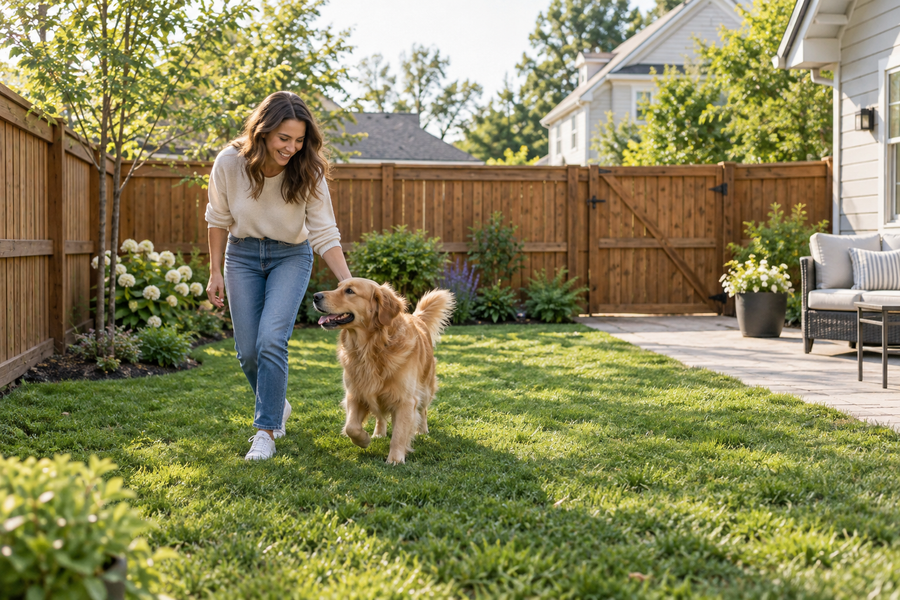
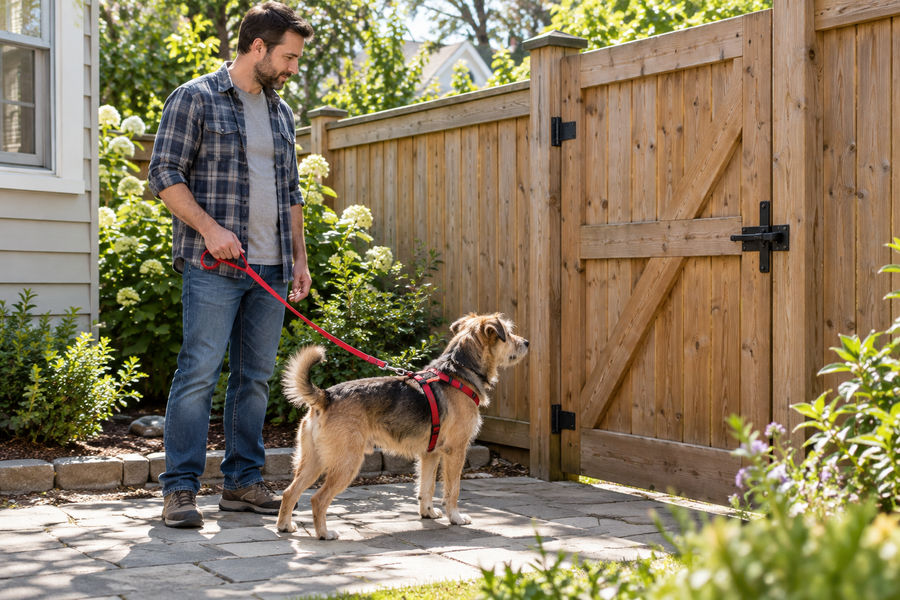
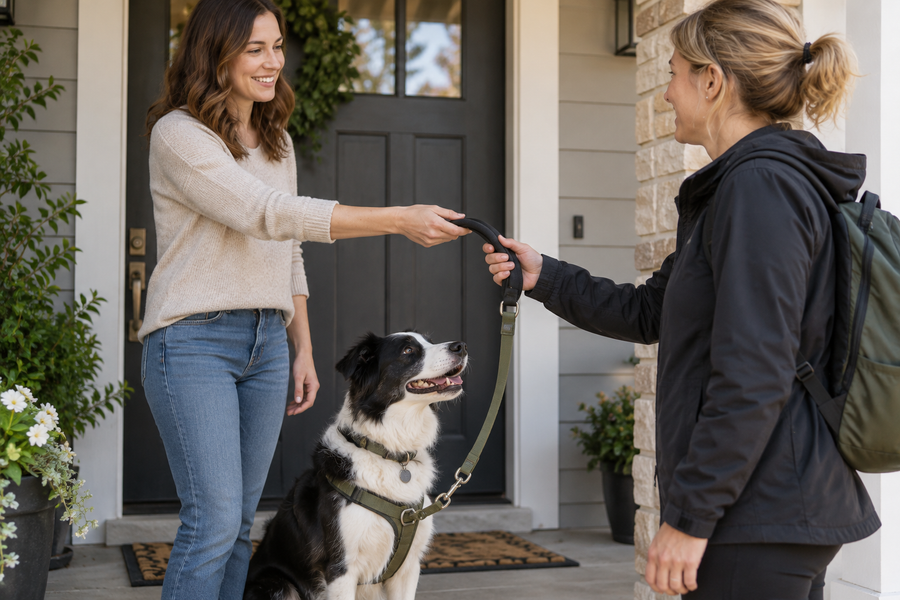
A business trip, family emergency, vacation, medical stay, or unexpected work assignment can take you away from home for a night or several days. When that happens, deciding what to do with your dog requires more than filling a food bowl and asking a neighbor to “check in when possible.”
If you will be away overnight or longer, arrange for a responsible adult to provide reliable, in-person care. An automatic feeder, pet camera, or GPS tracker can support that plan, but none can replace bathroom breaks, fresh water, exercise, companionship, medication, and emergency decisions.
The best arrangement depends on your dog’s age, health, temperament, routine, and comfort around unfamiliar people and animals.
Quick Answer: What Should You Do With Your Dog When You Travel?
For most dogs, the safest options are:
- Ask a trusted friend or relative to stay in your home.
- Hire a professional in-home pet sitter.
- Arrange care in a trusted sitter’s home.
- Use a reputable boarding facility.
- Bring your dog only when the trip and transportation are appropriate for them.
A healthy adult dog that is comfortable at home may do well with an overnight sitter or carefully scheduled visits. A puppy, senior dog, dog requiring medication, or dog with separation anxiety will usually need more frequent or continuous supervision.
Do not leave a dog completely unattended for an overnight or multi-day trip, even if food, water, cameras, and automated devices are available.
Compare Your Dog Care Options
| Care option | Often works well for | Main advantages | Points to check |
|---|---|---|---|
| Trusted friend or relative | Dogs already comfortable with that person | Familiar person, flexible routine, lower stress | Experience, reliability, emergency plan |
| In-home pet sitter | Anxious dogs, seniors, multi-dog homes | Dog remains in a familiar environment | References, insurance, backup coverage |
| Scheduled drop-in visits | Independent adult dogs during limited absences | Less expensive than overnight care | Visit frequency, overnight plan, exercise needs |
| Care in a sitter’s home | Social, adaptable dogs | More supervision and home environment | Other pets, fencing, household rules |
| Boarding facility | Dogs comfortable in structured environments | Professional staff and established routines | Vaccines, staffing, overnight supervision |
| Traveling with you | Dogs that handle transportation and new places well | Dog stays with owner | Travel rules, heat, stress, accommodations |
If you decide to bring your dog, use SATELLAI’s dog travel safety guide to prepare transportation, identification, accommodation, and emergency supplies.
Can You Leave Your Dog Home Alone While You Travel?
There is no single safe alone-time limit for every dog. Age, health, bladder control, training history, medication, anxiety, exercise needs, and previous experience all matter.
Some healthy adult dogs can comfortably spend part of a normal day alone. That does not mean they should be left without human care overnight or for several consecutive days.
Puppies generally need more frequent meals, bathroom trips, supervision, and social contact. Senior dogs may need medication, mobility help, or more frequent bathroom access. Dogs with separation anxiety can become distressed soon after the owner leaves.
A bowl of extra food is not a care plan. Neither is an automatic feeder by itself.
Pet Sitter vs. Dog Boarding: Which Is Better?
Neither option is automatically better for every dog.
An in-home pet sitter may be better when:
- Your dog is nervous in unfamiliar environments.
- Your dog follows a strict medication schedule.
- You have multiple dogs that are easier to care for together.
- Your dog reacts poorly to unfamiliar animals.
- Maintaining the usual home routine is important.
- Your dog has separation anxiety but relaxes around another person.
Boarding may be better when:
- Your dog is social and comfortable in structured environments.
- You prefer staff to be available on-site.
- Your home cannot safely accommodate a sitter.
- The facility can handle your dog’s medication or special needs.
- Your dog has completed a successful trial visit or overnight stay.
When choosing a sitter, ask about experience, references, emergency procedures, insurance, and backup coverage. Humane World for Animals recommends interviewing potential sitters and confirming that they are professional, trustworthy, knowledgeable, and able to respond to emergencies. Review its pet sitter selection guidance before hiring someone.
For boarding, tour the facility before booking. Ask where dogs sleep, how often they are supervised, how staff handle illness or injury, which vaccinations are required, and whether your dog can complete a short trial stay.
Prepare a Written Dog Care Plan
Do not rely on verbal instructions alone. Create a written care plan that the sitter can keep on their phone and in your home.

- Your phone number and travel itinerary
- A backup contact who can make decisions
- Your regular veterinarian’s contact information
- The nearest emergency veterinary clinic
- Feeding times and measured portions
- Medication names, doses, and timing
- Walking and bathroom schedule
- Leash, harness, and handling instructions
- Known fears, triggers, allergies, and behavior concerns
- Where food, medication, cleaning supplies, and carriers are stored
- Microchip number and registration information
- A recent, clear photo of your dog
- Instructions for a missed meal, illness, escape, or emergency
The American Veterinary Medical Association advises owners to provide caregivers with current medical information, vaccination history, medication instructions, veterinary contacts, and authorization for emergency care. Its caregiver planning guide can help you prepare.
Keep Your Dog’s Routine Familiar
Dogs often adjust more easily when meals, walks, bathroom breaks, playtime, and bedtime remain close to their usual schedule.
- Keep feeding times consistent.
- Avoid suddenly changing food.
- Leave familiar bedding and safe toys.
- Explain the dog’s normal walking route.
- Tell the sitter which commands your dog understands.
- Identify situations that cause fear, reactivity, or escape attempts.
- Complete at least one test walk or trial visit.
Avoid creating an emotional departure ritual. A calm, ordinary goodbye is usually easier for the dog than a prolonged farewell.
Can an Automatic Pet Feeder Help?
An automatic pet feeder can help maintain your dog’s regular meal schedule and dispense premeasured portions if a caregiver arrives later than expected.
Wopet automatic dog feeder HV10P is a good choice when you are traveling outside. Wopet HV10P have advantages as below:
Smart App Control & Stable Dual-Band WiFi:The WOPET smart dog feeder with camera supports both 2.4GHz & 5GHz WiFi for a stronger, more reliable connection. Use the WOPET Life app to schedule up to 10 meals per day with precise portion control (1–20 portions per meal), making it an ideal automatic dog feeder for busy pet owners.
1080P HD Camera with Adjustable View & Night Vision:Stay connected with your pet using this dog feeder with camera, featuring 1080P HD video, a 160° wide-angle lens, and 70° vertical rotation. Unlike fixed camera feeders, it allows flexible monitoring with clear night vision, making it perfect for day and night use. Video storage is supported via micro SD card up to 256 GB (4 GB card included).
Low Food Alerts & Privacy Control:The built-in low food sensor sends real-time app alerts when the hopper needs refilling, ensuring your pet always has fresh food. Easily control your dog food dispenser through the WOPET Life app, and turn the camera on or off anytime for enhanced privacy protection.
Two-Way Audio & Personalized Meal Call:Stay connected with your pet wherever you are. The built-in microphone and speaker support real-time two-way audio, allowing you to hear and talk to your pet. You can also record a personalized 10-second meal call that plays automatically during feeding time, helping create a comforting routine.
Multi-User Access & Dual Power Backup:The WOPET 6L WiFi dog feeder with camera supports multiple users, making it easy to share access with family members on both iOS and Android devices. Dual power options—AC adapter and 3 × D-cell batteries—ensure your automatic dog feeder continues working during power outages (batteries not included).
Can a GPS Dog Tracker Help While You Are Away?
A GPS tracker can provide an additional layer of visibility when your dog stays with a sitter, visits a different home, or follows an unfamiliar walking route.

The SATELLAI Collar Go provides live GPS tracking, customizable virtual boundaries, escape alerts, location history, and activity and rest insights. It can help an owner or caregiver respond more quickly if the dog leaves a designated area.
- Fully charge the tracker.
- Confirm that the telecom plan is active.
- Check coverage where the dog will stay and walk.
- Make sure the device fits securely.
- Show the caregiver how escape alerts should be handled.
- Leave the charging cable in an obvious location.
- Keep the dog’s ID tag and microchip registration current.
A GPS tracker does not physically stop a dog from escaping. It cannot replace a secure leash, properly closed doors and gates, direct supervision, or a registered microchip. For an escape-prone dog, review SATELLAI’s guide to preventing and responding to dog escapes.
Activity and rest insights may help identify a change in routine, but they are not a veterinary diagnosis.
Help a Dog With Separation Anxiety
Dogs experiencing separation anxiety may bark, howl, pace, pant, drool, eliminate indoors, destroy doors or windows, refuse food, or attempt to escape.
Do not assume these behaviors are spiteful. They can indicate genuine distress.
- Avoid introducing a long absence without preparation.
- Choose a caregiver your dog already knows when possible.
- Consider an in-home or overnight sitter instead of occasional visits.
- Arrange gradual meetings and short practice departures.
- Speak with your veterinarian or a qualified behavior professional.
- Do not start sedatives or supplements without veterinary guidance.
The ASPCA recommends gradual desensitization and avoiding absences that trigger full panic during separation-anxiety treatment. See its separation anxiety guidance.
Make Your Home Safer Before Leaving
- Confirm that doors, windows, fences, and gates close securely.
- Keep trash, medication, food, cleaners, and toxic plants inaccessible.
- Check that collars and harnesses fit correctly.
- Explain which doors must never be left open.
- Repair damaged fence sections and escape points.
- Keep indoor temperatures safe.
- Provide water in more than one secure location.
- Keep reachable cords away from the dog.
- Confirm that the sitter has working keys and alarm instructions.
A Simple Preparation Timeline
One to Two Weeks Before
- Book the sitter or boarding facility.
- Arrange an introduction or trial visit.
- Confirm vaccination and medication requirements.
- Check ID tags and microchip registration.
- Discuss emergency authorization and payment.
- Test the automatic feeder and GPS tracker.
Two to Three Days Before
- Portion food and prepare medication.
- Print or send the care plan.
- Charge connected devices.
- Secure the house and yard.
- Confirm arrival and departure times.
- Share veterinarian and backup contact details.
On Departure Day
- Follow the normal feeding and walking routine.
- Give your dog appropriate exercise.
- Confirm that fresh water is available.
- Review last-minute changes with the caregiver.
- Keep your departure calm and brief.
Frequently Asked Questions
Can I leave my dog alone overnight?
A dog should not be left completely unattended overnight simply because food and water are available. Arrange for an appropriate caregiver based on the dog’s age, health, routine, and emotional needs.
Can I leave my dog alone for two days?
No responsible plan should leave a dog without in-person care for two days. The dog needs fresh water, bathroom access, exercise, health checks, companionship, and someone capable of handling emergencies.
Is a pet sitter better than boarding?
An in-home sitter is often more comfortable for dogs that prefer familiar surroundings, while boarding may suit social dogs that handle structured environments well.
How often should a pet sitter check on my dog?
There is no universal schedule. Visits must be frequent enough to meet the dog’s bathroom, feeding, water, medication, exercise, safety, and social needs.
Can an automatic feeder replace a pet sitter?
No. It can help keep meals on schedule, but it cannot provide water checks, bathroom breaks, exercise, medication, companionship, health assessment, or emergency care.
Will my dog think I abandoned them?
Dogs can notice changes in routine and may experience stress when an owner leaves, but familiar routines and a trusted caregiver can make the transition easier.
What is the best option for a dog with separation anxiety?
An in-home or overnight sitter whom the dog already knows is often less disruptive. Severe separation anxiety should be discussed with a veterinarian or qualified behavior professional.
Should my dog wear a GPS tracker while staying with a sitter?
A GPS tracker can add location awareness and escape alerts, especially in an unfamiliar neighborhood. It remains a backup and does not replace a leash, secure property, supervision, ID tag, or microchip.
Final Takeaway
When you travel without your dog, choose human care first and technology second.
A trusted sitter, responsible friend, or reputable boarding facility should meet your dog’s daily physical, medical, and emotional needs. Automatic feeders can help maintain mealtimes, and GPS trackers can add location awareness, but neither makes it safe to leave a dog completely unattended.
The best plan is the one built around the dog you actually have—their age, health, behavior, routine, and comfort—not simply the most convenient option.