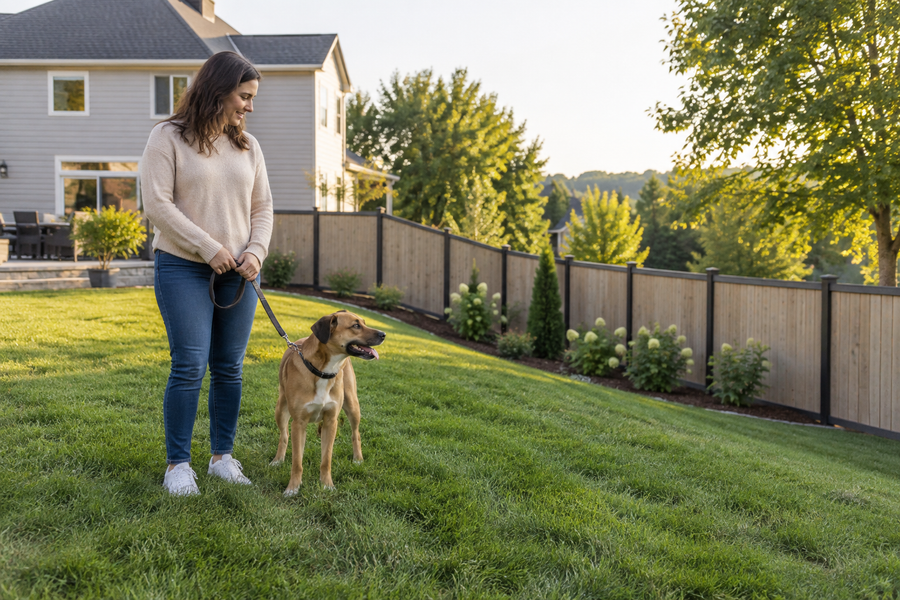
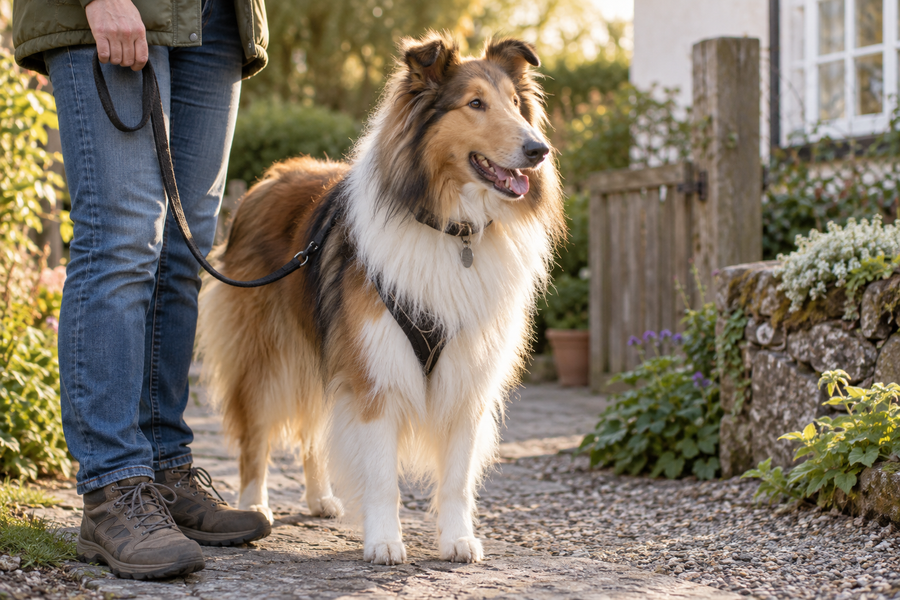
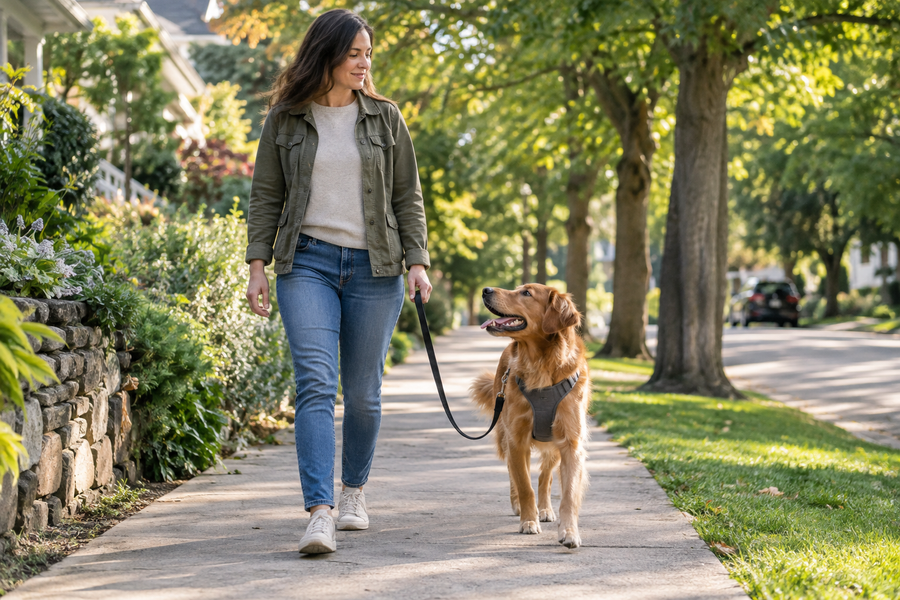
As dogs age, their routines and safety needs can change. A familiar walk may become harder to navigate, hearing or vision may decline, and some dogs may become disoriented or wander. A GPS collar for senior dogs can add useful location awareness, but the right choice is not simply the device with the longest feature list.
For an older dog, comfort, secure fit, dependable tracking, easy charging, and clear alerts matter more than flashy extras. A tracker can help you respond when a dog leaves an expected area and can provide activity or rest trends, but it cannot diagnose illness, prevent every escape, or replace supervision and veterinary care.
Quick Answer: What Should You Look for in a GPS Collar for a Senior Dog?
Choose a GPS collar or tracker that:
- Is light enough for your dog to wear comfortably
- Fits securely without rubbing, pressing, or restricting movement
- Provides live location tracking in the places you normally walk
- Sends an alert when your dog leaves a defined safe area
- Has battery life that fits your actual charging routine
- Is easy to remove, clean, inspect, and recharge
- Stores useful location history without making medical claims
- Works alongside a current ID tag and registered microchip
A senior dog does not automatically need a GPS collar. The decision depends on the dog's mobility, behavior, environment, comfort, and risk of becoming separated. Start with the needs of the dog in front of you rather than age alone.
Why a Senior Dog May Benefit From GPS Tracking
Senior dogs are not all alike. Some continue to walk, travel, and explore comfortably for years. Others experience changes in hearing, vision, mobility, sleep, or behavior. The AAHA Senior Care Guidelines emphasize that senior care includes medical needs, behavior, environmental adjustments, and quality of life—not the assumption that every change is simply “old age.”
A dog tracker for senior dogs may be especially useful when a dog:
- No longer responds consistently to a voice cue or whistle
- Has slipped through a gate or wandered away before
- Spends time in a yard, park, campground, or unfamiliar location
- Moves more slowly and may be difficult to spot at a distance
- Has shown confusion or disorientation that is being evaluated by a veterinarian
- Lives with a family that wants an additional recovery tool beyond an ID tag
Cornell University's veterinary guidance notes that canine cognitive dysfunction can involve gradual behavioral changes, including disorientation and wandering. If your older dog begins getting lost in familiar places, staring, pacing at night, becoming house-soiled, or acting unusually anxious, contact your veterinarian rather than assuming the behavior is normal aging. Read Cornell's overview of cognitive dysfunction syndrome.
For a broader explanation of aging stages, see SATELLAI's guide to when a dog becomes a senior.
Senior-Dog GPS Collar Checklist
| Feature | Why it matters for an older dog | What to check |
|---|---|---|
| Low device weight | Reduces unnecessary bulk during everyday wear | Published device weight and your dog's size |
| Secure, adjustable fit | Helps prevent slipping while avoiding pressure and friction | Neck range, strap width, attachment method |
| Live tracking | Helps you follow a moving dog after separation | Update mode, cellular coverage, app connection |
| Escape alerts | Can warn you when the dog leaves an expected area | Alert delay, boundary setup, phone notifications |
| Location history | Adds context when reconstructing where a dog traveled | Retention period and plan requirements |
| Practical battery life | Reduces gaps caused by missed charging | Maximum claim versus real feature use |
| Water and dust resistance | Supports walks through rain, wet grass, or dusty paths | Published IP rating and care instructions |
| Simple app experience | Matters during a stressful search | Readable map, battery status, clear controls |
| Activity and rest trends | May help you notice a change in routine | Trends only—not diagnosis or treatment advice |
1. Put Comfort and Fit Before Features

Older dogs may have thinner body condition, sensitive skin, reduced neck mobility, arthritis, or other conditions that affect comfort. A device that felt fine several years ago may no longer be appropriate.
Before buying, measure the dog's neck in the position where the collar will sit. Compare that measurement with the manufacturer's current size chart; do not rely only on breed or weight. After fitting the collar:
- Follow the manufacturer's spacing instructions.
- Confirm the collar cannot slide over the dog's head.
- Check that the tracker does not rotate into the throat or press against the jaw.
- Watch the dog walk, lower its head, drink, lie down, and stand up.
- Inspect the neck daily for redness, hair loss, moisture, odor, or tenderness.
The common “two-finger rule” can be a useful starting point, but coat thickness, loose skin, body shape, and the device design all affect fit. If your dog has neck pain, breathing disease, skin disease, a recent procedure, or significant mobility limitations, ask your veterinarian what style of collar or harness is appropriate.
Do not attach a leash to a tracker or accessory loop unless the manufacturer specifically designed it to bear leash force. Many senior dogs benefit from a properly fitted walking harness, while the GPS device remains a separate location tool.
SATELLAI also has a broader guide covering GPS collar safety and proper fit.
2. Prioritize Live Location and Escape Alerts

The main job of a GPS tracker for an older dog is to help you understand where the dog is. Look for two different capabilities:
- Live tracking helps you follow location after a dog is already moving.
- Escape alerts notify you when a dog leaves a defined area, such as a home, yard, or caregiver's property.
These features are related but not identical. An escape alert may help you respond earlier, while live tracking may help you follow the dog's direction. Test both before relying on them:
- Walk across the boundary with the device in hand.
- Confirm that the correct phone receives the alert.
- Check how quickly the app switches into live mode.
- Make sure family members know which screen shows battery and connection status.
- Repeat the test after app, phone, or firmware updates.
GPS performance depends on the device, satellite visibility, cellular or other communication coverage, terrain, buildings, and current operating conditions. No location device should be treated as a guarantee. Use a leash where required, secure gates, supervise outdoor time, and keep a recent photo of your dog available.
3. Treat Activity and Rest Data as Context—not a Diagnosis

Some smart collars record daily activity and rest patterns. Over time, that information may help you answer practical questions:
- Is today's movement lower than this dog's usual pattern?
- Did the dog rest normally after a longer walk?
- Has the daily routine changed since medication, weather, or household changes?
- Is there information worth sharing with the veterinarian?
The useful comparison is usually the dog against its own baseline, not against a generic goal for dogs of the same age or breed. AAHA recommends paying attention to changes in eating, drinking, movement, play, elimination, attitude, grooming, vision, and hearing when evaluating senior pets.
However, a collar cannot determine why activity changed. Less movement might reflect weather, a shorter walk, a depleted battery, poor fit, pain, illness, anxiety, or simply a quiet day. Tracking data can support observation; it cannot diagnose arthritis, cognitive dysfunction, heart disease, or any other condition.
Contact a veterinarian promptly for a sudden or persistent change, especially when it occurs with collapse, breathing difficulty, weakness, obvious pain, vomiting, loss of appetite, inability to stand, or new disorientation. AVMA's senior pet care guidance explains why older pets benefit from regular veterinary assessment.
4. Choose Battery Life for Your Real Routine
A battery claim is only useful if the device is charged and operating when your dog needs it. Live tracking, weak network conditions, temperature, and feature use may shorten real-world runtime.
Build a routine that is easy to maintain:
- Charge at the same time or on the same days each week.
- Set a phone reminder before the battery becomes critically low.
- Check the battery before travel, boarding, grooming, or a caregiver handoff.
- Keep the charging contacts clean and dry according to the instructions.
- Confirm the device reconnects after charging.
- Never leave a dog unsupervised while a loose charging cable is accessible.
If your senior dog becomes stressed when the collar is removed, practice brief, calm removal and replacement before charging becomes urgent. A predictable routine is easier for both the dog and caregiver.
5. Confirm Coverage Where Your Dog Actually Goes
A GPS receiver may calculate a position using satellite signals, but many pet trackers need LTE or another communication method to send that location to your phone. A cellular tracker may work well around neighborhoods, parks, and covered travel routes yet provide delayed updates in remote or weak-signal areas.
Before buying or traveling:
- Check the manufacturer's current service area.
- Test the tracker on normal walking routes.
- Do not assume your phone's signal guarantees the collar's connection.
- Review the last update time rather than looking only at the map pin.
- Carry an offline plan for remote areas.
For a senior dog, familiar and controlled routes are often more important than covering maximum distance. Choose technology for the places your dog actually visits—not an imagined adventure scenario.
6. Use GPS With an ID Tag and Registered Microchip

GPS, tags, and microchips solve different problems:
- A GPS collar may show location while it is charged, connected, attached, and subscribed where required.
- An ID tag gives a finder immediate contact information.
- A microchip provides permanent identification when scanned by an equipped shelter or veterinary clinic.
The AVMA explains that a microchip is not a GPS device and cannot show a pet's location. It also recommends keeping registration information current. Learn more in SATELLAI's guide to GPS trackers versus microchips.
The strongest lost-dog plan uses layers. Keep the microchip registration current, use a readable ID tag, maintain a secure collar or harness, and treat GPS as an additional recovery tool.
Is SATELLAI Collar Go Suitable for Senior Dogs?
The SATELLAI Collar Go may suit some senior dogs whose measurements and routines match the device. According to the current product specifications, it:
- Weighs 1.7 oz (47 g)
- Comes in M (13–18 in) and L (17–26 in) neck sizes
- Lists up to 4.5 days of maximum battery life
- Carries an IP68 water- and dust-resistance rating
- Supports live GPS tracking, virtual boundaries with escape alerts, location history, activity insights, two-way audio, and an NFC identification feature
Connected tracking and app features require an active telecom plan, and actual battery and tracking performance depend on settings, network conditions, use, and environment.
Collar Go should not be described as suitable for every senior dog. It may be too large for a dog below the available neck range, and device weight is only one part of comfort. Measure first, check fit carefully, and consider the dog's skin, mobility, behavior, and veterinary needs.
For a dog living on a farm, ranch, or large property where virtual-fence management and boundary feedback are the main priorities, the full-size SATELLAI Collar serves a different use case. For many everyday senior-dog households, however, Collar Go's lighter tracking-focused design may be the more relevant starting point.
Set Up the Tracker Before You Need It
Use this checklist on a calm day:
- Measure the dog and fit the collar according to the manufacturer.
- Charge the tracker fully and install current updates.
- Add the correct dog profile and caregiver contact details.
- Create a realistic safe area well inside nearby hazards.
- Enable phone notifications and location permissions.
- Walk across the boundary to test the alert.
- Practice opening live tracking and reading the update timestamp.
- Check the ID tag and microchip registration.
- Save a recent full-body photo and close-up face photo.
- Tell family members and caregivers how the system works.
Recheck fit, battery, alerts, and account access regularly. A tracker that has not been tested may create false confidence during an emergency.
Frequently Asked Questions
Are GPS collars safe for senior dogs?
GPS collars can be appropriate for many senior dogs when the device is correctly sized, comfortably fitted, maintained, and used according to its instructions. Safety depends on the individual dog's neck size, skin, mobility, breathing, behavior, and medical needs. Ask a veterinarian if the dog has pain, skin disease, respiratory concerns, or major mobility changes.
Can a GPS collar help a dog with dementia?
A GPS collar may help locate a dog that wanders or becomes separated, but it does not treat or diagnose canine cognitive dysfunction. New disorientation, nighttime pacing, house-soiling, altered interaction, or getting lost in familiar places deserves veterinary evaluation.
Should a senior dog wear a GPS collar all day?
Follow the manufacturer's instructions and assess the individual dog. Remove the device for charging, cleaning, skin checks, or whenever a veterinarian recommends it. Inspect the neck daily and do not continue use if you see irritation, pain, or behavioral distress.
Can a smart collar monitor a senior dog's health?
Some collars record activity and rest trends that may add context to daily observations. They cannot diagnose disease, measure every relevant health sign, or replace a physical examination and veterinary testing.
Is a GPS collar better than a microchip for an older dog?
They are not substitutes. GPS can provide location information while the device is operating and connected. A microchip provides permanent identification when scanned. Use both, plus a visible ID tag with current contact information.
What is the best GPS tracker for an older dog that wanders?
Look for a secure and comfortable fit, low device weight, dependable coverage, clear escape alerts, live tracking, practical battery life, and an app the caregivers can use under stress. The best choice is the device that fits the individual dog and works reliably in its normal environment.
Final Takeaway
A GPS collar for senior dogs should make daily safety simpler, not add discomfort or false confidence. Prioritize fit, low weight, reliable location features, clear alerts, realistic battery life, and coverage where your dog actually spends time.
Most importantly, use the tracker as one layer of protection. Secure supervision, a readable ID tag, a registered microchip, familiar routines, and veterinary care remain essential. Technology can help you stay connected—but attentive care is what supports a senior dog's comfort and quality of life.