Bringing home a second dog? Plan the first meeting before the new dog walks through your front door. A quiet walk with plenty of space gives both dogs a chance to notice each other without being pushed into a greeting.
The goal is a comfortable introduction, not instant friendship. This guide covers the first meeting and the first days at home, whether you're adopting another dog or helping two dogs share a home.
How do you introduce two dogs safely? Meet in a quiet, neutral place with one adult handling each leashed dog. Begin with a walk in the same direction at a comfortable distance. Keep any greeting brief, let both dogs move away, and provide separate spaces at home. Pause if either dog freezes, stares, hides, or cannot turn away.
Step 1: Decide Whether a Casual Introduction Is Appropriate
Consider each dog's history before choosing the location or arranging contact. Previous fights, bites, strong reactions to other dogs, or guarding around food and people call for an individual plan with a qualified behavior professional.
Size, age, health, and play style also matter. A lively puppy may overwhelm a senior dog even without showing aggression. A large dog can injure a smaller dog during rough play.
Ask the other handler about known triggers and agree that either person can end the meeting. Check that both dogs are well enough for the activity and follow veterinary advice about vaccination and disease exposure, especially for puppies.
Step 2: Prepare the Setting and Equipment
Choose a quiet place neither dog normally treats as its own territory. Avoid crowded dog parks, narrow paths, and busy entrances. The American Kennel Club (AKC) recommends neutral-space introductions before bringing dogs into a shared home.
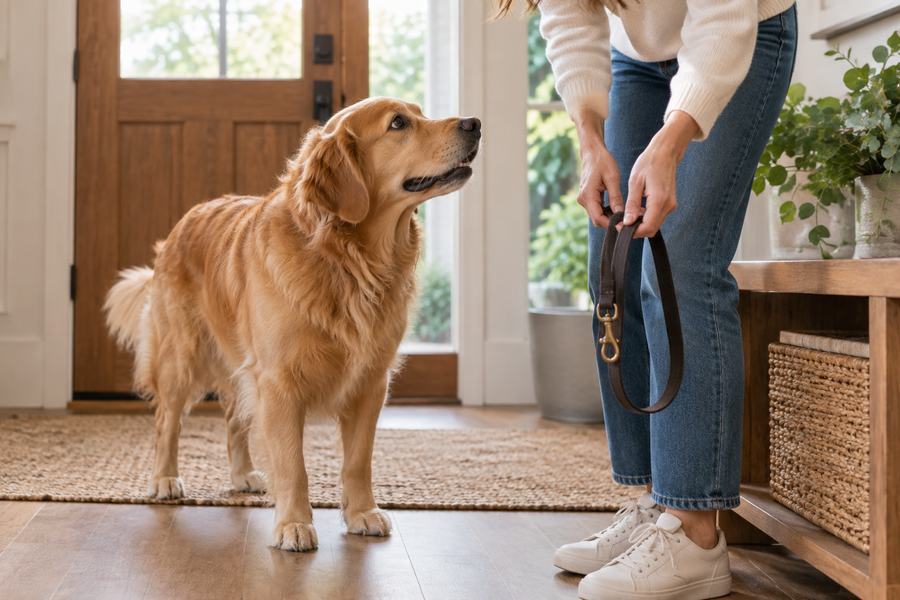
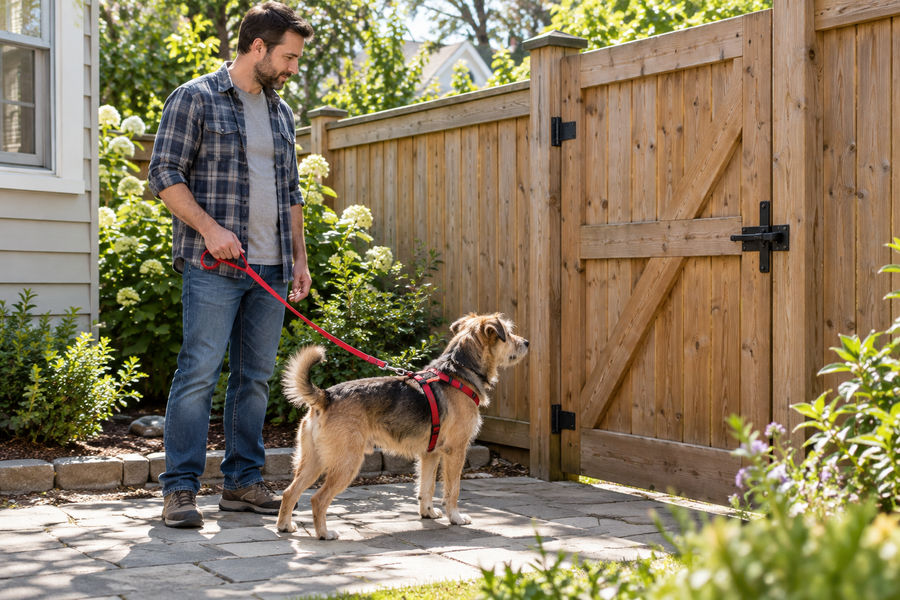
Bring one adult per dog, regular fixed-length leashes, well-fitted harnesses or collars, and small treats. Each person should be able to handle their dog safely. Skip retractable leashes for this meeting; fixed-length leashes make spacing easier to manage.
If you live in an apartment, avoid starting in an elevator, hallway, or doorway. Look for a quiet outdoor area with room to walk away, and follow local leash rules. A private yard is not required.
Prepare separate resting spaces at home before the meeting. Put away shared chews, food bowls, and favorite toys so the first indoor encounter does not become a competition over resources.
Step 3: Begin With Parallel Walking
Start far enough apart that neither dog is fixated on the other. Walk in the same direction rather than approaching head-on.
A check-in means briefly turning attention back to the person holding the leash. Reward each dog separately for doing that. Do not scatter treats between the dogs or encourage them to compete for food.
There is no universally correct starting distance. If either dog pulls continuously toward the other, freezes, barks repeatedly, or cannot turn away, create more space. If both can walk, sniff, and shift attention easily, you may gradually move closer.
Comfort matters more than completing a planned route. Some introductions should end with parallel walking alone.
Step 4: Offer a Brief Greeting When Both Dogs Are Ready
If both dogs show loose movement and voluntary interest, allow a short approach with room to turn away. Keep leashes from becoming tangled or pulling the dogs into contact.
After a brief sniff, invite each dog to move away with their handler. This creates a useful break and lets you see whether both are willing to reengage.
Avoid holding one dog still while the other investigates. Do not force nose-to-nose contact or keep extending a greeting because it initially looked friendly.

Step 5: Watch the Whole Interaction
Look for movement and changes over time rather than treating a wagging tail as proof of friendliness.
Encouraging signs include loose bodies, easy turns away, brief sniffing, and breaks that both dogs accept. During play, watch whether both dogs participate and whether either can leave without being pursued.
Pause for stiff posture, prolonged staring, freezing, repeated attempts to hide, relentless chasing, cornering, or escalating vocalization. Growling is a reason to create space, not to demand closer contact. As the ASPCA explains, a wagging tail alone does not establish friendliness.
If a fight occurs, do not reach between the dogs or grab near their mouths. Seek veterinary care for injuries and professional guidance before another introduction.
Step 6: Make the Transition Home Gradual
A successful outdoor meeting does not guarantee immediate comfort indoors. Doorways, confined rooms, and valued resting places change the situation.
Bring the dogs into the home without crowding them together at an entrance. Use gates or separate rooms to provide breaks. Feed separately and keep valuable items out of shared areas during the adjustment period.
Supervise shared time actively. When you cannot watch, separate the dogs safely. Avoid leaving them together overnight simply because the first afternoon went well.

Step 7: Observe the First Days, Not Just the First Meeting
Keep notes about each dog's appetite, rest, willingness to move around the home, and response to the other dog's presence. Reduce shared time if one dog repeatedly avoids rooms, struggles to settle, or is prevented from accessing essentials.
An activity-monitoring collar such as SATELLAI Collar Go can add context about changes in an individual dog's daily activity patterns. Those records are most useful alongside your observations; they cannot determine whether two dogs are compatible or replace supervision.
For longer-term routines, read How to Manage a Multi-Dog Household.
How to Tell Whether the Introduction Is Going Well
Use both dogs' behavior to decide what happens next. A quiet dog who remains stiff or keeps trying to leave is not ready for closer contact.
| What you see | What to do next |
|---|---|
| Both dogs walk with loose bodies and can turn away | Continue at that distance; consider a small decrease in space |
| One dog stares, freezes, or repeatedly pulls toward the other | Increase distance and return to walking separately |
| One retreats while the other keeps following | Interrupt the follower and give both a break |
| Comfortable outdoor contact but tension at home | Use separate areas and shorten indoor sessions |
Introducing a Puppy to an Older Dog
Protect the older dog's rest. Prevent the puppy from repeatedly climbing on, chasing, or biting them, and provide play and training separately. The resident dog should not have to manage all the puppy's behavior. The AKC's puppy-and-senior introduction guide addresses this age mismatch.
When to Get Help With Dog Introductions
Arrange professional help before direct contact if either dog has a bite history, repeatedly lunges at dogs, or guards resources. Seek help promptly if conflict escalates after moving in.
You can search the CCPDT trainer directory and ask specifically about reward-based methods and dog-to-dog cases. For serious aggression, severe fear, or possible medical contributors, start with your veterinarian; the American College of Veterinary Behaviorists directory lists veterinary specialists.
Frequently Asked Questions
How long does it take for two dogs to get along?
There is no fixed timeline. Some dogs settle into shared routines quickly; others need repeated short sessions and ongoing separation. Progress means both dogs are comfortable, not simply tolerating contact without a fight.
Should I let the dogs work it out on their own?
Do not let repeated intimidation or escalating conflict continue. Give space, manage access to resources, and seek help when interactions remain difficult.
What if one dog wants to play and the other doesn't?
Interrupt the interested dog and provide another activity. The less interested dog should have a protected place to rest without being followed.
Sources and Further Reading
- AKC: Introducing Dogs Who Will Share a Home
- AKC: Introducing Puppies to Senior Dogs
- ASPCA: Dog Bite Prevention
Product disclosure: SATELLAI manufactures the products mentioned in this guide. Images are AI-generated illustrations of training situations.