Quick Answer
For most RV travelers, the best GPS dog collar is an app-connected, waterproof tracker with dependable escape alerts, readable location history, comfortable daily fit and enough battery margin for travel days. Choose a virtual-fence model only if you will use it at suitable sites, have reliable service and have already trained your dog.
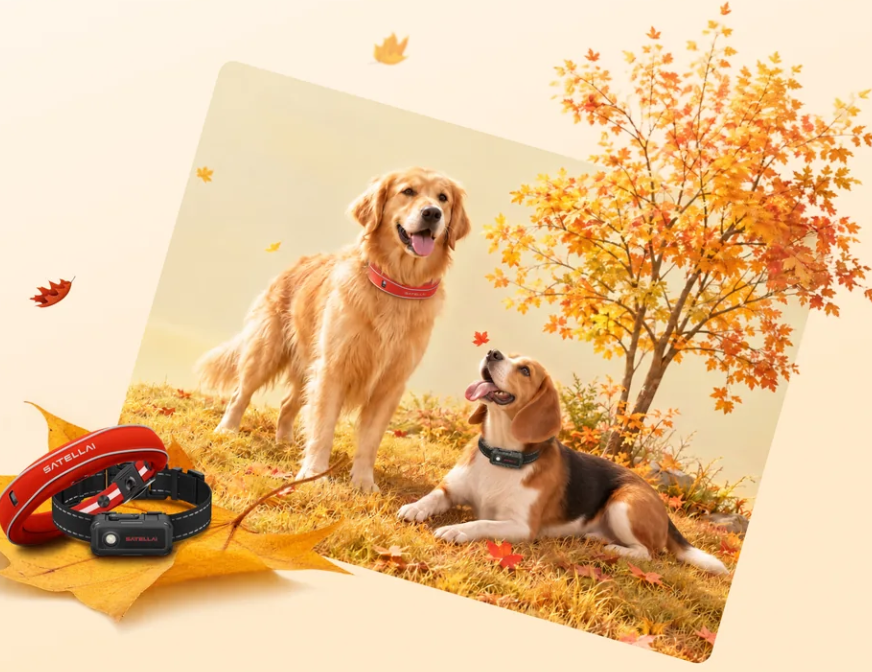
Within the SATELLAI range, Collar Go is the more straightforward everyday travel choice for owners focused on tracking and lighter wear. SATELLAI Collar is the stronger option when trained virtual boundaries are a real part of the campsite routine. Neither replaces a leash or campground rules.
Best RV Travel Picks by Use Case
| RV travel need | Best-fit type | Why |
|---|---|---|
| Everyday road-trip tracking | SATELLAI Collar Go | Lightweight tracking focus, escape alerts, location history and up to 4.5-day stated battery life |
| Campsite boundary management | SATELLAI Collar | Unlimited virtual fences plus live tracking, for suitable environments and trained dogs |
| Regular travel beyond cellular service | Direct radio or off-grid system | App-connected LTE tracking may not deliver live updates in dead zones |
| Tiny campsite beside roads | Leash, tether used safely, or enclosure plus GPS backup | A virtual line cannot physically stop a dog |
Our overall SATELLAI pick for typical RV travel is Collar Go because road-trip owners usually need portable, everyday location visibility more often than boundary feedback. The full Collar becomes the better match when the itinerary includes longer stays on open, suitable land and the owner is committed to boundary training.
Why RV Travel Changes the Buying Decision
At home, owners already know the weak gate, neighborhood traffic and cellular dead spots. RV travel replaces that familiar environment every few days. A campground may have new wildlife, unfamiliar dogs, children, generators, narrow sites and a road only a few yards away.
Travel also changes charging. The dog may wear the collar from the morning walk through fuel stops and an evening campsite, while the family manages phones, navigation and other devices from limited outlets. A device that is acceptable at home can become inconvenient if it needs attention during every travel transition.
The best RV collar therefore needs to perform across four phases:
- departure and loading;
- roadside and fuel stops;
- campground setup;
- walks, hikes and off-site activities.
The Seven Features That Matter Most
1. Escape Alerts That Follow Changing Locations
RV dogs encounter a new “home” repeatedly. Look for an app that lets you update safe areas without a complicated reset. An alert is most useful when every caregiver recognizes it and knows who is responsible for the dog.
Do not draw a zone and assume it creates containment. An escape alert tells you to act; it does not close the RV door or stop the dog at the site boundary.

2. Reliable Live Location in Covered Areas
Most connected dog collars combine satellite positioning with cellular transmission. The collar needs a usable sky view to calculate location and supported mobile service to send fresh updates to the app.
Check coverage along the route and around planned campgrounds. For U.S. travel, the FCC’s mobile coverage map is a helpful starting point. Always treat a map as planning information, not a guarantee at a particular campsite.
3. Battery Margin, Not Just Maximum Battery Life
Published battery life is usually an “up to” figure. Live tracking, weak signal, cold weather, frequent alerts and device age can reduce runtime. A sensible road-trip plan charges before the battery is nearly empty.
SATELLAI lists up to 4.5 days for Collar Go and up to three days for the SATELLAI Collar. Actual performance varies. Pack the correct cable in an accessible place and keep a power bank available for days away from hookups.
4. Comfortable Fit Through Long Days
A travel collar may be worn longer than a neighborhood tracker. Check the dog’s neck daily for rubbing, trapped moisture or coat matting. Follow the manufacturer’s fit instructions and account for seasonal coat changes.
Collar Go weighs 1.7 oz (47 g) according to SATELLAI’s current specifications, making it the more travel-friendly SATELLAI option when low device weight is a priority. Fit is still more important than the number alone.
5. Water and Dust Resistance
Camp life includes rain, puddles, dust and spilled water bowls. Both current SATELLAI collars are listed as IP68. That supports outdoor use, but owners should still inspect ports, seals and straps according to care instructions and avoid assuming every accessory has the same rating.
6. Location History
History is useful even when the dog is safe. It can help a family review the route taken by a dog walker, identify a weak point around a site, or understand where an escape began.
History does not prove a precise path under every condition. Position points and update intervals can simplify or skip parts of movement.
7. A Clear Plan for No-Service Areas
If the route includes national forest roads, desert camping or mountain valleys, decide what happens when app updates stop. Options include keeping the dog leashed, using a secure enclosure, choosing a direct radio tracker for remote excursions or changing the itinerary.
A connected GPS collar is valuable, but it should not be your only response to a predictable lack of connectivity. If remote camping is routine, compare a GPS dog collar with a radio tracker before departure.
Collar Go vs SATELLAI Collar for RV Owners
| Feature | Collar Go | SATELLAI Collar |
|---|---|---|
| Primary RV role | Everyday tracking | Tracking plus virtual-fence routines |
| Stated maximum battery | Up to 4.5 days | Up to 3 days |
| Device weight | 1.7 oz / 47 g | Larger full-feature collar |
| Water/dust rating | IP68 | IP68 |
| Virtual-fence boundary feedback | Not the core capability | Yes, configurable boundary system |
| Best for | Frequent movement and daily wear | Longer stays at suitable open sites |
Choose based on the routine you will actually maintain. If you change campsites daily and keep the dog leashed outside, Collar Go’s tracking-centered design is likely the cleaner fit. If you spend weeks on private open land and want trained reusable boundaries, the full Collar offers the relevant feature set.
Review the SATELLAI Collar vs Collar Go guide for the latest product-level comparison.
Can You Use a Virtual Fence at a Campground?
Sometimes—but only when rules, space, signal and training all align.
Public campgrounds may require pets to remain leashed or physically restrained. The National Park Service notes that rules differ by park and advises travelers to check the specific park before visiting.
Even where virtual-fence use is permitted, many RV sites are too small or too close to traffic for a generous safety buffer. Neighbors and their dogs may pass directly beside the site. A virtual boundary also cannot prevent another animal from entering.
Use a virtual fence only when:
- the property owner or campground permits the routine;
- the dog is already trained to the cues;
- the mapped area is comfortably inside hazards and property lines;
- GPS and cellular conditions are suitable;
- an adult is supervising;
- a physical restraint is available if conditions change.
For a clearer breakdown of alerts versus trained boundary features, see Virtual Fence Collar vs GPS Tracker.
A Better RV Dog Safety System
The collar should be one layer in a travel system:
- Primary control: leash, secure harness, crate or appropriate enclosure.
- Identification: readable tag and registered microchip with current phone numbers.
- Digital backup: GPS collar with alerts enabled and the app signed in.
- Human routine: assign responsibility before opening the RV door.
- Emergency plan: recent photo, veterinary information and local contacts.
At fuel stops, use two barriers when practical—for example, close the RV door before transferring the leash. Many escapes happen during transitions, not after the dog is settled at camp.
Set Up the Collar Before Departure
Do not unbox a tracker at the campground. Complete setup at home:
- confirm fit and comfort;
- activate the required telecom plan;
- install updates and enable phone permissions;
- test safe-zone alerts with the dog controlled;
- invite or train other caregivers;
- practice switching to live location;
- verify charging in the RV;
- save support details offline.
If using virtual boundaries, complete training well before travel. A new campsite already contains enough distractions; it should not be the dog’s first boundary lesson.

RV Travel Checklist
Before each driving day:
- charge the collar and phone;
- inspect strap, clasp and attachment points;
- confirm the app shows a recent update;
- update the temporary safe zone only when appropriate;
- check destination pet rules and cellular coverage;
- pack leash, long line, ID and water within reach;
- confirm who handles the dog at every stop.
At the campsite:
- keep the dog controlled while setting up;
- identify roads, water, wildlife and neighboring dogs;
- test location updates before relying on alerts;
- use lighting or reflective gear after dark;
- remove or dry wet gear if rubbing develops.
Who Should Not Rely on a Cellular GPS Collar Alone?
Do not rely on a cellular tracker as the only recovery system when you routinely camp outside service, when the dog chases wildlife over long distances, or when a missed alert could put the dog immediately on a highway or cliff edge.
In those scenarios, strengthen physical management and consider a direct radio or off-grid solution appropriate to the activity. Also remember that local leash rules apply regardless of the technology on the dog.
Final Verdict: The Best RV Travel Choice
Collar Go is our SATELLAI pick for most RV travelers because its lighter, tracking-focused design matches frequent movement and everyday wear. SATELLAI Collar is the better specialized choice for owners who genuinely need trained virtual boundaries at suitable longer-stay locations.
The best travel setup is not the one that promises freedom everywhere. It is the one that makes limitations visible: cellular gaps, charging needs, campsite rules and the fact that a digital boundary cannot physically contain a dog.
Frequently Asked Questions
Do GPS dog collars work at campgrounds?
They can work where satellite reception and the required cellular network are available. Trees, terrain, structures and congestion may affect performance.
What happens when an RV GPS dog collar loses cell service?
The collar may calculate position, but fresh app updates and alerts can be delayed until connectivity returns. Exact behavior depends on the product.
Is Collar Go or SATELLAI Collar better for RV travel?
Collar Go is the simpler everyday travel pick. Choose SATELLAI Collar when trained virtual boundaries are a central need and the sites are suitable.
Can a virtual fence replace a campground leash?
No. Campground and park rules still apply, and a virtual boundary is not a physical restraint.
How often should I charge a dog GPS collar on a road trip?
Charge with a generous margin rather than waiting for a low-battery warning. Usage, weak service and temperature can shorten runtime.
Should my dog still wear an ID tag and have a microchip?
Yes. GPS, visible ID and a registered microchip solve different parts of the recovery process.
Editorial note: SATELLAI publishes this guide and sells the products discussed. Recommendations are based on documented features and travel use cases, not a claim that every campground or route was personally tested. Product information was checked in September 2026.