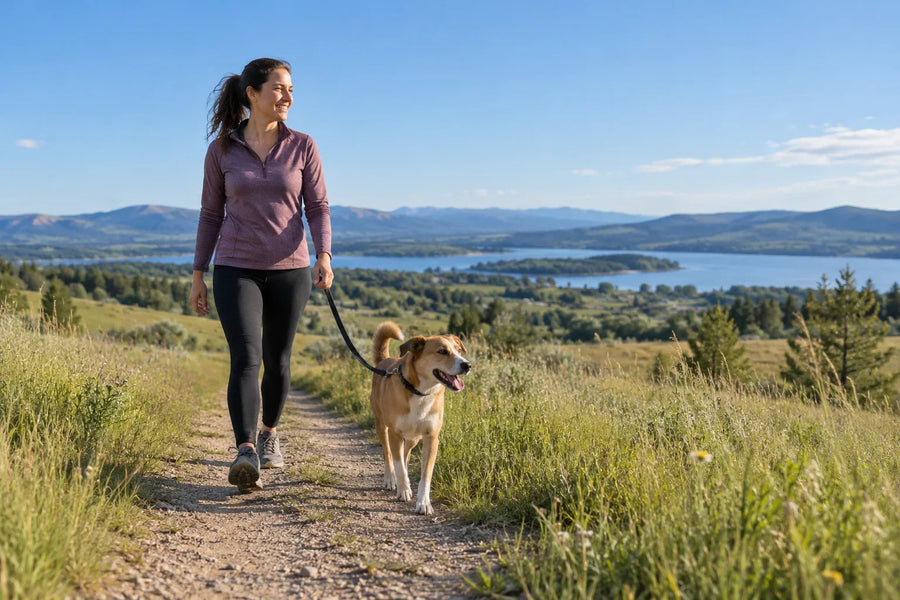
Caring for a large dog starts with the right food for their age, a healthy weight, comfortable movement, and a manageable exercise routine. You'll also want a home they can move through safely and a plan for emergencies such as bloat.
With a big dog, small details matter. A slippery hallway, an awkward jump into the car, or a few extra treats from everyone in the family can become a recurring problem. Here's how to build daily habits that work for your dog as they grow and age.
Care at Different Ages
Your puppy, adult dog, and senior dog need different kinds of support. Use this table to organize the basics, then adjust for your dog's health and lifestyle.
| Life stage | What to focus on | A habit worth building |
|---|---|---|
| Puppy | Food that supports appropriate growth; suitable play and exercise | Keep a record of meals, treats, and weight changes |
| Adult | Healthy body condition and regular activity | Review food portions and exercise together |
| Senior | Comfortable movement, muscle condition, and easy access around the house | Notice how your dog gets up, walks, and settles |
The American Animal Hospital Association (AAHA) recommends tailoring care to a dog's age, size, breed, lifestyle, and health. You don't need to overhaul everything at a particular birthday, but changes in your dog's needs deserve a fresh look. AAHA life-stage guidance
Choosing Large-Breed Puppy Food

Check the nutritional adequacy statement on the package. In the U.S., it tells you whether a food is complete and balanced for the stated life stage. Confirm that the growth statement covers your puppy's expected adult size; the words on the front of the bag aren't enough. AAHA feeding guidance
AAHA recommends a diet formulated for large-breed growth when a puppy is expected to weigh at least 70 pounds as an adult. The goal is steady, appropriate growth while keeping the puppy lean. AAHA guidance on preventing obesity
Calcium balance matters, too. Adding calcium to an already appropriate diet isn't a shortcut to stronger bones. Check with your vet before adding supplements. Large and giant dogs can reach skeletal maturity later than smaller dogs, so the switch to adult food should fit the puppy's development. AAHA guidance on age- and breed-specific diets
Make feeding easy for everyone in the household to follow. Write down the food, the amount per meal, and any extras. If you use a kitchen scale, record the portion in grams. If you use a measuring cup, use the same one each time.
Keep an Eye on Weight and Muscle
The number on the scale is only part of the picture. Two dogs can weigh the same amount and carry different amounts of fat and muscle. A thick coat can hide changes, too.
A hands-on body condition check looks at the ribs, waist, and belly. In many dogs at an ideal body condition, you can feel the ribs without a thick layer of fat, see a waist from above, and see the belly tuck up from the side. Have your veterinary team show you what this looks and feels like on your dog. World Small Animal Veterinary Association body condition chart
Muscle condition is a separate check, especially as dogs get older. A dog can carry extra fat and still lose muscle. WSAVA nutrition resources
Count treats, dental chews, and food used to give medication. Setting aside the day's rewards helps prevent each family member from adding an uncounted handful. If your dog's weight changes unexpectedly, bring the full food record to your vet rather than simply adding longer walks.
How Much Exercise Does a Large Dog Need?
There's no single exercise target for all large dogs. Age, fitness, health, and the activity itself matter. A relaxed walk and a fast game of fetch can last the same amount of time while asking very different things of your dog.
Build a week you can repeat: comfortable walks, time to sniff, short training sessions, and play your dog enjoys. Before adding sustained running, repeated jumping, or demanding sport, get a plan that fits your dog's development and health. This is especially important for puppies and dogs with mobility problems.
Notice what happens after the outing. Does your dog get up easily after a nap? Walk evenly the next morning? Hesitate at the car when they used to climb in readily?
If weekdays are quiet, prepare gradually for a long weekend hike. For everyday activity ideas, see our active dog care guide.
Make Your Home Easier to Navigate

Follow your dog's usual path from bed to water, back door, and car. Look for slippery spots, tight turns, and places that require a jump.
A few changes can make that route easier:
- Add secure, nonslip runners on frequently used slippery floors.
- Keep water and resting areas easy to reach.
- Choose a bed your dog can stretch out on and step onto comfortably.
- Introduce a stable car ramp rated for your dog's weight, with patient practice and supervision.
- Check harnesses, leashes, and gates for fit and condition.
Don't assume a new mobility problem is just age or stubbornness. Hip dysplasia, for example, can cause limping, difficulty getting up, and reluctance to jump. Those signs need an exam to determine the cause. American College of Veterinary Surgeons hip dysplasia guidance
A specific note helps: “She hesitates on the kitchen floor after getting up” says more than “She seems slower.” Take a short video if you can do so safely. Our guide to common health issues by dog breed can help you prepare questions for the appointment.
Bloat: Know When to Get Emergency Care
Gastric dilatation-volvulus, or GDV, is a life-threatening emergency involving stomach expansion and twisting. Deep-chested dogs are at increased risk.
Trying to vomit without bringing anything up, unusual restlessness, abdominal swelling, weakness, or collapse can be warning signs. Contact an emergency veterinarian right away if you suspect GDV. Don't wait for every sign or obvious swelling. ACVS guidance on GDV
If your dog is at risk, ask about preventive gastropexy. It helps prevent the stomach from twisting, but it doesn't prevent every episode of stomach dilation. Discuss feeding arrangements as part of your dog's individual plan. ACVS guidance on GDV
Save your emergency clinic's number and address before you need them, and share the information with anyone who cares for your dog.
Make Grooming and Preventive Care Part of the Week
Practice calm handling while your dog is comfortable. Brief sessions of touching paws, looking at ears, and brushing the coat make routine care easier to manage. Reward cooperation and keep the sessions short.
After outdoor time, check paw pads, nails, and between the toes. While grooming, notice new lumps, redness, odor, or spots your dog keeps licking.
Daily brushing with pet toothpaste supports dental care. Sore gums, bad breath, or trouble eating deserve a dental check; home brushing doesn't replace treatment your dog needs. AAHA dental care guidance
Keep vaccines, parasite prevention, and checkups on a shared calendar. Your vet can tailor the schedule to your dog's health, travel, and contact with other animals. AAHA canine life-stage guidelines
Where Activity Tracking Fits
SATELLAI's dog-tracking features include live GPS location tracking and records of activity and rest. They can help you keep an eye on outdoor time and describe changes in your dog's routine. SATELLAI GPS features · SATELLAI activity and rest features
For a hypothetical example, suppose your dog starts taking shorter walks. Add notes about the weather, route, appetite, and movement to the activity record. That gives your vet more context than a number alone.
An activity record can't diagnose joint disease. Visible pain or illness needs attention even if the app looks normal, and location tracking still needs to be paired with supervision and secure equipment.
Frequently Asked Questions
How can I tell whether my large dog is overweight?
Check weight along with body condition: feel the ribs, look for a waist, and check the belly tuck. Ask your veterinary team to demonstrate using your dog, especially if a thick coat makes appearance hard to judge. WSAVA body condition chart
When should a large-breed puppy switch to adult food?
Use your puppy's development and the food's suitability to guide the timing with your vet. Large and giant dogs may mature later than smaller dogs, so there isn't one birthday that works for every puppy.
Does every large dog need joint supplements?
No. Start with the diet, weight, activity, and any diagnosed condition. Have your vet review a specific supplement before adding it.
What should I do if my dog slips around the house?
Improve traction on the routes your dog uses most. If slipping is new, comes with weakness or pain, or continues despite better footing, schedule an exam.
Pick a few habits you can keep: measure food consistently, make the usual routes easier to navigate, and notice how your dog moves after activity. You'll have a clearer picture of what your dog needs as they grow and age.
Sources and Editorial Notes
This guide was drafted with AI assistance using the veterinary resources linked above. It hasn't been reviewed by a veterinarian and provides general education, not a diagnosis or an individual treatment plan. The checklists and hypothetical example are editorial tools, not results from a clinical study or product test.
This guide was prepared for SATELLAI, which sells dog GPS collars and trackers. Product descriptions come from SATELLAI's documentation; medical guidance comes from the cited veterinary sources.