Dogs cannot tell us they love us in words, but they communicate constantly through posture, movement, attention, play, and everyday choices.
Some of the clearest signs your dog loves you are surprisingly subtle: choosing to rest near you, checking in during a walk, bringing you a toy, or simply looking relaxed in your presence.
Quick answer: Dogs often show trust through voluntary closeness, relaxed body language, playful interaction, comfortable eye contact, checking in with their owner, and feeling safe enough to rest nearby. No single behavior proves affection, so look for consistent patterns and consider the situation.
1. Your Dog Chooses to Be Near You
Voluntary proximity is one of the simplest signs of a strong social bond.
Your dog may lie beside your desk, follow you into another room, or settle somewhere they can easily see you. Some dogs prefer physical contact, while others are happiest resting a few feet away.
The important part is that your dog chooses to stay close rather than appearing unable to relax without you.
2. They Look Relaxed Around You
Trust often looks quiet rather than dramatic.
A comfortable dog may show a loose body, soft eyes, a relaxed mouth, natural ear position, and easy movement.
Look at the entire dog rather than one signal. A wagging tail, for example, does not automatically mean a dog is happy.
If you notice more tense or avoidant behavior, our guide to signs of stress in dogs explains what to watch for.
3. Your Dog Makes Comfortable Eye Contact
Dogs often use eye contact to communicate with familiar people. Research has linked mutual gaze between dogs and owners with social bonding, although it should not be treated as a simple “love test.”
A dog who voluntarily looks at you with a soft expression is communicating very differently from a dog giving a fixed stare with a tense body.
Never force eye contact. Some dogs naturally use it more than others.
4. They Check In With You During Walks
Watch what your dog does while exploring.
A dog may stop to investigate a scent, move ahead slightly, then glance back at you before continuing. These small check-ins can show that you remain an important reference point even when the environment is interesting.

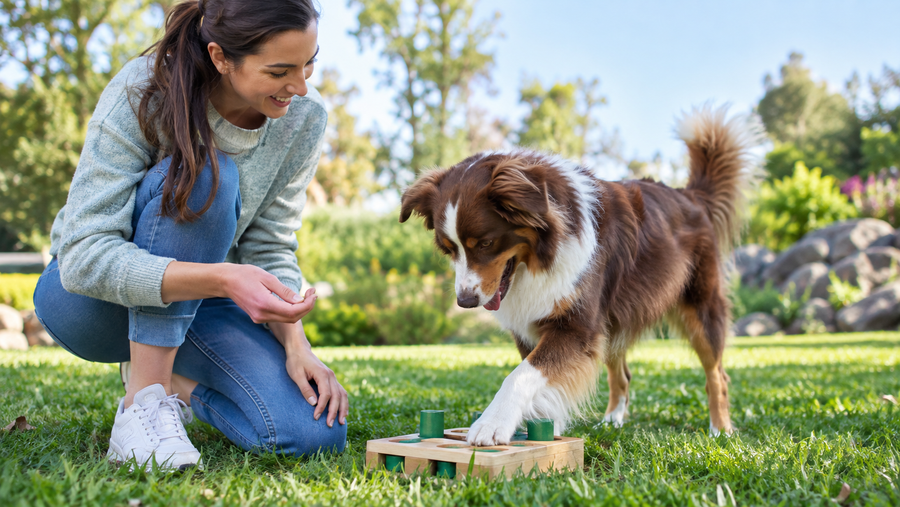
5. Your Dog Invites You to Play
Play-bowing, bringing a toy, initiating tug, or asking you to chase a ball are all ways dogs may invite social interaction.
A toy is not necessarily a human-style “gift.” More often, your dog is asking you to participate—and that invitation itself can reflect a positive relationship.
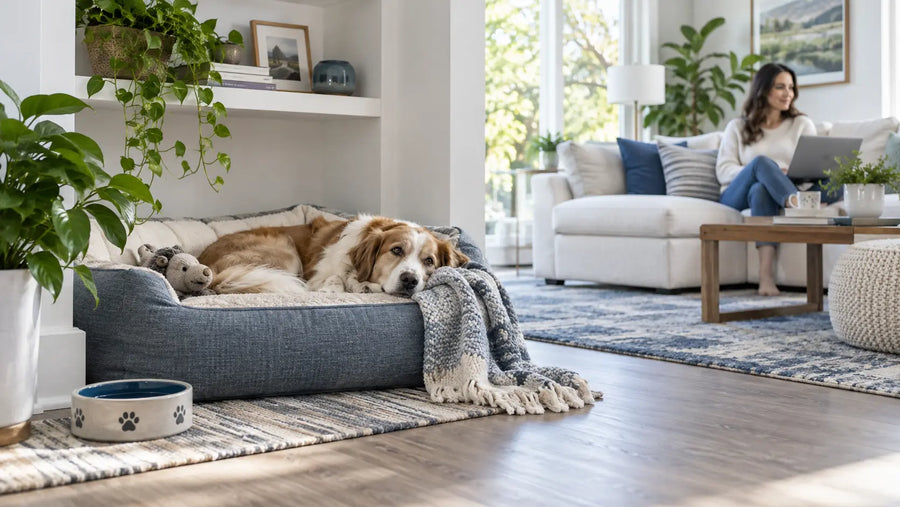
6. They Feel Safe Enough to Rest Near You
Dogs are less alert to their surroundings when sleeping, so regularly settling into relaxed rest near you can be consistent with feeling safe.
Your dog may stretch out beside you, nap in the same room, or sleep with their back toward you.
Some strongly bonded dogs still prefer sleeping elsewhere because of temperature, noise, or personal preference, so sleeping location should never be used as a single measure of attachment.

7. Your Dog Looks to You in Unfamiliar Situations
When something unusual happens, some dogs briefly look toward a familiar person before deciding how to respond.
You may notice this around a strange sound, new object, unfamiliar environment, or new person.
Calm behavior and giving your dog enough space can help reinforce that sense of security.
8. They Seek Physical Contact on Their Own Terms
Many dogs show affection by leaning against someone, resting their head nearby, sitting close, or asking for petting.
The strongest clue is not the contact itself but whether the dog voluntarily approaches and remains relaxed.
If your dog moves away, let them. Respecting their choice helps preserve trust.
9. Your Dog Is Happy to See You—and Can Settle Again
Some dogs greet their owners with full-body wiggles. Others walk over quietly, sniff, lean against them, and then return to resting.
Both can reflect a positive relationship.
If you are curious about what happens when owners are away, read Do Dogs Miss Their Owners?
Dogs that struggle during periods alone may also benefit from our guide to whether dogs feel lonely.
10. Your Dog Feels Comfortable Making Choices Around You
Trust is not the same as constant obedience.
A secure dog may feel comfortable choosing where to rest, when to approach, when to pause a game, or which safe direction to explore during part of a walk.
Reward-based training can provide structure without relying on fear or intimidation. The American Veterinary Society of Animal Behavior recommends reward-based methods for dog training and behavior modification.
See the AVSAB guidance on humane dog training for more information.
Behaviors That Do Not Always Mean “I Love You”
| Behavior | Other Possible Explanations |
|---|---|
| Following you everywhere | Affection, habit, anticipation, curiosity, or difficulty being alone |
| Licking you | Social interaction, attention-seeking, taste, or learned behavior |
| Showing the belly | Relaxation, but sometimes uncertainty or appeasement |
| Wagging the tail | General arousal; posture and context still matter |
| Leaning against you | Affection, comfort-seeking, or simply enjoying contact |
The safest approach is to read the whole dog, not one isolated behavior.
How to Build Trust With Your Dog
- Keep everyday routines reasonably predictable.
- Use reward-based training.
- Allow your dog to move away from unwanted interaction.
- Provide play, sniffing, exploration, and mental enrichment.
- Learn your dog's individual body language.
- Avoid punishing fearful or warning behaviors.
- Spend calm, low-pressure time together.
A strong relationship usually develops through hundreds of ordinary interactions rather than one dramatic bonding exercise.
When a Change in Social Behavior Matters
If a normally social dog suddenly withdraws, avoids touch, becomes unusually clingy, stops playing, or reacts negatively to handling, do not assume it is a relationship problem.
Pain, illness, sensory changes, stress, medication effects, and age-related changes can all affect behavior. Sudden or persistent changes are worth discussing with your veterinarian.
Frequently Asked Questions
How do you know if your dog trusts you?
Look for repeated relaxed behaviors such as voluntarily approaching you, resting comfortably nearby, checking in during exploration, and initiating interaction. Patterns matter more than any single behavior.
Does following me mean my dog loves me?
It can reflect a close bond, but dogs also follow people because of food, curiosity, habit, anticipation, or difficulty coping alone.
Does sleeping near you mean a dog trusts you?
Choosing to sleep nearby can be consistent with feeling safe, but some strongly bonded dogs prefer sleeping elsewhere because of temperature, space, or individual preference.
Why does my dog stare at me?
Dogs may look at owners for information, attention, food, social interaction, or reassurance. Relaxed voluntary eye contact should be interpreted differently from a tense fixed stare.
The Bottom Line
The clearest signs your dog loves and trusts you usually appear in everyday choices: approaching voluntarily, relaxing nearby, checking in, playing, seeking interaction, and feeling safe enough to rest.
Instead of looking for one perfect proof of affection, watch the relationship as a whole. Trust grows when a dog feels safe, understood, and respected.
Sources
PubMed: Oxytocin-Gaze Positive Loop and Human-Dog Bonds
American Veterinary Society of Animal Behavior: Position Statements