A dog body condition score (BCS) estimates body fat by assessing rib coverage, waist shape, and abdominal tuck. On the nine-point scale, 4–5 is ideal, 1–3 is below ideal, and 6–9 is above ideal. Scoring combines gentle touch with observation; the dog's weight alone does not determine the score.
Use this guide to understand the scoring method for a fully grown adult dog and record a home estimate. Your veterinary team can demonstrate the method and confirm findings that are difficult to judge.
Dog body condition score chart: what do 1–9 mean?
The World Small Animal Veterinary Association (WSAVA) publishes a canine body condition chart. The table below summarizes the nine-point system for orientation. Use the original chart and veterinary guidance when making an assessment.
| Score | General observation |
|---|---|
| 1 | Marked bony prominence with severe loss of body tissue. |
| 2 | Very thin, with conspicuous bones and minimal coverage. |
| 3 | Below ideal; little fat coverage and a pronounced outline. |
| 4 | Lean ideal condition; ribs easy to locate, with a clear waist. |
| 5 | Ideal condition; ribs identifiable beneath a light covering. |
| 6 | Some extra fat; definition behind the chest is less clear. |
| 7 | Heavier coverage; ribs harder to locate and waist reduced. |
| 8 | Substantial excess fat with little waist or abdominal tuck. |
| 9 | Extensive fat deposits and a markedly altered body outline. |
The tool groups these scores into four broad results: underweight at 1–3, ideal at 4–5, overweight at 6–7, and the obesity range at 8–9.
How do you check a dog's body condition score at home?
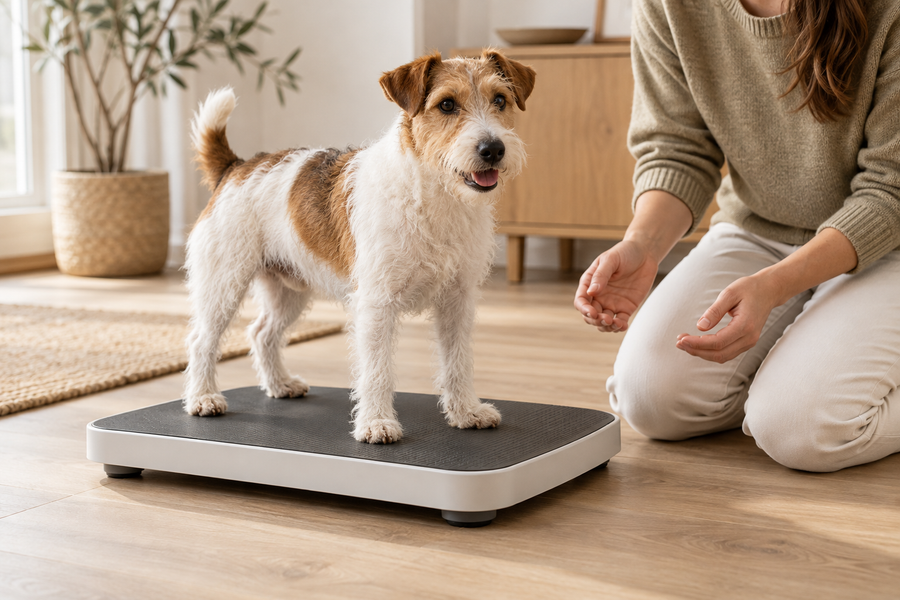
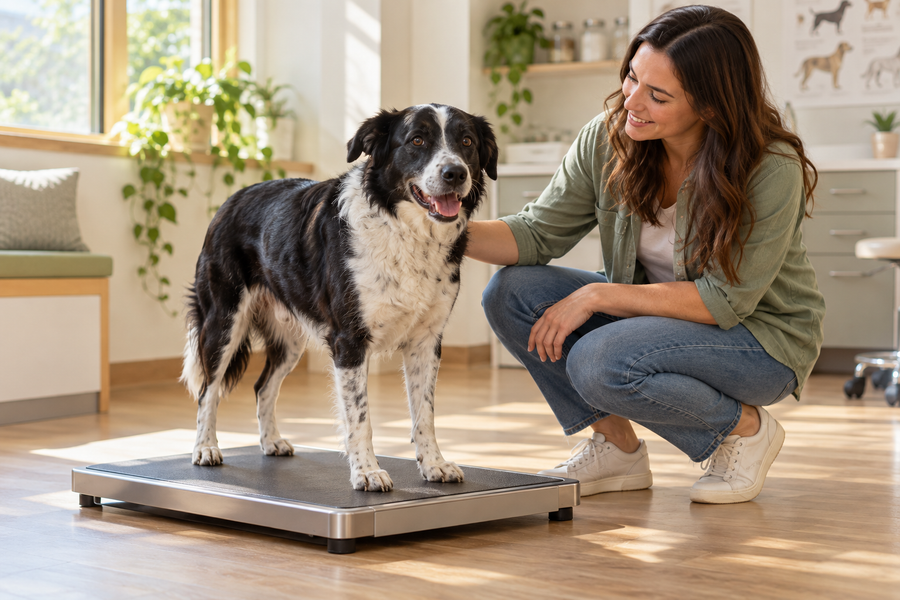
Choose a quiet place with a secure floor. Let your dog stand naturally on all four paws rather than sitting, stretching, or twisting toward a treat.
Assess them when they are calm. If touching a region causes discomfort, stop and tell your veterinarian. This is an observation exercise, so there is no need to press hard or insist on finishing.
Try to use the same approach each time. A photograph can document an outline, but it cannot tell you what lies beneath the coat.

Step 1: Gently assess the rib coverage
Place your hands along the sides of the chest and identify the ribs with light touch. Notice how much tissue lies over them and whether they are straightforward or difficult to distinguish.
Record your observation in everyday language first: for example, “ribs easy to find with gentle touch” or “harder to distinguish than last time.” This can be more useful than selecting a number you do not feel confident about.
Step 2: Look down at the waist
From above, observe the body just behind the ribs. Note whether it narrows toward the waist, continues with little change in width, or looks unusually drawn in.
Keep your viewing angle consistent. A dog bending toward you can change the outline. If the coat obscures the shape, use a gentle hands-on assessment and ask your veterinary team to demonstrate at the next visit.
Step 3: Observe the abdomen from the side
From the side, follow the underside of the body behind the chest. Notice the abdominal tuck and interpret it alongside the rib and waist observations. These are the body regions used in the MSD Veterinary Manual's condition assessment table.
Avoid choosing the score from the abdomen alone. Individual structure can make the outline less straightforward, and a new or unusual change deserves professional attention.

How do you choose a score when the signs do not all match?
Compare all three observations with the reference chart. Choose the closest overall match, and record that it is a home estimate.
You can then use the SATELLAI Dog Weight & Body Condition Check to record the selected score alongside a current weight. If you have a target weight from your veterinarian, the tool can also compare the two numbers. It does not calculate BCS from the scale reading, breed, or a photo.
If you are between scores, note your uncertainty and ask your veterinary team to score your dog with you. A consistent method is more helpful than false precision.
What is the difference between BCS and muscle condition score?
Body fat and muscle need separate assessment. The WSAVA muscle condition chart notes that muscle loss can occur even in an overweight animal.
This matters if the scale reading stays similar while your dog's strength or shape changes. A BCS in the ideal range also does not establish that a dog is free from illness. Veterinary assessment adds the health history, physical examination, and muscle evaluation that a home check cannot provide.
How should you record a dog's BCS?
Record the date, body weight, units, score, and who made the observation. Write “5/9” rather than simply “5,” because other scoring systems use different scales. AAHA recommends consistent use of the nine-point system to make records easier to interpret.
Pair the score with our weight tracking guide. If you are trying to understand a target number, read how much your dog should weigh.
Frequently asked questions about dog body condition scores
What is a healthy body condition score for a dog?
The ideal range on the nine-point canine BCS scale is 4–5/9. That describes body fat and shape, not overall health. A dog can have an ideal BCS and still need assessment for muscle loss or other medical concerns.
Is 5/9 the same as 5/5?
No. A score only makes sense when its scale is specified. Five out of nine and five out of five occupy different positions in their respective systems. Record the denominator and ask the veterinary team to interpret a score made on a different scale.
Can I score a dog from a photo?
A photograph can document the outline, but it cannot show how the ribs feel beneath the coat. Posture and camera angle also affect appearance. Combine observation with gentle touch and veterinary guidance rather than treating a photo as a complete assessment.
Can a BCS tell me exactly how much my dog should weigh?
A home BCS does not establish an exact target weight. A veterinary team can interpret the score alongside measured weight, muscle condition, frame, and health. The SATELLAI tool reports the score you select and compares weight only when you enter a separate vet-set target.
This guide describes a home observation method for adult dogs. It does not replace veterinary assessment or provide a feeding prescription.