Yes, you can train an older dog. Whether you've adopted an adult rescue dog or want to improve a longtime companion's habits, start with one useful skill and make the first steps easy to reward.
An adult dog starting training is different from a senior dog who needs adjustments for comfort, hearing, or vision. This guide covers both, with a simple mat exercise and ways to build better habits at home.
How do you train an older dog? Pick one everyday skill, practice in a quiet place, and reward small steps toward the behavior. Use gates, leashes, or changes to your routine to prevent the old habit from paying off. For senior dogs, adjust the exercise to their comfort and senses; new behavior changes need a veterinary check.
Step 1: Choose One Skill Your Dog Needs
Observe before introducing a long list of commands. Does your dog respond to their name? Follow a hand gesture? Rest comfortably on a bed? Come toward you when you crouch or move away?
A newly adopted adult dog may know different words or need time to feel safe before familiar skills reappear. Use the same simple cue consistently rather than testing several words in quick succession.
Choose an everyday goal: checking in during walks, resting on a mat, waiting while a door opens, or returning when called. One clear goal makes progress easier to recognize.
Step 2: Check Comfort and Health
A dog who avoids sitting may find that position uncomfortable. A dog who misses a verbal cue may not hear it clearly. Sudden house-training problems or nighttime confusion deserve more than a refresher lesson.
The American Animal Hospital Association (AAHA) includes changes in movement, behavior, vision, and hearing as part of a senior pet's health history. Share new or persistent changes with your veterinarian.
Use nonslip flooring, comfortable temperatures, and easy access to the training area. Choose a response your dog can perform comfortably; a calm stand can replace repeated sits if sitting is difficult.
Step 3: Teach a Simple Mat Routine
A mat routine gives your dog a familiar place to settle while you eat dinner or answer the door. Start with getting onto the mat; waiting there through distractions comes later.
Have a few tiny treats that fit your dog's diet ready:
- Place a comfortable mat on a nonslip surface.
- Reward your dog for voluntarily looking toward or approaching it.
- Reward a paw on the mat, then additional steps onto it. Place the reward on or over the mat so you are not repeatedly drawing your dog away.
- Once the dog readily moves onto the mat, add a consistent cue just before that movement.
- Reward a brief pause there. Use a consistent release word, such as "free," before inviting the dog off the mat. Teach the release by saying it and then encouraging movement away.
Begin with a few successful repetitions. Increase duration separately from distance or distractions. A dog who can pause on the mat beside you is not yet ready to remain there while guests enter.
For reward selection and marking behavior, see SATELLAI's positive reinforcement guide.

Step 4: Replace the Habit You Want to Change
Ask what the existing habit achieves. Pulling may lead to an interesting smell. Barking at you may start play. Rushing a door may create access outside.
Then teach an alternative that can produce an appropriate version of that outcome. For example, wait for a brief pause before opening the door, or reward a moment of loose-leash walking by moving toward a safe sniffing spot.
Manage the situation while the new response develops. A gate can prevent door rushing; more distance can make a distracting walk easier. Consistent practice matters because the old habit may have a long history of paying off.
How to Adjust Training for a Senior Dog
Keep sessions short enough that your dog remains engaged and comfortable. A few easy repetitions may be more useful than completing a predetermined session length.
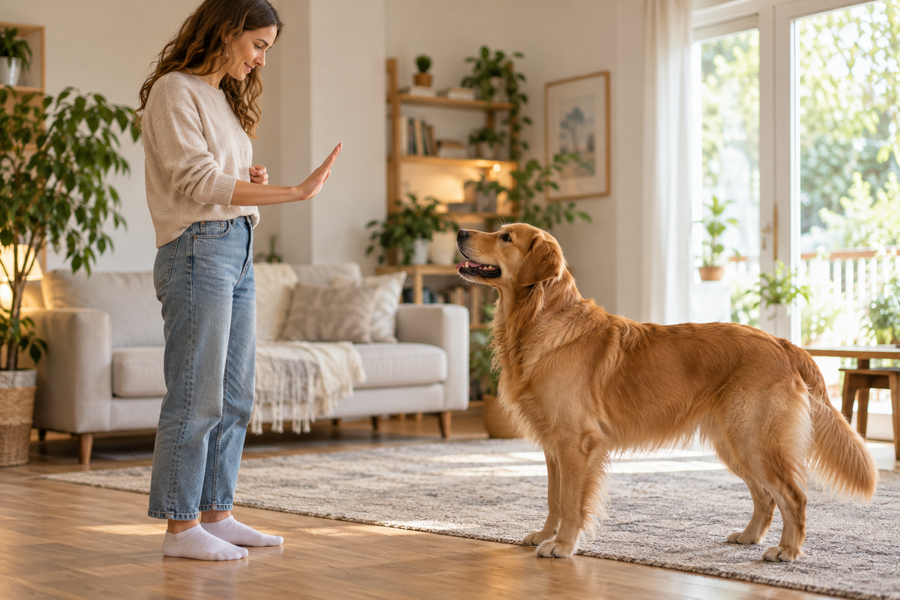
If hearing is reduced, a visible hand signal may help. If vision is reduced, keep verbal cues clear and the environment predictable. Avoid startling the dog with unexpected touch, and ask a professional for individualized help when sensory changes complicate communication.
The American Veterinary Society of Animal Behavior (AVSAB) recommends reward-based training. Keep practice gentle and avoid escalating pressure when a dog struggles.
Let your dog rest between sessions. Stop if you notice discomfort, unusual breathlessness, repeated avoidance, or a marked drop in enthusiasm.

Track Progress Alongside Your Dog's Daily Routine
Record the behavior you practiced, the setting, and how comfortably your dog responded. Also note whether they seemed unusually tired or restless that day.
SATELLAI Collar Go provides activity monitoring and insights into daily patterns, which can complement those notes. A change may prompt you to observe more closely or discuss concerns with a veterinarian; the data does not diagnose pain, cognitive decline, or training success. Check fit and suitability for your individual dog before use.
For broader care adjustments, read How to Care for a Senior Dog.
A Simple Practice Routine for an Older Dog
Start when your dog is rested and interested. Practice the mat approach a few times, reward each successful step, and take a break before attention fades. Later, repeat an easier version during an ordinary moment, such as sitting down to watch TV.
Record what changed: your dog approached with less help, stayed comfortably for a brief pause, or responded in a second quiet room. These are useful progress markers. There is no fixed number of days in which every adult dog should learn a skill.
If the same step remains difficult, change the setup. Try a more comfortable surface, a simpler request, or a quieter time of day before adding repetitions.
When to Call a Vet or Trainer
Call your veterinarian for a sudden loss of familiar skills, new accidents indoors, confusion, unusual irritability, or signs of pain. AAHA's behavior guidance identifies changes such as disorientation and altered sleep as reasons for closer attention in senior pets.
For a training plan, look for a professional with relevant adult- or senior-dog experience through the CCPDT directory. Ask how they adapt reward-based methods to your dog's limitations.
Frequently Asked Questions
Is it ever too late to train a dog?
Age alone does not make training too late. Start with achievable tasks and account for previous habits. Health, comfort, and cognitive changes may limit what an individual dog can do, so adapt the goal rather than pushing through difficulty.
How long should training sessions be for an older dog?
Start with a few easy repetitions and stop while your dog is still comfortable and engaged. Several brief opportunities can work better than one long session. Adjust for fatigue, health, and interest rather than following a rigid time limit.
How do I know when to make a task harder?
Look for easy, repeatable responses across several sessions. Add one challenge at a time, and simplify if your dog starts struggling.
What if a trained older dog suddenly stops responding?
Check the environment and cue, but also consider health or sensory changes. New, persistent loss of familiar abilities warrants a veterinary visit.
Sources and Further Reading
- AAHA: Evaluating the Healthy Senior Pet
- AAHA: Age and Behavior
- AVSAB: Current Training Position Statements
Product disclosure: SATELLAI manufactures the products mentioned in this guide. Images are AI-generated illustrations of training situations.