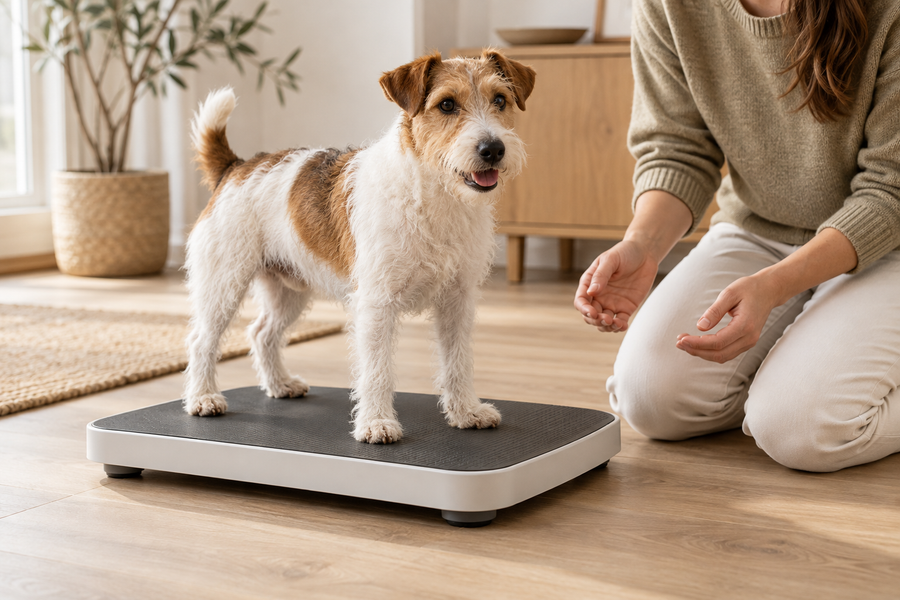
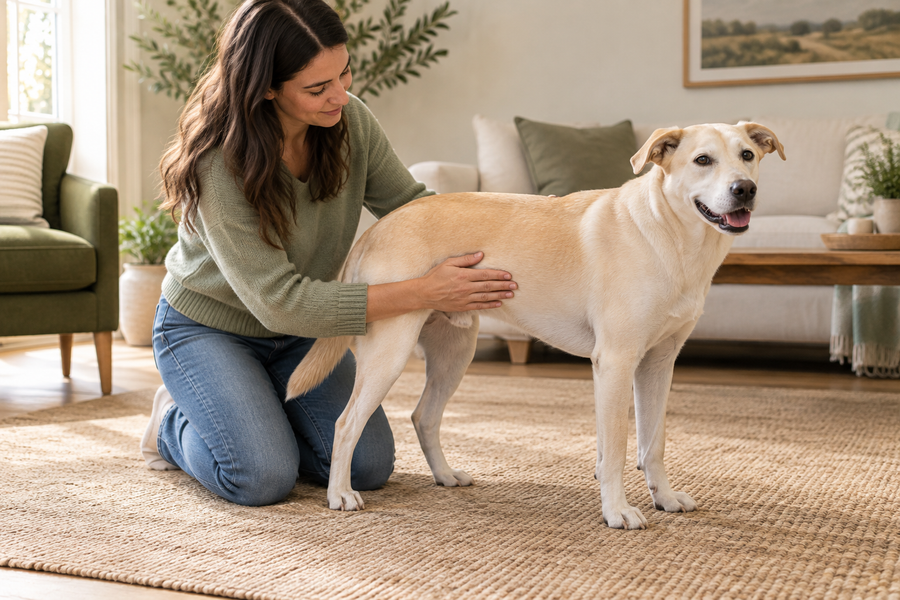
Your dog's healthy weight is an individual target based on body condition, frame, muscle, life stage, and health. A breed weight range provides context but cannot set that target by itself. Ask your veterinarian to interpret your dog's current weight and agree on a goal or reassessment point.
This guide explains how to use a veterinary target, what a dog weight calculator can compare, and why “percent above target” is different from body-fat percentage or percent of starting weight lost.
Can a breed weight chart tell you your dog's ideal weight?
A breed range is a broad comparison. It does not examine your dog, describe their muscle condition, or show how their weight has changed.
Imagine two fully grown dogs of the same breed. One has a smaller frame; the other is taller and more muscular. The same scale reading would not necessarily represent the same condition in both. For a mixed-breed dog, choosing a single breed range may be even less informative.
Use a range as background for a conversation. Avoid making it the only reason to increase food, reduce portions, or set a weight-loss goal.
What do veterinarians assess when setting a healthy weight?
Body weight
This is the total measured in pounds or kilograms. A series of readings can show direction, provided the measurements are made consistently.
Body condition score
BCS describes fat coverage and shape. Our nine-point body condition guide explains the observation method. The number should be recorded with its scale, such as 5/9.
Muscle condition
Muscle assessment adds information that body weight and BCS cannot supply on their own. It is especially useful when a dog's shape, strength, or health changes.
AAHA's nutritional screening guidance includes body weight, body condition, muscle condition, and the wider health and feeding history. Those findings help a veterinarian interpret what a scale reading means for an individual dog.

What should you ask about a vet-set target weight?
Ask your veterinarian whether your dog's current condition calls for weight loss, weight gain, or maintenance. Then ask for a target weight or initial milestone, written in the units you use at home.
It can help to ask:
- “What body condition are we aiming for?”
- “Is this the final goal or the first reassessment point?”
- “When should we weigh again, and what change should prompt a call?”
- “Does the feeding plan need to account for any health condition?”
AAHA's guidance on individualized feeding plans emphasizes suitable amounts of complete and balanced nutrition and accounting for food beyond the main meals. A target number is one part of that plan.
How does the dog weight calculator compare current and target weight?
The SATELLAI Dog Weight & Body Condition Check lets you enter a current weight and, optionally, a target supplied by your veterinarian. It shows the current weight's percentage difference from that target:
Percentage above target = (current weight − target weight) ÷ target weight × 100
For an illustrative example, suppose the current weight is 66 lb and the veterinary target is 60 lb:
(66 − 60) ÷ 60 × 100 = 10% above target.
That is a numerical comparison with the target you entered. It is not a measurement of body-fat percentage, a diagnosis, or a daily calorie recommendation. The body condition result comes separately from the BCS you select.
The tool does not infer an exact ideal weight from a breed average or a home score. If you do not have a veterinary target, leave the target field blank and use the body condition check as an observation to discuss.

Is “10% above target” the same as “10% of body weight to lose”?
No. The denominator changes the question. Moving from 66 lb to 60 lb would be a 6 lb loss, or about 9.1% of the starting weight. Being 66 lb compared with a 60 lb target is 10% above that target.
| Comparison | Calculation in this example | What it means |
|---|---|---|
| Difference in weight | 66 lb − 60 lb = 6 lb | The numerical gap between current and target weight. |
| Percentage above target | 6 ÷ 60 × 100 = 10% | The gap as a proportion of the target weight. |
| Loss as a percentage of starting weight | 6 ÷ 66 × 100 ≈ 9.1% | The same gap as a proportion of starting weight. |
Use either pounds or kilograms, but keep both inputs in the same unit. These examples explain the arithmetic; they do not prescribe a target or the time needed to reach it.
Does a dog's target weight stay the same throughout life?
A target may need reassessment as your dog's life stage, body condition, or health changes. Write down who set it, when it was set, and the next planned review. Bring subsequent weights and observations to that appointment instead of treating the target as a permanent instruction.
Puppies, pregnant or nursing dogs, and dogs with health conditions need plans suited to their circumstances. The current SATELLAI tool is intended for fully grown adult dogs; it is not a growth predictor or a pregnancy weight calculator.
For a consistent record, follow our home weighing and tracking guide. If the goal is weight loss, use the safe weight-loss guide to organize the daily routine around the veterinary plan.
Frequently asked questions about ideal dog weight
How do I find a healthy weight for a mixed-breed dog?
Use the dog's own condition and veterinary assessment rather than averaging the ranges of suspected breeds. A veterinarian can assess frame, fat coverage, muscle, and health, then suggest a target or an initial milestone. Breed ancestry alone cannot supply a precise goal.
What if I do not know my dog's ideal weight?
Leave the optional target field blank in the SATELLAI tool. You can still use the body condition check to organize your observations. Ask your veterinary team to establish a target before interpreting a numerical difference as a weight-loss or weight-gain goal.
Can I use this calculator to predict my puppy's adult weight?
No. The current tool is for fully grown adult dogs. It does not predict adult size or establish growth, pregnancy, or nursing targets. Ask your veterinary team for guidance appropriate to your dog's life stage.
What if my dog is losing weight without trying?
Contact your veterinarian. Read our underweight and unexplained weight-loss guide to prepare useful observations, rather than using a target calculation to explain the change.
All figures above are illustrative arithmetic, not an individual weight or feeding recommendation.