Your dog may be overweight if their ribs are difficult to feel with gentle touch, their waist is becoming less defined, and their abdomen has little upward tuck. Check these features together, alongside weight history. A veterinarian can confirm whether the changes reflect excess body fat and help set an appropriate plan.
This guide is for owners checking a fully grown adult dog. It explains three observations you can make at home, what an overweight body condition score means, and what to record before an appointment.
How can you tell if your dog is overweight at home?
Choose a calm moment when your dog is standing comfortably on all four paws. Keep your touch gentle, and stop if they seem painful or reluctant to be handled.

1. Feel the ribs
Run your hands along the sides of the chest. In an ideally conditioned dog, the ribs should be identifiable beneath a light covering of tissue. Having to press firmly to locate them can suggest excess fat coverage.
Do not judge by rib visibility alone. Coat, posture, and individual build can change what you see. The feel of the chest provides another useful piece of information.
2. Look for a waist from above
Look down at your dog's back. Notice whether the body narrows behind the rib cage before widening toward the hips. A waist that has become harder to distinguish is worth recording, especially if older photos show a clearer outline.
3. Look at the abdomen from the side
From the side, look at the line running from the chest toward the hind legs. A healthy abdominal tuck usually rises behind the rib cage. A fuller outline with little definition can support a concern about excess body fat.
These observations are part of the physical assessment illustrated in AAHA's canine body condition chart. Consider the findings together rather than deciding from one feature.
What body condition score means a dog is overweight?
A body condition score, or BCS, describes fat coverage and body shape. It serves a different purpose from the number of pounds or kilograms on a scale.
On the nine-point system used by our tool, 4–5 is the ideal range, 6–7 is overweight, and 8–9 is the obesity range. The categories follow the ranges shown in AAHA's canine body condition resource. A home score is an observation to discuss with your veterinary team, rather than a diagnosis.
Use the SATELLAI Dog Weight & Body Condition Check to bring your dog's current weight and observations together. Its body condition result follows the score you select. It does not identify excess fat from weight alone or determine an exact ideal weight.
If you are unsure which number fits, our practical nine-point BCS guide explains how to make the assessment more consistent.
Is your dog overweight, muscular, or just fluffy?
A thick coat can hide the waist, so use gentle touch as well as sight. A sturdy or muscular build can also make visual comparisons less useful. Body condition scoring evaluates fat coverage; muscle condition requires a separate assessment. A veterinary team can help distinguish the two when the shape is difficult to interpret.
An active dog can still carry excess fat. Finishing a walk or enjoying play does not establish whether the ribs, waist, and overall condition are ideal. Compare your dog with their own earlier records rather than using another dog as the target.
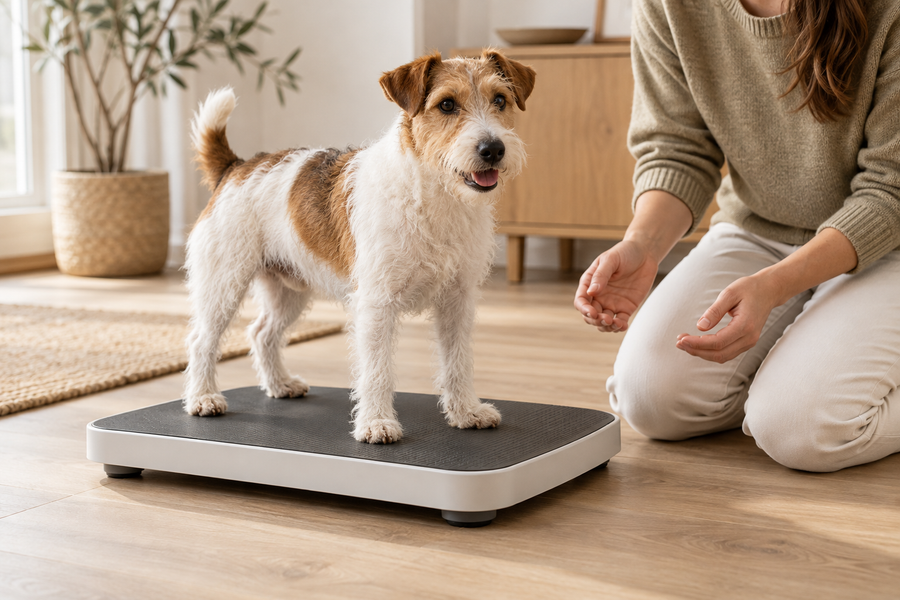
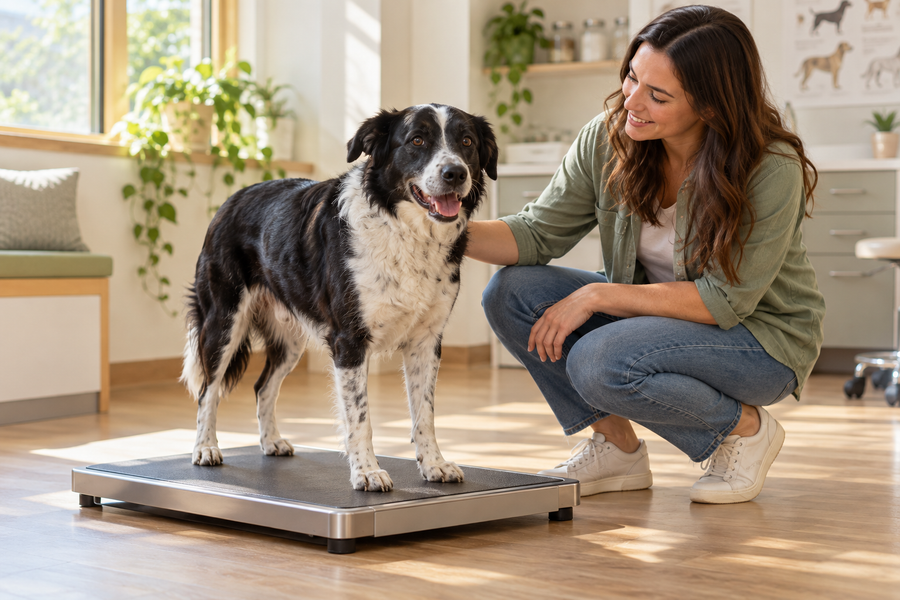
Write down the date of the last veterinary weigh-in and compare it with a new measurement made using a reliable scale. Add a note about whether the ribs, waist, or abdomen feel different.
You may also notice a change in willingness to walk, play, or climb steps. Such changes deserve attention, but they do not identify the cause. Avoid assuming that slowing down is simply a consequence of weight.
What to bring to a veterinary appointment
Give your veterinary team a clear picture of a normal day. A useful note includes:
- The food brand, recipe, and amount actually offered.
- Treats, chews, table food, toppers, and food used for medication.
- Whether another person feeds your dog or another pet's food is accessible.
- Recent weights, medications, and changes in appetite or activity.
AAHA recommends an individual assessment and weight management plan that considers diet, health, and suitable activity. Ask what target condition you are working toward and when the first follow-up should happen.

If your dog appears overweight, what comes next?
Start by recording the baseline. Then discuss a feeding and activity plan with your veterinarian rather than choosing a large food reduction or a strenuous exercise routine yourself.
Our guide to helping an overweight dog lose weight safely explains how to turn that plan into a manageable household routine. For a dog who is already comfortable and in good condition, the next step may simply be maintaining that routine and watching for change.
Frequently asked questions about overweight dogs
Can my dog be overweight even if they are within a breed weight range?
Yes. A dog can fall within a published breed range and still carry excess body fat for their own frame. Breed weight is a reference; a veterinary assessment of fat coverage, muscle, and health is more useful for deciding whether that individual dog needs to lose weight.
Can a dog be overweight even if they exercise every day?
Yes. Daily exercise does not by itself establish healthy body condition. Review the dog's ribs, waist, weight history, and feeding routine together. If excess body fat is confirmed, ask for a plan that accounts for both nutrition and appropriate activity.
Is difficulty feeling the ribs enough to diagnose obesity?
Difficulty finding the ribs is a reason for a fuller assessment, rather than a diagnosis by itself. Fat coverage, coat, build, and handling all affect the observation. Ask your veterinarian to demonstrate the assessment if you cannot confidently tell what you are feeling.
Should I cut my dog's food as soon as I suspect excess weight?
First record the current portions and all extras, then ask your veterinary team about an appropriate amount. A large, unsupervised reduction can make it harder to meet nutritional needs. The safe weight-loss guide explains how to organize a prescribed plan.
Ready to establish a starting point? Check your dog's body condition and bring your observations to your veterinary team.
This guide provides general education for adult dogs. Your veterinarian can assess your dog's individual health and nutritional needs.