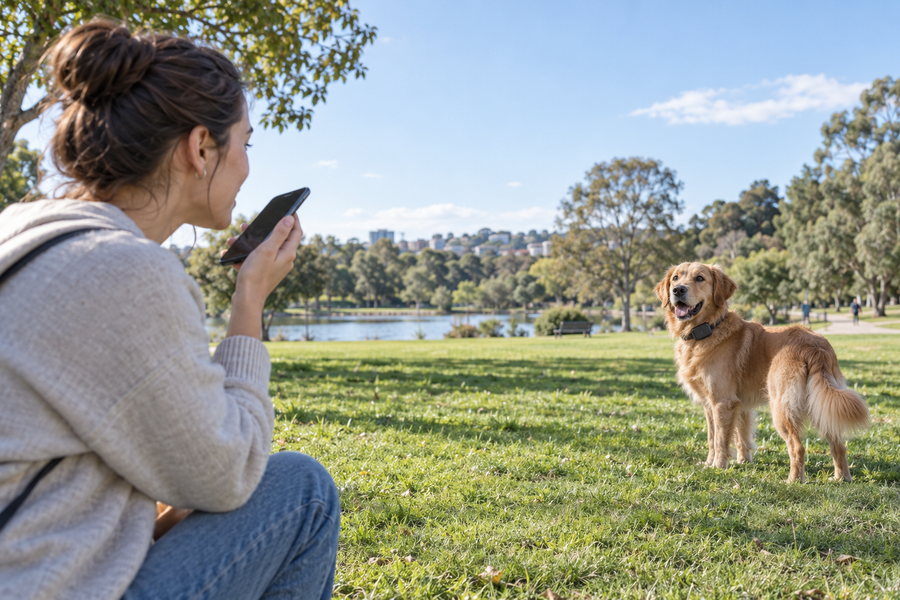
The first days with an adopted dog are exciting, but they are also unusually unpredictable. A dog may not know the new home, respond reliably to a new name or understand which door leads to a busy street. Even a calm dog can bolt when startled by traffic, visitors or an unfamiliar noise.
A GPS tracker can add location awareness during this transition. The best GPS tracker for rescue dogs is one the dog can wear comfortably, the owner understands before an emergency and the local network can support. It cannot prevent every escape, replace a leash or make an anxious dog feel secure.
Quick answer: For newly adopted dogs weighing at least 8.8 lb, SATELLAI Collar Go is the strongest SATELLAI fit because it combines lightweight live GPS tracking, customizable virtual-boundary alerts, location history, a night safety light, two-way audio and a built-in NFC identification feature. Tractive is a straightforward location-first alternative, while Fi Mini is worth considering for a smaller dog that needs a lighter device. Use SATELLAI Collar only after a compatible medium-to-large dog has settled and when a larger-property virtual fence is genuinely needed.
Editorial disclosure: SATELLAI publishes this guide and sells products discussed below. Comparisons use public specifications and intended use cases reviewed in September 2026. They are not presented as independent hands-on testing.
How We Evaluated Trackers for Newly Adopted Dogs
We prioritized secure fit, device weight, fast live-location access, recognizable escape alerts, dependable identification layers and a charging routine that a new owner can maintain. We also favored products that can support a calm transition without implying that GPS replaces a leash, a secure harness, a registered microchip or gradual behavior training.
Best Options at a Glance
| Option | Best for | Helpful transition feature | Main limitation |
|---|---|---|---|
| SATELLAI Collar Go | Everyday safety for dogs at least 8.8 lb | Live tracking, escape alerts, NFC ID and night light | Connected functions require a telecom plan |
| Tractive | Location-first tracking across different dog sizes | Live tracking, virtual-fence alerts and sharing options | Separate subscription required for each tracker |
| Fi Mini | Small dogs and lightweight wear | Live location, safe-zone alerts, activity and sleep tracking | Not an active virtual-fence system |
| SATELLAI Collar | Settled dogs using larger properties | GPS fencing, tracking and configurable boundary support | Too specialized for many first-week routines |
| Bluetooth item finder | Low-cost backup layer | Nearby compatible-device network | Not a dedicated live GPS dog tracker |
1. SATELLAI Collar Go — Best SATELLAI Choice for a New Dog
SATELLAI Collar Go is designed around everyday tracking rather than active boundary training. It provides live GPS, location history, customizable virtual boundaries with app-based escape alerts, activity and health monitoring, Doggie-Talkie, an adjustable night light and a built-in NFC identification tag.
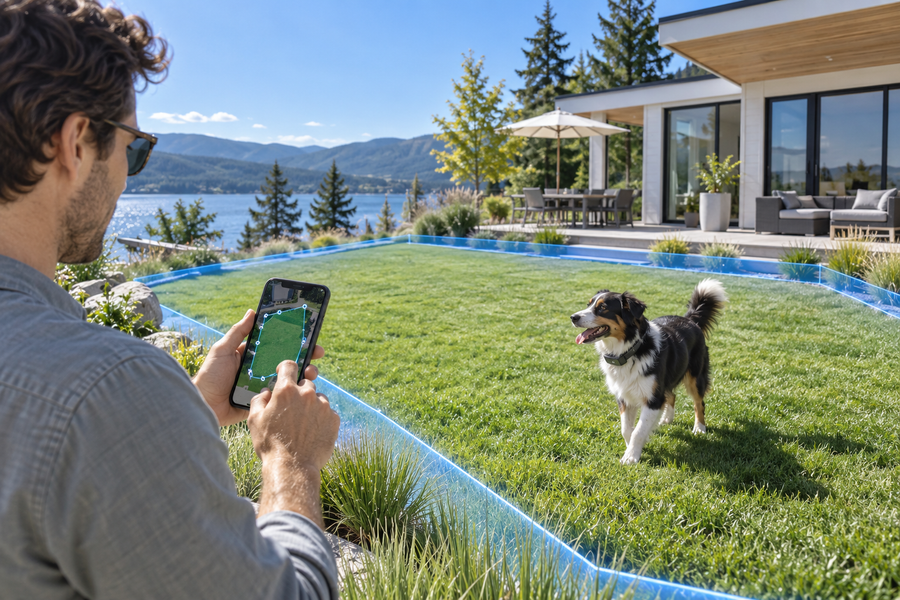
For a newly adopted dog, that mix is practical. A boundary around the new home can provide an early alert, while Live Tracking helps the owner follow movement if the dog gets away. Location history may show the route the dog recently took. The NFC tag gives a finder another way to share contact information if the collar remains attached.
The U.S. device weighs about 1.7 oz / 47 g and is suitable for dogs weighing at least 8.8 lb. It should be worn at the neck on a compatible collar or harness strap. Measure the dog, check for rubbing and confirm that the mounting hardware cannot slide off.
Doggie-Talkie may let an owner speak through the device or play a familiar prerecorded cue. That can help get attention, but a frightened or newly adopted dog may not respond. Treat voice as a support feature, not a remote-control guarantee.
2. Tractive — Best Location-First Alternative
Tractive focuses on live GPS location, escape alerts, virtual safe areas, location history and activity or health monitoring. Its range of tracker formats may suit households whose adopted dog falls outside another product’s size guidance.
Plan level matters. Review family sharing, international coverage and history retention before buying, and practice switching into Live Tracking before the dog wears the device outside.
3. Fi Mini — Best for Small Dogs and Lightweight Wear
Fi Mini is a compact tracker that attaches to a compatible collar and provides live GPS location, Lost Mode, safe-zone alerts, activity and sleep tracking. At about 0.56 oz according to current product information, it may suit a small newly adopted dog that falls below Collar Go’s 8.8 lb minimum weight, provided the fit is secure and the manufacturer’s guidance is followed.
Fi lists up to two months of battery life for Mini, but published maximum battery life is not the same as real emergency runtime. Weak signals, tracking behavior and real-world use can reduce it. Use a repeatable charging schedule rather than waiting for the battery to become critically low.
4. SATELLAI Collar — Best After a Dog Settles on a Larger Property
The full SATELLAI Collar is built for compatible medium-to-large dogs using virtual-fence areas of at least 0.5 acre. It combines live GPS, unlimited custom-shaped boundaries, no-go zones, configurable boundary feedback and activity insights.
That is not usually the first tool to introduce on adoption day. A new dog needs time to decompress, learn the home and build trust. If a larger-property boundary will become part of the routine, introduce it gradually on leash after the dog is comfortable and the owner understands the dog’s behavior.
5. Bluetooth Tags — Best as a Secondary Backup
A Bluetooth item finder can help locate a collar near compatible phones, particularly in a populated area. It is not equivalent to a cellular GPS tracker and should not be presented as continuous live tracking.
For a dog with an unknown escape history, a dedicated GPS tracker is usually the more capable primary tool. A Bluetooth tag may still serve as a low-cost additional layer.
What a Newly Adopted Dog Actually Needs

Secure fit before smart features
Check the collar and harness indoors. You should be able to follow the manufacturer’s fit guidance without allowing the dog to back out or the tracker to rotate excessively. Recheck after grooming or weight change.
Escape alerts that are easy to recognize
Create a safe area around the home and test the alert while the dog is securely leashed. Give the alert a distinctive phone notification and ensure more than one responsible adult knows what it means.
Fast access to Live Tracking
Do not wait until the dog is missing to learn the app. Practice opening the map, identifying the last update and changing tracking mode.
A realistic battery routine
Charge while the dog is safely indoors and supervised. Keep a standard collar with visible identification on the dog when the tracker is removed.
Coverage in the real neighborhood
GPS accuracy and cellular delivery are different. Test the device around the building, parking area and normal walking route. Tall buildings, trees and reflected signals can affect positioning, while weak LTE can delay app updates.
For more technical context, see how GPS dog trackers work.
A Safer First-Week Setup
- Confirm the microchip is registered to the current owner.
- Add a visible ID tag with a current phone number.
- Fit and activate the GPS tracker indoors.
- Add the dog’s current photo and name to the app.
- Set a home boundary with a generous safety buffer.
- Test the escape notification with the dog on leash.
- Keep the dog leashed outside, including in an unfenced yard.
- Use a secure doorway routine and tell visitors not to open exterior doors.
- Keep early walks quiet and predictable.
- Arrange an initial veterinary visit and bring available health records.
The AKC recommends giving adult dogs a confined, manageable space at first and taking them outside on leash as they adjust. Its guidance also emphasizes that every dog decompresses at a different pace.
Build a Layered Lost-Dog Plan
A tracker is most effective when it sits inside a broader plan:
- Visible ID tag: Gives a finder an immediate phone number.
- Registered microchip: Provides permanent identification if the collar comes off.
- GPS tracker: Helps the owner follow current or recent movement.
- Secure harness and leash: Reduces the chance of an escape during walks.
- Recent photo: Helps shelters and neighbors recognize the dog.
- Local contacts: Include the shelter, microchip registry and veterinary clinic.

The ASPCA recommends combining visible identification with a registered microchip and keeping contact information current. Learn more in SATELLAI’s comparison of GPS trackers, microchips and AirTags.
What Health and Activity Data Can Tell You
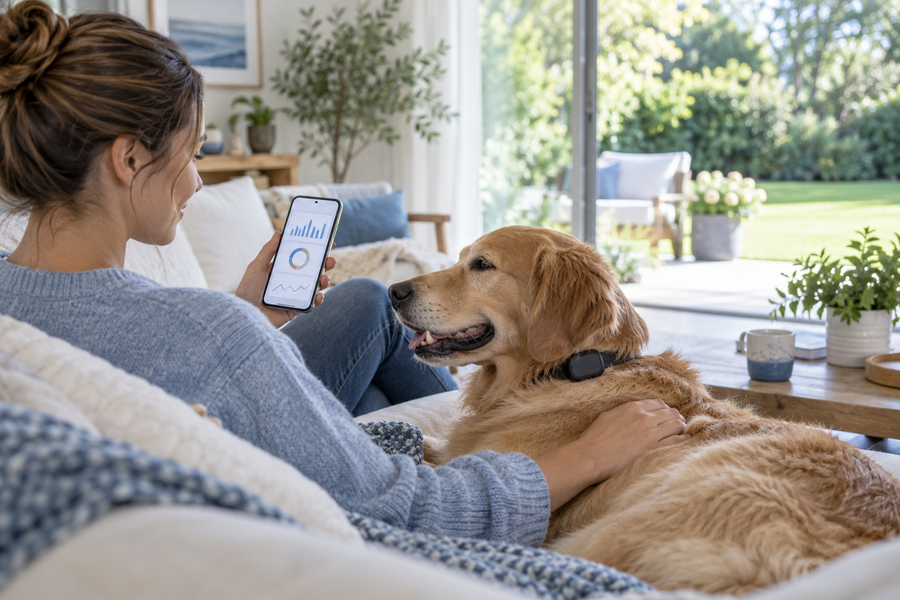
During the transition, activity and rest data may help you establish a baseline. A dog that sleeps often during the first quiet days may simply be decompressing; another may pace or remain unusually alert.
Wearable trends cannot explain why behavior changed. If the dog stops eating, has difficulty breathing, repeatedly vomits, appears painful, becomes profoundly lethargic or shows another concerning sign, contact a veterinarian rather than waiting for the app to interpret it.
Frequently Asked Questions
Should a rescue dog wear a GPS tracker immediately?
It can be useful once properly fitted and activated, especially during transport and early walks. Introduce it calmly indoors and make sure it does not add discomfort or interfere with the harness.
Is a GPS tracker better than a microchip?
They solve different problems. GPS can help show where a dog is moving; a microchip helps identify the owner after the dog is found and scanned. Use both, along with a visible ID tag.
Can I let my adopted dog off leash if it has GPS?
Not simply because a tracker is attached. GPS does not stop traffic, create recall or physically contain a dog. Follow local leash rules and wait until the dog has appropriate training and a safe environment.
What if my new dog weighs less than 8.8 lb?
Collar Go is not recommended below that weight. Choose a tracker whose manufacturer explicitly supports the dog’s body weight and collar size; do not select a device only because it can be physically attached.
Can two-way audio make a lost dog return?
It may help a dog hear a familiar voice, but response depends on training, stress, distance, noise and connectivity. Continue teaching recall through positive, controlled practice.
Final Verdict
SATELLAI Collar Go is the best SATELLAI option for many newly adopted dogs because it combines portable live tracking with early escape awareness, location history, visibility and identification features. Tractive is a strong location-first alternative, while Fi Mini may better suit smaller dogs that need a lighter tracker.
The tracker should support a calm transition, not rush it. Keep the dog leashed, secure doors and gates, update identification, schedule veterinary care and allow time to decompress. The smartest device is only one layer in a thoughtful first-week plan.
External Sources
- American Kennel Club, How to Help an Adult Dog Adjust to a New Home.
- American Kennel Club, The Importance of Decompression.
- ASPCA, Position Statement on Pet Identification.