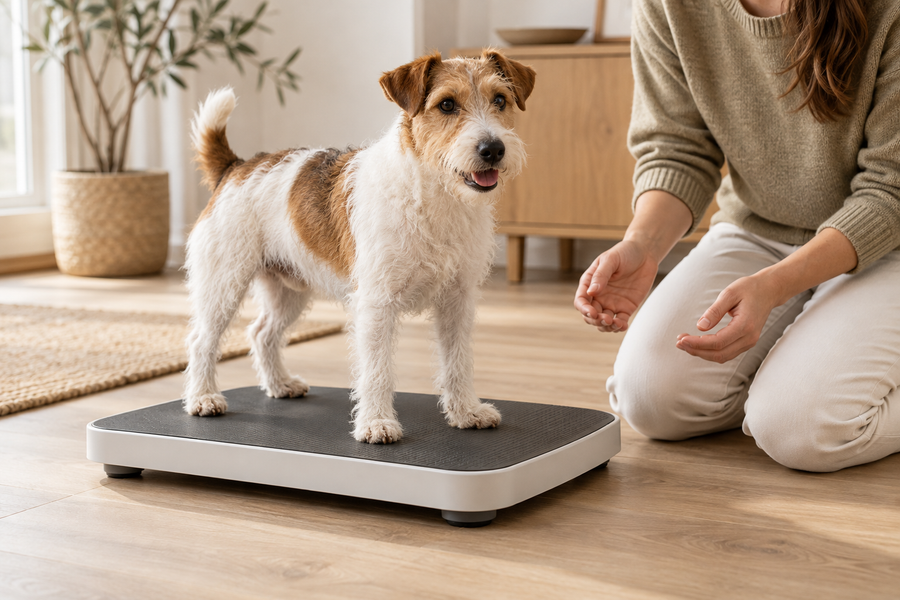
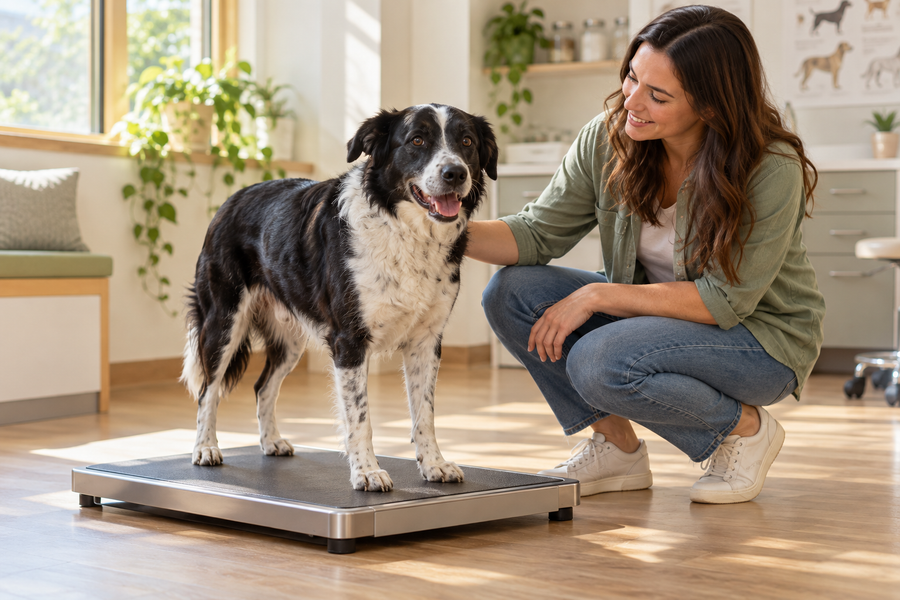
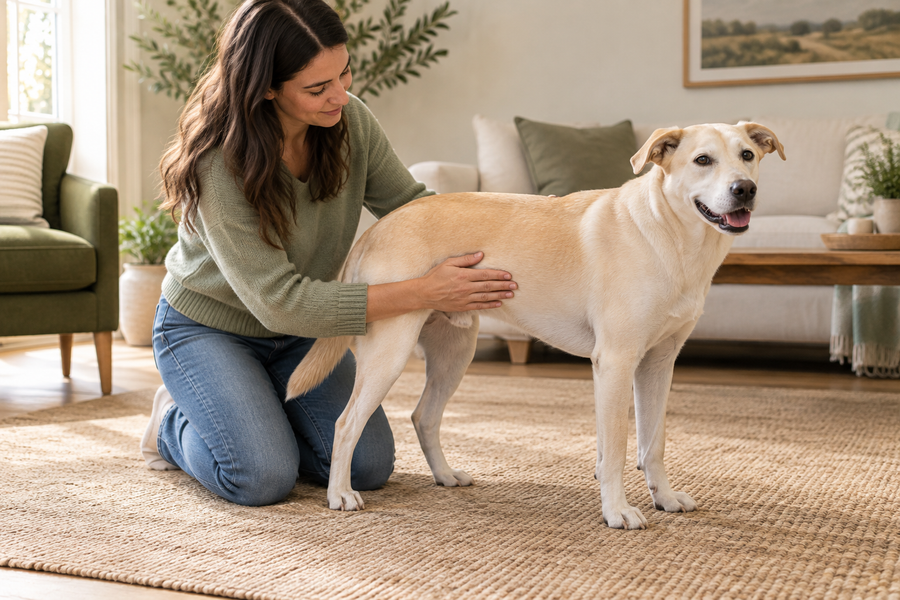
To help an overweight dog lose weight safely, start with a veterinary assessment and an individual feeding plan. Measure meals, account for treats and extras, choose activity your dog can comfortably manage, and record progress for reassessment. Ask your veterinarian to set the target and pace rather than choosing a large food reduction yourself.
The steps below turn that plan into a daily routine. The aim is to make feeding and follow-up practical for everyone who cares for your dog.
1. Confirm the starting weight, body condition, and goal
Bring a recent weight, your observations of body shape, and a record of everything your dog eats. The assessment should also consider muscle condition and any health concerns.
You can use the SATELLAI Dog Weight & Body Condition Check to organize an adult dog's starting observations. If you are unsure whether extra body fat is present, begin with the signs of an overweight dog. A home result is not enough to prescribe a diet.
Ask your veterinary team to put the plan in writing: food, daily amount, treats, activity guidance, target or milestone, and follow-up date. The American Animal Hospital Association (AAHA) recommends an individualized weight-reduction approach that considers current intake and lifestyle.
2. Record everything your dog eats
List the main meals and everything else: training rewards, dental chews, table food, toppers, supplements with calories, and food used to give medication. Include food offered by other people or accessed from another pet's bowl.
Use a shared note if several people care for your dog. Instead of writing “a few treats,” record the product and number. A photograph of the packaging can help the clinic identify the relevant product.
The purpose is to describe the current routine accurately. You do not need to solve every part of it before the appointment.
3. Weigh the prescribed meals instead of estimating portions
If the veterinary plan gives an amount in grams, use a kitchen scale rather than estimating by eye. Weigh the daily allowance, then divide it into the recommended meals.
AAHA recommends weighing food for greater portion accuracy. It also identifies extra food and access to another pet's meals as practical areas to address.
Keep the written feeding amount beside the food container. When a new bag arrives, check that it is the same recipe and confirm any product change with the clinic. If food needs to change, ask for transition instructions suited to your dog.

4. Count treats within the daily calorie allowance
Treats still contribute calories, even when they are small. AAHA advises that treats generally account for no more than 10% of total daily calories; your dog's prescribed allowance may be lower.
That percentage refers to calories, rather than the weight or volume of the food. Ask the clinic to translate the allowance into the products you actually use.
For an arithmetic example only, if a veterinarian prescribed 600 calories per day with up to 10% from treats, the treat allowance would be at most 60 calories. Those 60 calories are part of the 600-calorie total, leaving 540 for the planned main food. Six hundred calories is not a general recommendation for dogs.
One household approach is to set out the day's permitted rewards in a labeled container. Everyone draws from the same allowance. If your veterinarian recommends using some of the main food for training, take it from the measured daily ration.
Keep non-food rewards in the routine too: attention, praise, an appropriate game, or time exploring together.
5. Ask whether a weight-loss diet is appropriate
A large reduction in an ordinary ration can reduce essential nutrients along with calories. Ask your veterinarian whether the current food is suitable for the intended restriction.
AAHA's guidance on therapeutic weight-loss diets explains that these diets are formulated to help preserve nutrient intake during calorie restriction. The right choice depends on the individual dog and any other dietary needs.
Avoid treating fasting, supplements, or a homemade diet as shortcuts to a prescribed plan.
6. Increase suitable activity gradually
Ask which activities and starting level are appropriate, particularly if your dog has mobility problems or becomes tired easily. Build from that guidance instead of introducing a fixed step goal or long, strenuous walks.
AAHA's owner guidance on overweight pets recommends gradual changes to activity to avoid overexertion. Watch comfort and willingness as well as duration. If a walk brings pain, unusual breathing, or marked fatigue, stop and seek veterinary advice.
Activities you enjoy together can make the routine easier to sustain. Movement supports the plan, but it does not make unrecorded food irrelevant.
7. Track weight and review the plan with your vet
Agree on a weighing and follow-up schedule with your veterinary team. Record actual food intake, treats, weight, appetite, and any concerns. Our weighing and tracking guide includes a practical log.
If the trend is flat, check the record with the clinic rather than repeatedly reducing food yourself. If weight is falling unexpectedly fast, appetite changes, or your dog seems unwell, contact the clinic before the next scheduled review.
Avoid choosing a universal weekly percentage from an online article. Your dog's health, starting condition, and response determine how the plan should be adjusted.

What should you do when your dog reaches the target weight?
Ask for a maintenance plan rather than returning automatically to the old portions. Keep the habits that made the process manageable: measured meals, a shared reward allowance, and periodic checks.
Frequently asked questions about helping a dog lose weight
Can walking alone help my dog lose weight?
Walking can support a weight-management plan when it is appropriate for the dog's health and mobility. It does not remove the need to account for food and treats. Ask for a suitable starting routine, increase it gradually, and monitor comfort as well as time or distance.
How much should I feed my dog to lose weight?
The amount depends on the food's calorie density and the individual dog's target, health, and current intake. Ask your veterinarian for a daily amount in grams or another clear measure, with an allowance for extras. A universal percentage reduction or “half a bowl” is not an individualized plan.
Why is my dog not losing weight despite eating less?
The veterinary team needs the food and weight record to assess the cause. Review actual portions, calorie density, treats, access to other food, and how weight was measured. The clinic can also assess health factors and decide whether the plan needs an adjustment.
How quickly should my dog lose weight?
Ask your veterinarian for the intended rate and the next review date. The appropriate pace depends on the dog's starting condition, health, and response. If weight falls unexpectedly fast, appetite changes, or your dog seems unwell, contact the clinic rather than waiting for the scheduled review.
This guide supports veterinary weight management. It does not provide an individual calorie prescription or a target rate of weight loss.