You can weigh a small dog on a suitable pet scale or estimate their weight by subtracting your own weight from a combined person-and-dog reading. Use a platform scale for a dog you cannot safely lift. Record the scale, date, and units, and use a consistent method to compare changes.
Choose the method that fits your dog's size and comfort. Then use the log below to keep the measurements understandable for your veterinary team.
Which weighing method should you use for your dog?
| Method | When it may be useful | Main limitation |
|---|---|---|
| Suitable pet or baby scale | A small dog who fits comfortably within the scale's capacity. | The scale needs enough resolution for the changes being monitored. |
| Person-and-dog subtraction | A small, willing dog you can securely lift. | It is an estimate based on two readings and can miss small changes. |
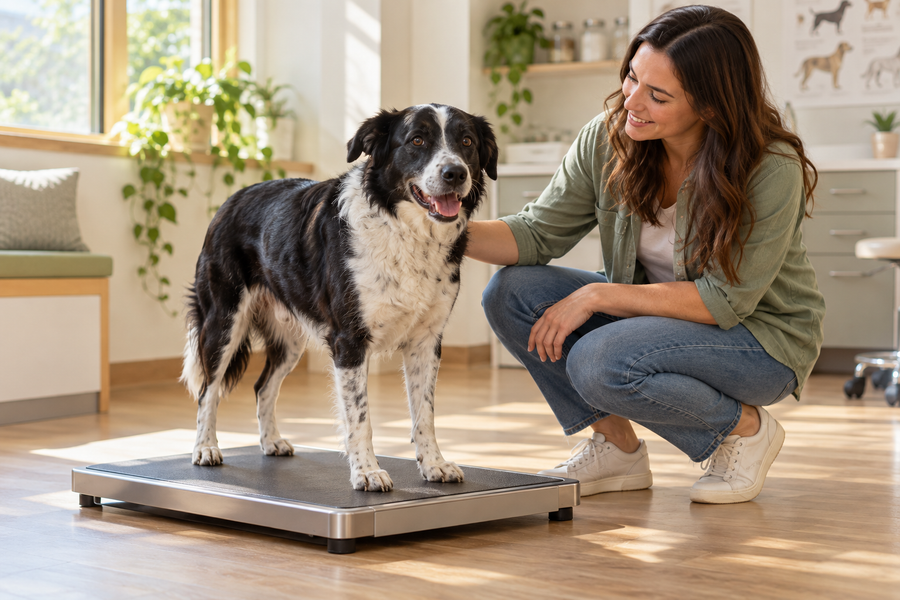
| Dog-sized platform scale | A large dog, an unwilling dog, or one you cannot safely lift. | You may need to arrange a clinic weigh-in. |
Method 1: Weigh a small dog on a suitable pet scale
Use a scale with an appropriate platform, capacity, and resolution for your dog. Place it on a stable, level surface. Let your dog become comfortable around it, and take a reading only when they are safely supported and still. Do not leave them unattended on a raised platform.
VCA's weighing guidance notes that an appropriately accurate small-animal or baby scale can be an option for small dogs. Ask your clinic whether your equipment is suitable for the changes you need to monitor.
Method 2: Use a bathroom scale with a small, willing dog
For a small, willing dog you can comfortably and securely lift, a bathroom scale may provide a rough estimate. Weigh yourself, then weigh yourself holding the dog, and subtract your weight from the combined reading.
For example, a combined reading of 162 lb minus a person-only reading of 150 lb gives an estimated dog weight of 12 lb. This is an arithmetic example, not a target weight.
Dogs Trust describes this method for suitable dogs. Do not attempt it if the dog resists handling or you cannot lift safely. Two separate scale readings also introduce measurement uncertainty, so this method may miss small changes.

Method 3: Arrange a platform weigh-in for a larger dog
Use an appropriately sized platform scale. Ask your veterinary clinic about arranging a weigh-in and whether you need an appointment. Do not assume a scale or weighing service will be available without checking first.
If weighing is stressful, ask for help introducing the scale gradually. Avoid pulling or forcing your dog onto it to obtain a number.
How can you make home weight readings more consistent?
Use the same scale and units where possible. Record whether it was a home scale, a clinic scale, or a combined-weight estimate.
Choose similar conditions, such as a similar time of day relative to meals and walks. Keep accessories consistent, or note when a harness or other equipment was included. Do not withhold water to standardize a reading.
Record the number as the scale displays it. Extra decimal places do not add accuracy that the equipment does not have. If a reading looks implausible, check the surface and setup and repeat it safely before drawing a conclusion.
How often should you weigh your dog?
Agree on an interval with your veterinary team. A dog on a weight-management plan may need a different schedule from a healthy adult maintaining a stable condition.
Ask three practical questions: how often to weigh, which scale to use, and what change should prompt contact. There is no benefit in collecting frequent measurements if you do not know how they should guide the plan.
If you notice unexplained weight loss or your dog seems unwell, arrange veterinary advice instead of waiting to finish a tracking period. PDSA's weight-loss guidance recommends reporting accompanying changes such as altered appetite, thirst, or energy.
Dog weight log: what should you record?
The entries below are fictional examples of documentation, not a suggested rate of weight change.
| Check-in | Weight | Scale and conditions | Home BCS | Notes |
|---|---|---|---|---|
| Baseline | 24.0 kg | Clinic platform, harness removed | 6/9 | Vet plan recorded; follow-up booked. |
| Follow-up | 23.8 kg | Same clinic platform and setup | 6/9 | Appetite unchanged; food allowance logged. |
| Later check | 23.8 kg | Same clinic platform and setup | Unsure | Bring observations to the planned review. |
In your own record, add real dates and distinguish a home estimate from a score assigned by a veterinary professional. Log the food amount actually fed and any changes to medication or routine.
VCA provides a weight-management tracker that also pairs weight information with daily care records. The useful habit is recording enough context for your veterinary team to interpret the trend.

How do you interpret changes in your dog's weight?
A single reading can be affected by the method and conditions. A consistent sequence makes comparison easier, but it still needs interpretation.
Pair the weight record with a body condition assessment, and ask your veterinarian about muscle condition. If a goal has been set, keep it alongside the record rather than substituting a breed average. Our ideal-weight guide explains the difference.
The SATELLAI Dog Weight & Body Condition Check can compare a current reading with a vet-set target and summarize the BCS you select. It does not automatically keep a history of your weigh-ins, so retain your own log.
Can an activity tracker help you understand a weight trend?
Activity information can give a weight record useful context: whether walks have become less frequent, for example, or whether your dog's usual routine has changed.
SATELLAI offers activity and wellness tracking to help you review those patterns. Use the observations alongside measured weight, food records, and veterinary guidance. Activity data does not directly weigh your dog or establish a body condition score, and a lower activity reading does not explain its own cause.
Frequently asked questions about weighing a dog at home
How accurate is weighing a dog on a bathroom scale?
A bathroom scale can provide an estimate for a suitable small dog, but its resolution and two-reading subtraction method may miss small changes. Compare the method with a clinic reading and ask whether it is accurate enough for your dog's monitoring plan.
How do I weigh a dog I cannot lift?
Use a stable, dog-sized platform scale rather than attempting to carry the dog onto a bathroom scale. Ask your veterinary clinic about an appointment or weighing service. If stepping onto the scale is stressful, request help introducing it gradually.
Can I estimate my dog's exact weight without a scale?
A photograph, breed chart, or body condition score cannot supply an exact weight. Those observations can add context, but an actual measurement is needed for a reliable weight record. Arrange access to a suitable scale rather than converting appearance into pounds or kilograms.
Does a smart collar weigh my dog?
The SATELLAI collar's activity information does not directly measure body weight. Use it to review patterns in the daily routine alongside actual weigh-ins and feeding records. Continue to use a scale and the monitoring plan agreed with your veterinarian.
For an unwell dog or unexplained weight change, contact your veterinarian rather than relying on a home tracking record alone.