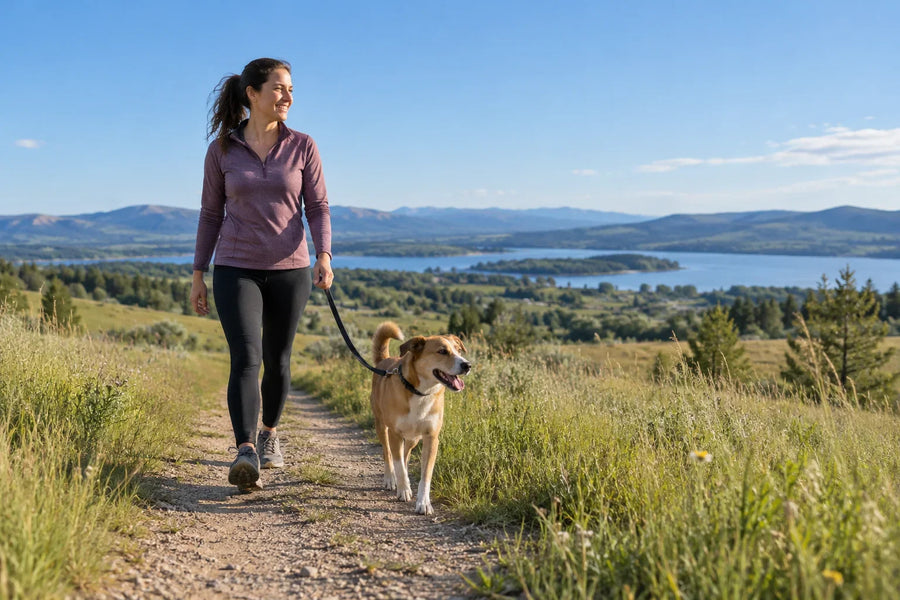
Keeping a dog safe in rural areas requires more than giving them space to roam. Country roads can be fast and poorly lit, wildlife can trigger a chase, livestock interactions can escalate quickly, and a dog that disappears into fields or woods may be difficult to see even when they are nearby.
The strongest plan uses several layers: secure barriers around high-risk areas, trained recall and check-ins, current identification, location technology, daily equipment checks, and a clear response plan if the dog goes missing.
30-Second Rural Dog Safety Checklist
- Physically secure roadside areas, livestock pens, equipment zones, and unsupervised turnout spaces.
- Walk the property and identify water, wildlife routes, toxic materials, damaged fencing, and weak cellular coverage.
- Teach recall, an emergency stop, and a return-to-home-base routine.
- Use a visible ID tag and keep microchip registration current.
- Consider a GPS collar for location awareness and escape alerts, but do not treat it as a physical barrier.
- Check collar fit, charge level, gates, and weather before outdoor time.
- Keep a written lost-dog and veterinary emergency plan.
1. Audit the Property From the Dog’s Point of View
Start at dog height and follow the routes your dog is likely to choose—not only the paths people use. Look for gaps under gates, loose fencing, drainage channels, fallen branches, animal trails, feed storage, compost, standing water, and places where vegetation blocks your view.
Map the property into three categories:
- Everyday safe areas: spaces where the dog can spend supervised time after training.
- Controlled-access areas: fields, trails, or work zones that require a leash, long line, or active supervision.
- No-access areas: roads, livestock pens, machinery, chemicals, unstable ice, steep drops, and other immediate hazards.
Recheck the map when seasons change. A dry ditch can become fast-moving water, a quiet field can become an active hunting area, and snow can raise the effective ground level beside a fence.
2. Use Physical Barriers Where the Consequences Are High
A physical fence is the most appropriate foundation where a dog could run into traffic, enter a livestock enclosure, approach visitors or delivery vehicles, or access equipment and chemicals.
Inspect fences and gates routinely. Dogs can dig beneath a previously secure section, squeeze through damaged wire, climb stacked materials, or slip through a gate left open during farm work. If several people use the property, agree on one gate-check routine so nobody assumes someone else secured it.
Electronic and GPS boundaries can support trained behavior, but they do not prevent another animal from entering and cannot physically stop a frightened or highly motivated dog from crossing.
For farms comparing boundary types, see our guide to the best dog fence options for farms.
3. Build a Reliable Recall and Check-In Routine
Rural distractions are powerful. Deer, livestock, machinery, unfamiliar dogs, and scent trails may compete with a cue that works perfectly in the kitchen.
Train in stages:
- begin indoors or in a securely fenced area;
- move outside on a standard leash;
- use a long line to practice at greater distance;
- add one controlled distraction at a time;
- reward fast returns generously;
- avoid calling the dog for something they consistently dislike;
- do not test off-leash freedom beside an unprotected hazard.
An emergency stop or down-at-a-distance cue can provide another layer when the dog is moving toward danger. A qualified reward-based trainer can help adapt the plan for dogs with strong prey drive, fear, reactivity, or a history of roaming.

4. Create a Home Base the Dog Understands
A defined home base gives the dog a predictable place to return. It might be a fenced yard, kennel area, mudroom entrance, porch, or another secure spot near the house.
Practice short returns to that location throughout the day. Use the same verbal cue and reward calm arrival. If the dog works across a larger property, regular check-ins can prevent distance from gradually increasing without anyone noticing.
Food, shade, clean water, and rest should be available in an appropriate secure area. Do not rely on an outdoor bowl staying full or clean throughout a long day; weather, wildlife, and active dogs can empty or contaminate it.
5. Use Identification in Layers
A visible collar tag helps a neighbor contact you immediately. A registered microchip provides permanent identification if the collar is lost. A GPS collar can add active location information and escape alerts.
These tools are complementary, not interchangeable. The American Veterinary Medical Association recommends that microchipped pets also wear a collar with current identification and advises owners to keep registration details updated: AVMA microchipping FAQs.
At least once a year—and whenever your contact details change—confirm:
- the phone number on the tag is readable;
- the microchip registry has your current contact information;
- your veterinary clinic has the correct address and phone number;
- you have recent clear photos showing the dog’s face, body, and distinctive markings.
6. Add GPS Tracking for Location Awareness
A GPS collar can show where a dog is, record location history, and notify the owner when the dog leaves a defined area. This can be especially helpful when woods, hills, crops, or outbuildings make visual supervision difficult.
The SATELLAI Collar combines real-time GPS tracking with customizable virtual fences and location alerts for larger outdoor spaces. Current specifications list IP68 water resistance and up to three days of maximum battery life. Real-time tracking and phone alerts require an active Telecom Plan and adequate connectivity.
Before depending on any GPS device:
- test it across the property;
- identify cellular dead zones;
- confirm how frequently the location updates;
- keep the collar charged and fitted correctly;
- check what works when cellular service is unavailable;
- save the support number and understand the app before an emergency.
If your dog already has a pattern of leaving the property, read what to do when a dog keeps escaping. Tracking can speed up awareness and recovery, but the escape route and underlying motivation still need to be addressed.

7. Manage Livestock and Wildlife Encounters
Even a friendly dog can cause stress or injury by chasing livestock. A defensive cow, horse, guardian animal, wild pig, snake, or other animal can also injure a dog.
Do not introduce a dog to livestock through uncontrolled off-leash exposure. Use secure separation, a leash or long line, and professional guidance appropriate to the species and the dog’s role. Working farm dogs require structured training; pet dogs do not automatically understand livestock boundaries.
Wildlife risks vary by region. Ask a local veterinarian or animal control agency which hazards are common and what seasonal precautions are appropriate. Keep dogs away from carcasses, unknown bait, traps, and areas treated with agricultural chemicals.
8. Plan for Roads, Vehicles, and Visitors
Rural roads may have little lighting, narrow shoulders, and vehicles moving faster than expected. Do not place a virtual boundary directly on the road edge. Keep a wide internal buffer and use physical fencing wherever possible.
Create a routine for deliveries, contractors, open farm gates, and visiting vehicles. The safest option may be to move the dog to a secure indoor room or fenced turnout area before a gate opens.
Teach the dog not to approach parked or moving machinery. Drivers should know where the dog is before starting a vehicle, tractor, mower, or other equipment.
9. Improve Visibility After Dark
Use reflective identification, a safety light, or another visible accessory during low-light routines. Carry a flashlight and leash even for a short evening check outside.
Visibility equipment helps people see the dog, but it does not make nighttime roaming safe. Wildlife activity, road visibility, temperature, and the owner’s ability to assess injuries are all different after dark.
10. Adjust the Plan for Weather and Seasons
Rural dogs may encounter intense sun, hot vehicle surfaces, frozen ponds, mud, snow, storms, and long distances from shelter. Check the forecast and shorten outdoor time when conditions are unsafe.
After storms, inspect fencing, gates, trees, and power lines before releasing the dog. In hot weather, provide shade and clean water and watch for changes in behavior or movement. In cold weather, consider the dog’s coat, age, health, wind exposure, and access to dry shelter. Contact a veterinarian promptly if you suspect heat illness, poisoning, a bite, serious trauma, or another emergency.
11. Keep an Emergency and Lost-Dog Plan
Prepare the plan before you need it. Keep the following together:
- a recent photo and written description;
- microchip number and registry contact;
- veterinary and emergency clinic phone numbers;
- local animal control and shelter information;
- spare leash, long line, water, and a familiar reward;
- login access for the GPS tracking app;
- contact information for neighbors who can safely help.
If the dog goes missing, check the live location if available, search high-risk areas first without putting people in danger, notify neighbors, and contact local shelters and animal control. Do not chase a frightened dog toward traffic; use familiar cues, calm body language, and known return locations where possible.

A Practical Daily Routine
Before Outdoor Time
- Check gates and the physical fence.
- Confirm collar fit, ID tag, battery, and app connection.
- Review weather, hunting activity, deliveries, and farm work.
- Make sure water and shelter are appropriate.
During Outdoor Time
- Maintain supervision appropriate to the risk.
- Ask for regular check-ins.
- Watch for livestock, wildlife, vehicles, and changing weather.
- Respond to an escape alert immediately.
At the End of the Day
- Inspect paws, coat, skin, and collar contact areas.
- Remove mud and trapped moisture from equipment.
- Recharge devices before they become unreliable.
- Record any new escape attempt or hazard and adjust the plan.
Final Takeaway
The safest rural dog is not the one with the most freedom; it is the one whose freedom matches their training, environment, and the safeguards in place.
Use physical barriers around immediate hazards, practice recall in realistic conditions, keep identification current, test GPS tools across the property, and prepare for emergencies. No single fence, collar, or training cue can replace those layers working together.
Frequently Asked Questions
Is it safe to let a dog roam on rural property?
Unrestricted roaming carries risks from roads, wildlife, livestock, toxins, weather, and getting lost. Freedom should be limited to an assessed area with appropriate barriers, training, identification, supervision, and a recovery plan.
Should a rural dog wear a GPS collar?
A GPS collar can be valuable when distance, woods, crops, or buildings make visual supervision difficult. It adds location awareness but does not replace an ID tag, registered microchip, secure fencing, recall training, or supervision.
Will a microchip tell me where my dog is?
No. A standard pet microchip stores an identification number that can be read with a scanner. It does not provide live location tracking. Keep the registration current and use a visible ID tag as well.
How do I stop my dog from chasing livestock?
Prevent uncontrolled access, use secure separation and a leash or long line, and seek help from a qualified trainer familiar with livestock environments. Do not rely on punishment after a chase or assume the dog will learn safely through exposure.
What should I do if cellular service is weak?
Test your tracking device and learn which functions continue without cellular service. Stored GPS boundaries may still operate on some collars, but live tracking and phone alerts generally need connectivity. Use physical barriers and direct supervision in areas where a missed alert would be dangerous.