Communicating with your dog involves two skills: making your requests clear and noticing how your dog responds. The words you choose matter, but so do your gestures, timing, and the space you give them.
A few consistent cues can make daily routines easier, from getting ready for a walk to greeting a guest. Reading your dog's body language helps you recognize when they need an easier task or a break.
How can you communicate better with your dog? Use one consistent word or hand signal for each learned behavior, reward the response promptly, and watch your dog's whole body. Practice in quiet settings before adding distractions. If your dog freezes, turns away, or tries to leave, give space and adjust the request.
Use Consistent Words and Hand Signals
Choose a short word or distinct hand signal for each skill. Decide exactly what you want it to mean. Does "come" mean approach within reach? Does "bed" mean move onto the mat, or remain there until released?
Teach the behavior in small steps, then attach the cue when your dog is beginning to perform it reliably. Avoid introducing a word only when the situation is already difficult.
Have household members use the same cues. A written list of a few everyday skills can prevent one person using "down" for lying down while another uses it for getting off furniture.
Give Attention, Behavior, and Release Cues Different Jobs
| Cue type | Example | What you teach it to mean |
|---|---|---|
| Attention | Your dog's name | Turn attention toward you |
| Behavior | "Bed" | Move onto the mat |
| Release | "Free" | The exercise has ended; the dog can move away |
Teach each part separately. Your dog's name is an invitation to pay attention, not a substitute for every instruction. A release word also needs practice; an unfamiliar word will not automatically tell a dog the exercise is over.
For example, practice attention first, then ask for an already learned mat response. Reward arriving on the mat, and give the taught release before inviting your dog elsewhere. Keep the sequence short and familiar.
Notice What Your Body Is Saying
Dogs may respond to your movement along with your words. The AKC's hand-signal guidance explains how gestures can become part of a trained cue. If you always lean forward when asking for a sit, that movement may become part of the cue. When you later remain still, the request can look different to the dog.
Practice deliberately: give the same cue from slightly different positions while keeping the exercise easy. Reward successful responses and avoid changing every detail at once.
During social interaction, give your dog room. Reaching over their head, looming close, or blocking their exit can make an approach less comfortable, especially for a hesitant dog.
Read Your Dog's Body Language in Context
A tail wag, yawn, or lip lick does not have one guaranteed meaning. The AKC's body-language guide recommends reading signals together. Compare your dog's posture and movement with how they normally look in that setting.
Loose movement and voluntary approaches may suggest comfort. Stiffness, freezing, turning away repeatedly, or attempts to leave are reasons to reduce pressure. A dog who accepts food can still be uncomfortable, so eating alone is not proof that an interaction is welcome.
For more detail on interpreting stress, read Signs of Stress in Dogs: Body Language and What to Do.
Pause During Petting and Let Your Dog Choose
If your dog approaches for contact, offer a brief, gentle interaction, then pause. Watch whether they remain close or choose to move away. Respecting that choice helps you adjust the interaction to the individual dog.
For a dog with a history of guarding or biting, get professional guidance instead of testing tolerance. Supervise children actively and let resting dogs rest. The ASPCA's bite-prevention guidance explains why respecting warning signals matters.
The same approach helps with grooming preparation. Teach small cooperative steps when there is no urgency: approaching a brush, standing on a mat, or accepting a brief touch. Necessary care that causes distress may need a veterinary and training plan.

Practice a Simple Check-In
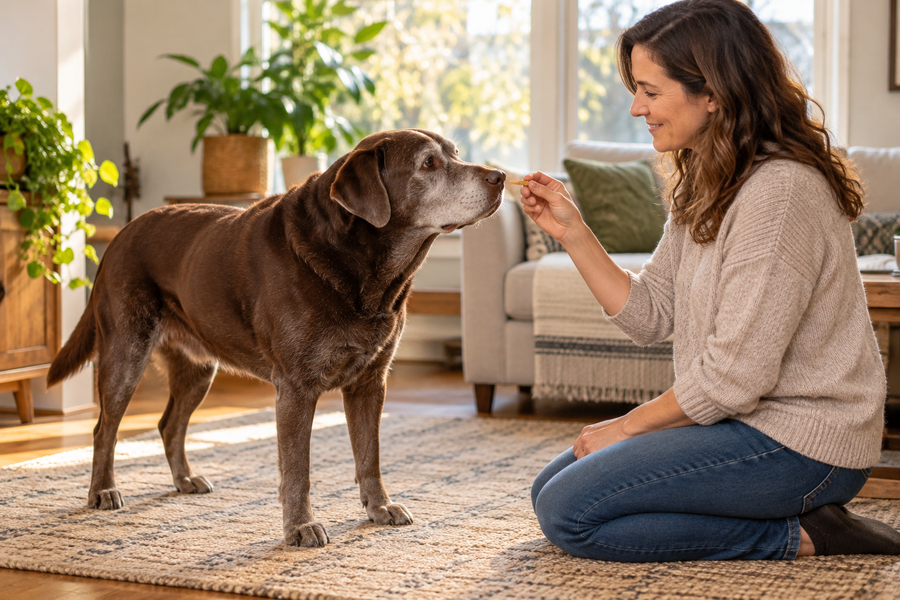
A check-in is a brief, voluntary turn of attention toward you. Practice it without asking for constant eye contact:
- Start in a quiet room with a few small treats ready.
- Wait for your dog to look or turn toward you.
- Say a learned marker such as "yes," then reward the response.
- Let your dog look away or explore. Reward another voluntary check-in.
- Finish after a few easy repetitions.
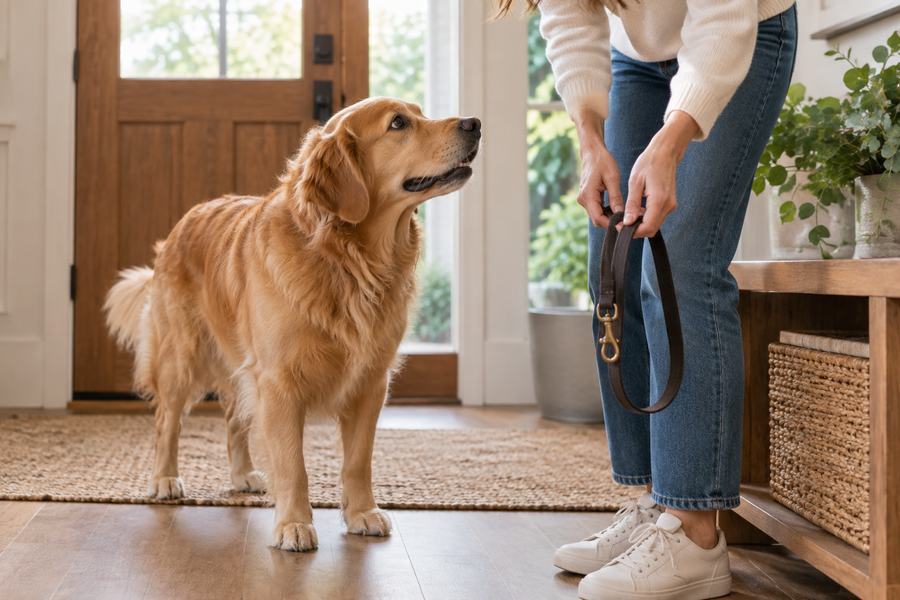
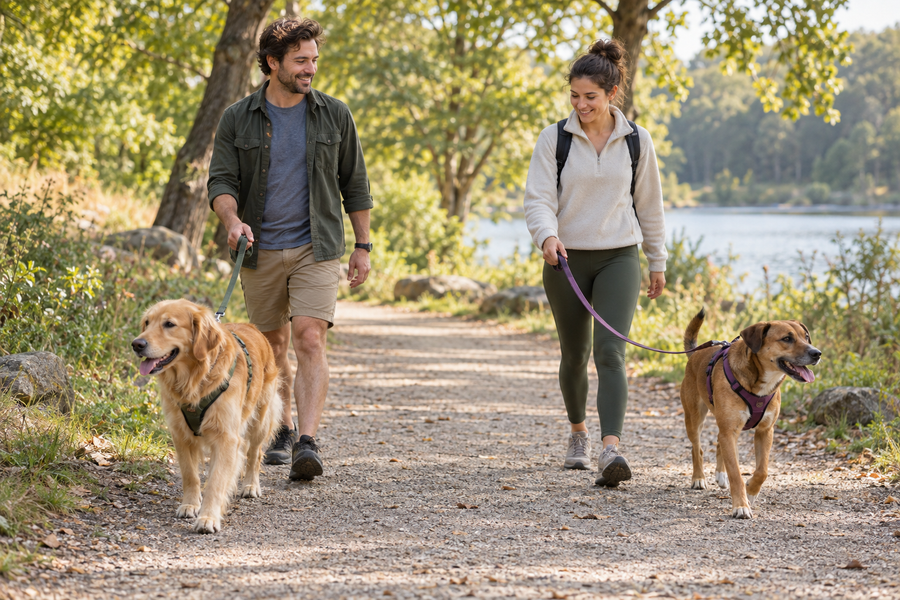
As the behavior becomes familiar, practice in other easy settings. Keep outdoor sessions safe on leash and make the task easier around distractions.
A check-in gives you a useful opening for communication. It does not require your dog to watch you constantly; sniffing and exploring can still be part of the walk.
Use Two-Way Audio for Familiar Voice Cues
Once your dog understands a cue near you, a device can provide another way to transmit your voice. SATELLAI Collar Go's Doggie-Talkie feature supports two-way audio and prerecorded voice commands.
Introduce the audio in a quiet setting while you are nearby, speaking in a calm voice. Once your dog is comfortable with the sound, try a familiar cue and reward the response. Pause if the sound startles or worries them. Speaker audio is a new context and may require practice even when the words are familiar.
Remote audio can support communication, but it cannot guarantee recall, interpret emotion, or replace direct observation. Continue using suitable leashes, supervision, and safe boundaries for the situation.

When the Message Does Not Get Through
Before repeating a cue, check whether your dog has learned it, whether the distraction is too strong, and whether they seem comfortable. Try the same request closer to you or in a quieter spot. If that helps, build back gradually.
Simplify before repeating. If familiar responses change suddenly or your dog seems unable to hear or see you as before, talk with your veterinarian.
For distraction-specific practice, read Why Your Dog Ignores Commands Outside and How to Rebuild Focus.
Frequently Asked Questions
Are hand signals better than words?
Both can be useful. Choose signals your dog can perceive, teach them consistently, and account for hearing or vision limitations.
Why does my dog understand one person better?
People differ in timing, gestures, words, and reinforcement. Compare how each person gives the cue, then practice a consistent version in easy settings.
Can my dog understand my voice through a collar speaker?
A familiar word may sound different through a speaker. Introduce the sound nearby, then practice an already learned cue and reward the response. Do not rely on remote audio for an untrained recall or an unsafe situation.
Does better communication mean my dog always obeys?
No. It helps you make requests clearer and recognize when the task or situation needs adjustment. For persistent difficulty, a reward-based trainer from the CCPDT directory can help assess the interaction. Sudden hearing, vision, or behavior changes belong with your veterinarian.
Sources and Further Reading
Product disclosure: SATELLAI manufactures the products mentioned in this guide. Images are AI-generated illustrations of training situations.