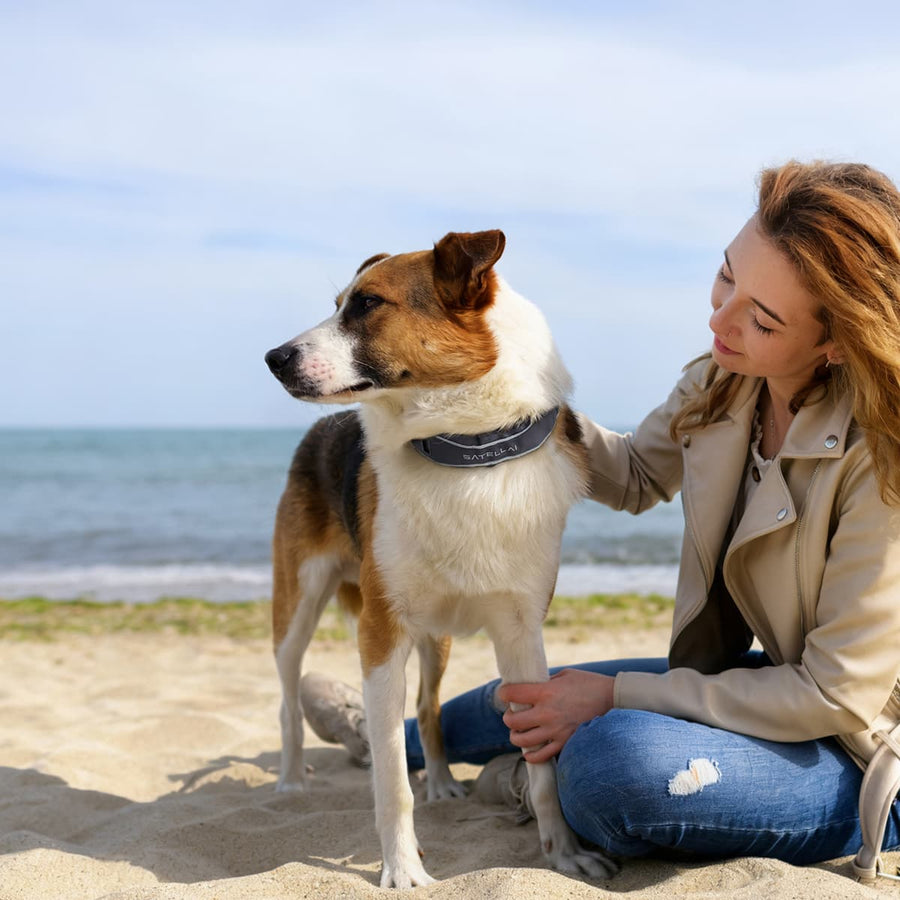
If your dog listens well at home but suddenly ignores commands outside, it does not necessarily mean they are stubborn or that training has failed. In many cases, the environment has simply become more rewarding, exciting, or distracting than the cue you are giving.
A familiar neighbor, another dog, a favorite walking route, food, attention, or the chance to greet someone can all become powerful distractions. The good news is that you can rebuild focus—but it usually takes management, consistency, and training at a level your dog can handle.
Quick Answer: Why Does My Dog Ignore Commands Outside?
Dogs may ignore commands outside because they have not yet learned that the same cue applies in a more exciting setting. They may also be distracted, over-aroused, worried, or repeatedly rewarded for pulling toward a person, dog, or place.
The fix is not to repeat commands louder or punish the dog for being excited. Instead, prevent the unwanted behavior from being practiced, create enough distance from the distraction, and reward your dog for choosing to focus on you.
Your Dog Has Not “Forgotten” Training
Dogs do not automatically understand that a cue learned in the kitchen means exactly the same thing on a busy sidewalk, near a familiar neighbor, or around other dogs. In training, this is often called generalization.
A dog may know “sit,” “come,” or “watch me” in a quiet room but struggle when distance, duration, or distractions increase. The American Kennel Club notes that dogs do not generalize skills automatically, and that increasing any of these training challenges can make a behavior harder. Learn more about duration, distance, and distraction in dog training.
That means the goal is not to prove that your dog “knows better.” The goal is to teach the behavior again in manageable steps until it works in real-life situations.

Why Your Dog Gets Excited Around Certain People or Places
Accidental Reinforcement
Dogs repeat behaviors that lead to something they enjoy. If pulling toward a neighbor has regularly led to petting, treats, play, being invited into a yard, or even enthusiastic attention, your dog may learn:
“When I see this person, pulling gets me something good.”
This is not disobedience or spite. It is learning. The behavior may become stronger because the reward does not happen every time, but happens often enough to keep your dog trying.
Anticipation Starts Before You Reach the Person
Dogs are excellent at recognizing patterns. They may notice a familiar street, driveway, gate, time of day, or smell long before you realize they are becoming excited. Once anticipation builds, your dog may be too aroused to respond well to cues that normally work.
Do not wait until your dog is already pulling hard or staring intensely. Start working before you reach the trigger, at a distance where your dog can still notice you and take a reward.
Excitement Can Look Like Poor Training
A happy, social dog can still be difficult to handle when excitement is too high. Pulling, jumping, whining, staring, or ignoring a familiar cue can all be signs that your dog is over their current training threshold.
Excitement is different from fear or aggression, but both require thoughtful handling. If your dog freezes, growls, lunges, snaps, panics, or cannot recover after seeing a trigger, work with a qualified trainer or veterinary behavior professional rather than trying to push through the situation alone.
When a Neighbor Accidentally Reinforces Excitement
Sometimes the challenge is not a stranger. It is a friendly neighbor, family member, delivery person, or regular dog-walking acquaintance who gives your dog lots of attention.

If someone regularly calls your dog over, offers food, plays with them, or lets them into a yard, your dog may begin to pull toward that person on every walk. Even well-meaning attention can reinforce an unwanted greeting routine.
The first step is management. Have a clear, polite conversation and ask the person not to call, feed, touch, or invite your dog over while you are training. You do not need to blame them; simply explain that you are working on calm leash behavior and need consistency.
Then temporarily change your routine if needed:
- Walk on the other side of the street.
- Choose a different route or walking time.
- Create more distance before your dog starts pulling.
- Do not allow “just one quick greeting” while rebuilding the habit.
Every successful rush toward the person can strengthen the behavior again.
How to Rebuild Focus Outside
1. Teach Attention in a Quiet Place First
Start indoors or in a quiet outdoor area. Teach a simple attention cue such as “watch me” or “look.” Reward your dog immediately when they make eye contact or turn toward you.
The American Kennel Club recommends building an attention cue in a low-distraction setting before adding more challenging environments. See a step-by-step “watch me” training guide.
Use a reward your dog genuinely values. Around major distractions, ordinary kibble may not be enough. Small, soft, high-value treats are often easier to deliver quickly during a walk.
2. Start Farther Away Than You Think
Choose a distance where your dog can notice the person, dog, or location without pulling, staring, or ignoring you. Ask for a simple behavior your dog already knows, such as looking at you or taking a few loose-leash steps.
Reward calm check-ins and keep the session short. If your dog cannot respond, you are probably too close, moving too fast, or asking for too much.
Distance is not failure. Distance is part of the training plan.
3. Reward the Behavior You Want Before the Pulling Starts
Do not wait for your dog to pull and then repeatedly say “leave it” or “come.” Watch for the early signs of excitement: ears forward, faster walking, intense staring, whining, or a tighter leash.

Before your dog reaches that point:
- Say their name or use your attention cue once.
- Reward them for looking back at you.
- Continue walking only while the leash remains loose.
- Turn away or create more distance if their focus disappears.
Calm behavior should make good things happen. Pulling should not move your dog closer to the reward.
4. Build Difficulty Gradually
Once your dog can stay focused from a comfortable distance, make only one small change at a time. You might move a few steps closer, train for a little longer, or work when the neighbor is outside instead of inside.
Do not increase distance, duration, and distraction all at once. Slow progress is more reliable than repeated overwhelming sessions.
Choose Secure, Comfortable Walking Equipment
Training works best when your dog’s walking equipment is secure and comfortable. A collar that is too loose can slip, while one that is too tight can create discomfort and make walks harder for everyone.
Review our guide to choosing the right dog collar for practical advice on fit, materials, and everyday walking safety.
What Not to Do When Your Dog Will Not Listen Outside
- Do not repeat the same cue over and over. If your dog cannot respond, create distance and make the next repetition easier.
- Do not drag your dog toward or away from the distraction. This can increase frustration and make the situation more stressful.
- Do not punish excitement as if it were defiance. Focus on teaching an alternative behavior instead.
- Do not let other people undo your plan with surprise greetings, treats, or invitations.
- Do not expect perfect focus immediately. Outdoor training is a skill that develops through repetition.
When to Rule Out a Health Issue
If your dog suddenly stops responding to familiar cues in many settings—not only around one trigger—consider whether pain, illness, hearing changes, vision changes, or anxiety could be involved.
Contact your veterinarian if the behavior change is sudden, severe, or accompanied by changes in appetite, sleep, movement, energy, or mood. A trainer can help with learning and behavior, but medical issues should be ruled out when appropriate.
When to Get Professional Training Help
Seek qualified support if your dog’s behavior is escalating, if you cannot safely manage the leash, or if the trigger involves fear, aggression, or repeated escaping.
A good professional will help you build a plan around your dog’s specific triggers, threshold, reward preferences, and daily routine. For more practical resources, visit our dog training page.
Frequently Asked Questions
Why is my dog ignoring my commands?
Your dog may be distracted, excited, worried, confused by the environment, or more interested in another reward. Ignoring a cue does not always mean your dog is being stubborn. Review where the behavior happens and whether you have practiced the cue in that setting.
Why will my dog not listen to me outside?
Outside environments contain more smells, movement, people, dogs, and unpredictable events. Your dog may need additional practice to understand that familiar cues still apply around distractions.
How do I stop my dog from pulling toward people on walks?
Prevent greetings that reward pulling, create distance before your dog becomes overexcited, and reward calm check-ins with you. Gradually decrease distance only when your dog can remain responsive and keep a loose leash.
My dog listens at home but not outside. What should I do?
Start with very easy outdoor practice in a quiet setting. Reward attention and simple cues, then gradually add more distractions. Build success in small steps instead of testing your dog in the hardest situation first.
Can a friendly neighbor make leash pulling worse?
Yes. If your dog regularly gets attention, food, play, or access after pulling toward a person, that interaction can unintentionally reinforce the pulling. Ask the neighbor not to greet or reward your dog while you rebuild calm behavior.
Final Takeaway
When your dog ignores commands outside, the answer is usually not more pressure or louder cues. Manage the situation, prevent the unwanted behavior from being rewarded, train below your dog’s excitement threshold, and reward calm focus consistently.
With time, your dog can learn that seeing an exciting person, place, or distraction is a cue to check in with you—not pull away from you.