To help a dog with storm anxiety, prepare a familiar retreat before the storm, secure doors and windows, reduce noise and flashes where possible, and offer calm company if your dog wants it. Don't punish fear or force exposure to thunder. Dogs who panic, injure themselves, or struggle repeatedly need a veterinary behavior plan.
Dogs with storm anxiety may become frightened during a thunderstorm or react to signs that one is coming. Some dogs start pacing before you hear the first thunderclap. Others seem fine until a sudden crash sends them behind the couch. Notice when your dog's behavior first changes. That gives you a chance to help before they're panicking.
Why Are Dogs Afraid of Storms?
A thunderstorm brings more than sound. Wind, darkening skies, flashes, and atmospheric changes can become warning cues. That's one reason a thunder recording doesn't fully reproduce a real storm. A dog may eventually react to rain or wind even without loud thunder. Merck Veterinary Manual: behavior problems in dogs
What Are the Signs of Storm Anxiety in Dogs?
Signs of storm-related distress can include:
- Hiding or seeking unusually close contact with a caregiver.
- Trembling, panting, drooling, or pacing.
- Trying to escape, scratching at exits, or damaging objects.
Your dog isn't choosing to be afraid. Scolding can make the storm more frightening, while calm company may help your dog feel safer. You don't need to withhold comfort out of concern that it will reinforce fear. University of Pennsylvania School of Veterinary Medicine: fear of thunderstorms and fireworks
Look at the pattern rather than one isolated behavior. Panting after play and panting while hiding during thunder have different contexts. If a change is sudden, occurs outside storms, or comes with physical symptoms, speak with your vet instead of assuming anxiety explains it.
How to Prepare Your Dog Before a Storm

Choose a familiar interior area away from large windows. Place a comfortable bed and water there, and let your dog explore it during ordinary calm periods. Keep it available often enough that entering the room doesn't always predict bad weather.
Try the arrangement yourself. Can you close the curtains without approaching the dog? Can people move around the house without repeatedly passing through the dog's resting space? Is there anything a frightened dog could pull down or become tangled in?
Our guide to creating a safe space for your dog covers the everyday setup. Before storm season, agree on who will handle each part of the plan:
| Task | Decide beforehand |
|---|---|
| Weather check | Who notices the forecast and starts preparations? |
| Bathroom break | Who offers a leashed break before weather becomes hazardous? |
| Room setup | Where are the bed, water, curtains, and background sound? |
| Door control | Who checks exits and tells visitors where the dog is? |
| Veterinary plan | Where are the written instructions and prescribed medication? |
| Backup care | Who can help if the usual caregiver is away? |
Keep these arrangements simple enough that a pet sitter or another family member can follow them.
What to Do During a Thunderstorm
Start with security and familiar surroundings
Bring your dog indoors before severe weather arrives, secure exits, and keep the dog away from open windows and exterior doors. Close curtains and use familiar background sound if your dog is comfortable with it. Don't turn the volume up so far that you create another source of stress.
Let your dog choose a safe resting position. Some want contact; others prefer a little distance. Sit nearby if that helps, but don't hold your dog down or pull them out of hiding for reassurance. Penn Vet specifically advises against ignoring a panicking dog or using punishment to suppress fearful behavior. Penn Vet storm-fear guidance
Offer familiar activities without pressure
If your dog still wants food, offer an ordinary treat or a familiar food toy that is safe for that dog under supervision. You don't need to turn the storm into a training session. If your dog turns away, stop asking and reduce demands.
Avoid repeatedly testing obedience. If your dog can't respond to a familiar cue, stop repeating it and focus on helping them feel safe. Keep children and visiting pets away from the retreat, and let the dog rest without being followed.
Don't introduce a crate during panic
A crate may help a dog who already rests comfortably there. It can be dangerous for a dog who bites the bars, claws at the door, or tries desperately to escape. Do not shut an unprepared dog into a crate because a storm has started. Penn Vet guidance on confinement during storms
If your dog is injuring themselves, cannot be managed safely, or has trouble breathing or collapses, seek urgent veterinary help. Keep yourself safe too; frightened animals may react defensively to handling.
When Should You Ask About Medication?
Arrange an appointment before the next predictable storm if fear is intense, recurring, or affecting normal life. Tell your vet whether your dog can eat, settle, respond to you, and recover afterward. Mention attempts to break through windows or doors and any injuries.
Medication may be an important part of care for moderate or severe storm fear. The choice and timing depend on the individual dog; sedation alone is not the same as relief from anxiety. Penn Vet treatment guidance
Ask these questions and save the answers with your care instructions:
- What should I do at the first weather warning or behavioral sign?
- When should a prescribed medicine be given, and what effects should I watch for?
- Should we trial it on a calm day under your instructions?
- What should I do if the first plan doesn't help?
- When would referral to a veterinary behavior specialist be appropriate?
Never improvise a dose, combine calming products without advice, or use another pet's prescription.
Can Training Help Between Storms?
Behavior work should happen when your dog can stay comfortable. Desensitization means exposure at an intensity low enough to avoid fear; counterconditioning pairs a tolerable cue with something pleasant. Ask your vet or a qualified behavior professional working with your vet to help choose exercises and recognize when to stop or make them easier.
Loud recordings and forced exposure can overwhelm the dog. Sound work also has limits because a real storm involves several senses. Don't treat a calm response to an audio track as proof that your dog is ready for the next thunderstorm. Merck Veterinary Manual: noise fears and behavior modification
Build useful routines independently of storms: resting on a mat, entering the retreat voluntarily, and responding to a gentle invitation to move with you. Reward your dog for joining in, and let them move away if they want a break.
What to Record After a Thunderstorm

After the storm, give your dog time to rest. Check the yard for damage before going outside, use a leash, and resume a quiet routine. See our outdoor safety guide for the fence and equipment check.
Keep a short record for your vet:
| Observation | What to write |
|---|---|
| First sign | What changed, and did it start before thunder? |
| Behavior | Hiding, movement, food interest, or escape attempts |
| Support | Room used, company offered, and prescribed treatment given |
| Recovery | When ordinary eating, resting, and movement resumed |
| Follow-up | Any injury, new behavior, or difficulty using the plan |
Don't deliberately expose your dog to a frightening situation to collect a video or improve the record.
How to Reduce Escape Risk During a Storm
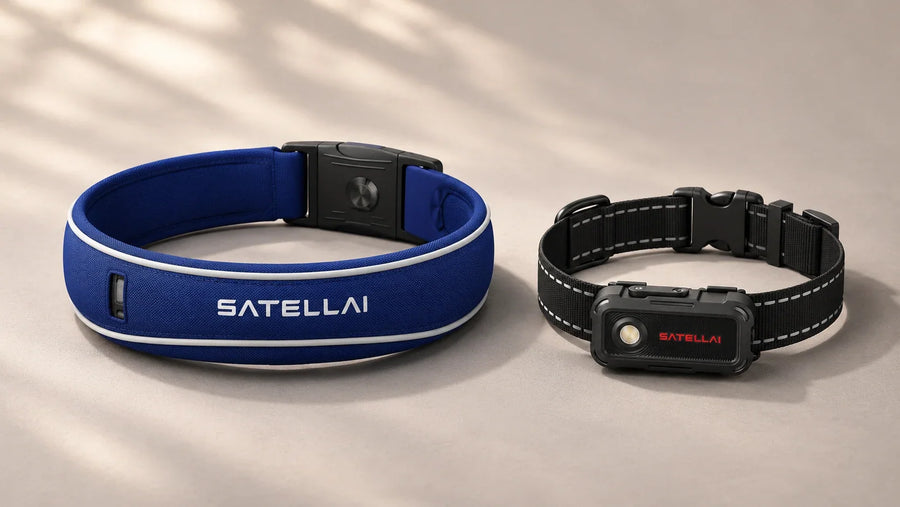
Check identification and microchip contact details before storm season. If you use a SATELLAI Collar, keep it charged and confirm the location connection as part of your escape-prevention routine.
GPS can help with locating a missing dog. It doesn't treat anxiety, prevent a dog from running through an open door, or make it safe to leave a frightened dog outdoors. Don't use correction features to suppress fear during a storm.
For planned celebrations with sudden noise and frequent door openings, also prepare with our holiday safety guide.
Frequently Asked Questions
Should I comfort my dog during thunder?
Yes, if your dog seeks contact. Offer calm company and allow space when preferred. Avoid forced cuddling, restraint, or pulling a dog from a safe hiding place.
Will my dog grow out of storm anxiety?
Don't rely on that. Fear can persist or spread to other weather cues. Early veterinary advice is especially useful when reactions are becoming stronger or recovery takes longer.
Do anxiety wraps work for every dog?
No single accessory is a dependable solution for every dog. Discuss options with your vet and try wearable items in calm conditions first. Remove anything that causes discomfort; a wrap shouldn't delay care for severe distress.
Should I play thunder sounds until my dog gets used to them?
No. Repeated exposure at a frightening level can make the experience worse. Any sound work should remain below your dog's fear threshold and fit a professional plan.
Sources and Editorial Notes
This article was prepared with AI assistance for SATELLAI, which sells dog-tracking products. Veterinary and public-health guidance is linked where it is discussed; product descriptions come from SATELLAI. The checklists and examples are practical planning aids created for this article, rather than clinical assessments or customer case reports. The cited organizations have not reviewed or endorsed this article.
This article has not been reviewed by a veterinarian. It provides general information; your vet can advise you on your dog's health and care. Sources were checked on November 2, 2026. The images are AI-generated illustrations of everyday care, not photographs of customers or clinical cases.