Before taking your dog outside, check the yard or route, secure the leash or gate, and make sure you can supervise. Adjust the outing for the weather and how your dog is feeling. Carry identification and a way to get help. GPS tracking adds location information, but it doesn't replace a leash, fence, or person watching the dog.
A morning walk, a backyard break, a visit to a friend's house, and an hour at the park all call for a few basic checks. Those ordinary settings deserve a repeatable safety routine because small changes—a loose clip, an open gate, a new dog nearby—can change the outing quickly.
Outdoor Dog Safety Checklist: Place, Equipment, Dog, and Handler
Take a moment to check four things: where you're going, the equipment you're using, how your dog is doing, and who's supervising.
| Check | What to look at | A reason to change the plan |
|---|---|---|
| Place | Gates, traffic, surfaces, weather, water, and other animals | The route or enclosure has a hazard you can't manage. |
| Equipment | Fit, clips, leash, identification, and tracking setup if used | Something is damaged, loose, or untested. |
| Dog | Comfort, movement, energy, and ability to respond | Your dog seems unwell, unusually frightened, or unable to settle. |
| Person | Attention, supplies, and a clear way home | The handler can't supervise or safely control the outing. |
Make this a pause at the door. Put your phone away while attaching the leash, check the clip by hand, and locate your dog before opening the exit. At an unfamiliar destination, repeat the check before letting the dog explore.
How to Keep Your Dog Safe in the Backyard

A familiar yard can change overnight. Walk the boundary after storms, repairs, deliveries, or gardening. Check that gates latch, panels are secure, and there are no new gaps underneath. Move furniture or stacked materials that could provide access over a fence.
Look beyond the boundary. Put tools and chemicals away, control access to pools, and remove accessible food waste or sharp debris. Follow product labels for treated lawns and keep the dog out until the stated reentry conditions are met.
Supervise outdoor time rather than assuming the fence handles every risk. A fence does not tell you whether a dog is overheating, chewing an object, or becoming distressed by something on the other side.
For a shared household, make gate checks explicit. For example: "I've finished unloading; the gate is latched and the dog is inside." Use a handoff like this to confirm that one person has actually checked the gate.
Check Leash and Harness Fit Before Walks
Choose a collar or harness that fits your dog's current size and shape and follow the manufacturer's fitting instructions. Check the fit again after coat changes, growth, or weight changes. Inspect stitching, clips, buckles, and leash attachment points for damage.
Use a leash and handling arrangement that lets you maintain control near traffic, unfamiliar animals, and other hazards. A long line may be useful in an appropriate open area, but it introduces tangling and running-start risks; it isn't the default choice for a crowded sidewalk.
Practice simple behaviors in easier settings: coming toward you, waiting at a doorway, and turning away with you. Don't make a busy road or crowded entrance the first place you test a new cue. Keep your dog leashed near roads and other hazards, even while you're practicing those skills.
For balanced activity ideas once the basics are in place, see our active dog care guide.
Adapt Outdoor Time to Weather and Your Dog's Health
Choose an outing based on the current route and your dog's condition, not just last week's successful walk. Check for heat, ice, poor visibility, air-quality alerts, or approaching storms. Have a shorter route and a way to turn back.
In hot weather, favor cooler hours and comfortable surfaces, carry drinking water, and stop if your dog appears distressed. Heat illness can become an emergency. Cornell University College of Veterinary Medicine: summer heat safety
Use the summer safety guide for the full heat and water routine. In winter, our existing winter dog care guide covers cold-weather walks and paw care.
Bring the dog indoors before severe weather arrives. After a storm, recheck the yard and route before returning to the usual routine. A dog who is frightened by thunder may also need the separate storm anxiety plan.
Give Wildlife and Other Dogs Space
Don't allow your dog to chase wildlife, investigate nests, or approach livestock. Turn away early when you notice an animal ahead, rather than waiting until your dog is pulling at the end of the leash.
At parks, check the specific area's pet rules before leaving home. A park may allow dogs in one place while excluding them from another. The National Park Service's B.A.R.K. Ranger guidance emphasizes picking up waste, leashing pets, respecting wildlife, and knowing where pets are allowed. Check the rules for the specific park and route. National Park Service: Be a B.A.R.K. Ranger
Ask before approaching another dog and accept a refusal without moving closer. Some dogs need distance because of fear, recovery, or training. Your dog can enjoy the walk without greeting every dog you pass.
At a dog park, watch the activity from outside first. Choose a quieter option if the gate area is crowded, dogs are repeatedly chasing one unwilling participant, or you can't interrupt your own dog's behavior safely. If the group feels too busy or your dog seems uncomfortable, leave and try a quieter place.
For trail preparation, terrain, and longer trips, use our dedicated hiking with dogs safety guide.
Check Water, Plants, and What Your Dog Picks Up
Carry clean water instead of relying on puddles or an unfamiliar pond. Check local advisories and keep dogs away from suspicious algae, shoreline scum, and dead fish. Dogs can be exposed when they drink contaminated water or lick it from their coats. CDC: preventing harmful-algae illness in pets
If you suspect algae exposure, prevent licking, rinse with clean water, and contact your vet promptly. Get advice even if the swim was brief; time in the water alone doesn't tell you how much exposure occurred.
Keep your dog from eating unknown plants, mushrooms, discarded food, or chemicals. If ingestion may have occurred, move away from the hazard and call a veterinarian or animal poison-control service. Photograph the item or label when safe; don't risk another exposure while collecting it. ASPCA Poison Control
Ask your vet about a parasite-prevention and testing plan for your dog, including any changes needed for travel. The Companion Animal Parasite Council recommends ongoing prevention and routine testing. CAPC general guidelines for dogs and cats
Can a GPS Collar Keep Your Dog Safe Outdoors?
A GPS collar can help you locate a dog after separation, but it cannot physically contain a dog or remove outdoor hazards. Use secure equipment, supervise your dog, and keep a readable ID tag on the collar. Separately, make sure your dog's microchip registration has your current contact details. Before relying on a tracker, confirm the device is attached securely, charged, and communicating where you'll use it.
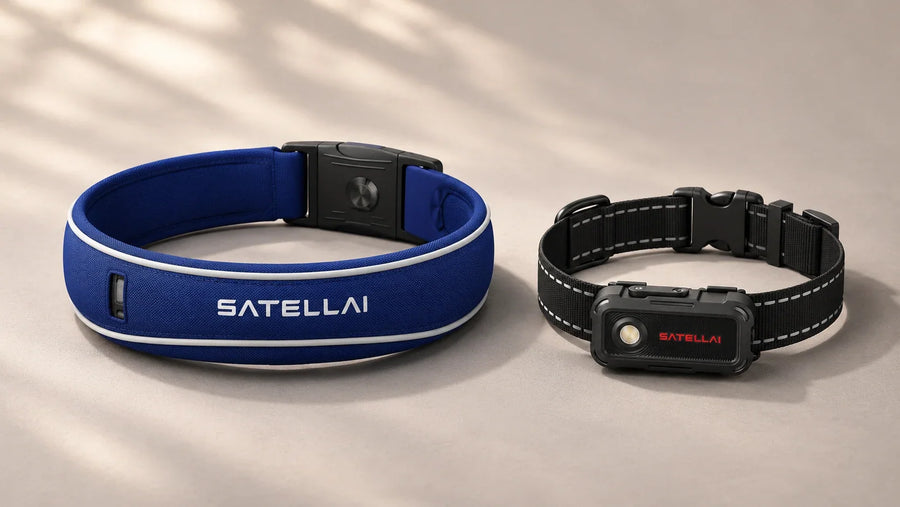
The SATELLAI Collar offers GPS location tracking and virtual-fence features. These features can help you monitor your dog's location and manage virtual boundaries. A virtual fence cannot physically stop a dog from leaving. Location updates depend on operating conditions and connectivity; don't assume every displayed position is current.
Practice opening the app and recognizing the last update before you need it urgently. If the dog escapes, note the last confirmed location, time, and direction. Coordinate a search, notify local animal services and shelters as appropriate, and share a current photo. Don't enter traffic, floodwater, or other danger to reach a map pin.
Keep the physical safety plan strong even when the technology is working normally. Roads, wildlife, and other animals can remain hazardous on either side of a virtual boundary.
Finish with a Short After-Outing Check

Before settling in, look over paws, nails, coat, and equipment. Notice persistent licking, limping, tenderness, or anything caught in the fur. Offer water and a comfortable place to rest. Contact your vet about concerning changes, especially breathing difficulty, collapse, injury, or suspected poisoning.
Write down anything that changes the next outing: a broken gate, a rough section of pavement, a poorly fitting harness, or a dog who struggled with the route. Fix the issue before treating the next walk as routine.
Frequently Asked Questions
Is a fenced yard safe enough for a dog to stay alone?
A fence is useful containment, but it doesn't cover every hazard. Check the yard, monitor conditions, and supervise based on the dog's needs. Outdoor access should include a reliable way to return to a comfortable indoor space.
Does good recall mean my dog can be off leash anywhere?
No. Local rules, traffic, wildlife, and your dog's response to distractions still matter. Use physical control wherever required or where a missed recall could cause harm.
What should I bring on a normal walk?
Bring secure walking equipment, identification, waste bags, a phone, and water as appropriate for the route and conditions. Add any items required by your dog's individual care plan.
What if the tracker shows an old location?
Treat it as the last known position rather than proof of the dog's current location. Check the update time and connection, and use direct observations and a coordinated search if the dog is missing.
Sources and Editorial Notes
This article was prepared with AI assistance for SATELLAI, which sells dog-tracking products. Veterinary and public-health guidance is linked where it is discussed; product descriptions come from SATELLAI. The checklists and examples are practical planning aids created for this article, rather than clinical assessments or customer case reports. The cited organizations have not reviewed or endorsed this article.
This article has not been reviewed by a veterinarian. It provides general information; your vet can advise you on your dog's health and care. Sources were checked on November 2, 2026. The images are AI-generated illustrations of everyday care, not photographs of customers or clinical cases.