Keep your dog safer during the holidays by controlling access to food and decorations, preparing a quiet retreat, managing doors during guest arrivals, and assigning one adult to coordinate care. Know the nearest open veterinary hospital before the celebration. If your dog may have swallowed something toxic, contact a veterinarian promptly rather than waiting for symptoms.
Busy moments create easy-to-miss hazards: someone carries food outside, a child leaves a bag on the floor, or several people hold the front door open at once. Decide who will watch the dog during arrivals, meals, and cleanup so those jobs don't get missed.
This holiday safety guide for dogs covers family gatherings throughout the year, with examples from Thanksgiving, Christmas, and New Year's Eve. For costumes and trick-or-treating, see our dedicated Halloween safety guide for dogs.
Holiday Dog Safety Checklist
Before guests arrive, secure food and trash, put medication and small decorations away, prepare the dog's retreat, and decide who will manage doors and bathroom breaks. Save the emergency clinic's details and share the care plan with the person helping you.
Start with the parts of the celebration most likely to change your dog's routine:
| Occasion | Where to focus your preparation | Detailed section |
|---|---|---|
| Thanksgiving and shared meals | Serving dishes, leftovers, kitchen access, and cleanup | Food safety |
| Christmas and gift exchanges | Decorations, wrapping, cords, and visitors' belongings | Decoration safety |
| New Year's Eve and noisy celebrations | Indoor retreat, secured exits, and an existing veterinary noise plan | Doors and noise |
This table organizes the practical checks below; it isn't a complete list of hazards for every celebration.
Check Your Home Before Holiday Guests Arrive
Before guests arrive, follow the path they'll take from the front door to the kitchen, dining area, bathroom, and guest room. Look at each space from your dog's height.
Can a shopping bag be reached from the floor? Does a chair make the buffet accessible? Will overnight guests leave medicine on a low table? Can the dog slip through the door while someone carries luggage?
Assign someone to check each area before guests arrive and keep an eye on it during the gathering:
| Area | Before the gathering | During the gathering |
|---|---|---|
| Front door | Prepare a secure resting area away from arrivals. | Check the dog's location before opening the door. |
| Kitchen | Store food, waste, and cleaning supplies securely. | Keep serving dishes and used utensils out of reach. |
| Living room | Check cords, ornaments, candles, and small objects. | Remove dropped food and damaged decorations. |
| Guest room | Offer closed storage for bags and medication. | Keep the room secured when belongings are accessible. |
| Dog's retreat | Add familiar bedding and water. | Ask guests to leave the dog alone there. |
Give each task to a named person. "We'll all keep an eye out" is easy to misunderstand when everyone is busy.
Which Holiday Foods Should Dogs Avoid?

Several common celebration foods are dangerous for dogs. Chocolate, grapes and raisins, onions and garlic, alcohol, and products containing xylitol should be kept away from them. Recipes can hide these ingredients in desserts, stuffing, sauces, and gift baskets. ASPCA: people foods to avoid feeding pets
Read ingredient labels rather than deciding from the food's appearance. Sugar-free products are not automatically pet-safe. The ASPCA advises contacting veterinary or animal poison-control professionals promptly after known or possible xylitol ingestion. ASPCA xylitol safety warning
Cooked bones and rich, fatty leftovers create additional risks. The American Animal Hospital Association's holiday guidance recommends avoiding these offerings and controlling access to the meal. AAHA: Thanksgiving pet safety
The easiest rule for guests is to ask before feeding the dog. If you want them to participate, set aside a small portion of your dog's usual approved treats and let one adult manage it. That keeps several guests from each offering "just one more."
During cleanup, treat plates, bags, and trash as part of the food problem. A cleared table isn't secure if everything has moved to an open bin. Keep trash behind a closed door or in a container your dog can't open.
How to Make Holiday Decorations Safer for Dogs
A dog who ignores ornaments one year may investigate a new scent, texture, or moving light the next. Recheck the room after decorating rather than relying on last year's behavior.
Keep electrical cords inaccessible to chewing, use flameless candles where practical, and place breakable ornaments out of reach. Secure the tree and block access to tree water. Keep ribbons, small gift parts, batteries, and edible decorations away from the dog. Salt-dough ornaments can cause dangerous salt exposure, and some snow-globe liquids contain toxic ethylene glycol. ASPCA holiday safety tips
Don't assume a decorative plant is safe because it's sold for indoor use. Identify it before bringing it within reach. Artificial decorations also need supervision if your dog chews or swallows objects.
After gifts are opened, collect packaging before starting the next activity. Put new toys, remote controls, and loose batteries in their proper places. Clear away wrapping and small parts before the dog comes back into the room.
Give Your Dog Permission to Skip the Party
Prepare a comfortable resting space away from guests. Keep familiar bedding and water there, preserve ordinary meal and bathroom routines where possible, and ask visitors not to follow a resting dog. AAHA guidance on holiday guests and stress
Choose a place where your dog already rests comfortably. Don't suddenly lock a dog who struggles with confinement into a crate for a long gathering. A different room, a familiar caregiver, or a smaller celebration may be a better fit.
Set expectations before children arrive: an adult supervises interactions, the dog's bed is off-limits, and no one hugs, corners, or wakes the dog for a photo. If the dog moves away, let that be the end of the interaction.
For setup ideas, read how to create a safe space for your dog at home. Let your dog use that space on ordinary days, too, so it feels familiar when guests arrive.
Prepare for Open Doors, Fireworks, and Sudden Noise
Guest arrivals, deliveries, and trips to the car create repeated escape opportunities. Move your dog to their prepared area before opening the door, and check gates after visitors use them. Confirm identification and current microchip contact details before the event.
For fireworks or other anticipated noise, arrange bathroom breaks before the event and prepare indoor support. Severe noise fear deserves a veterinary plan ahead of time. Our storm anxiety guide explains how to organize a retreat and recognize when professional help is needed; your vet can adapt a plan to fireworks.
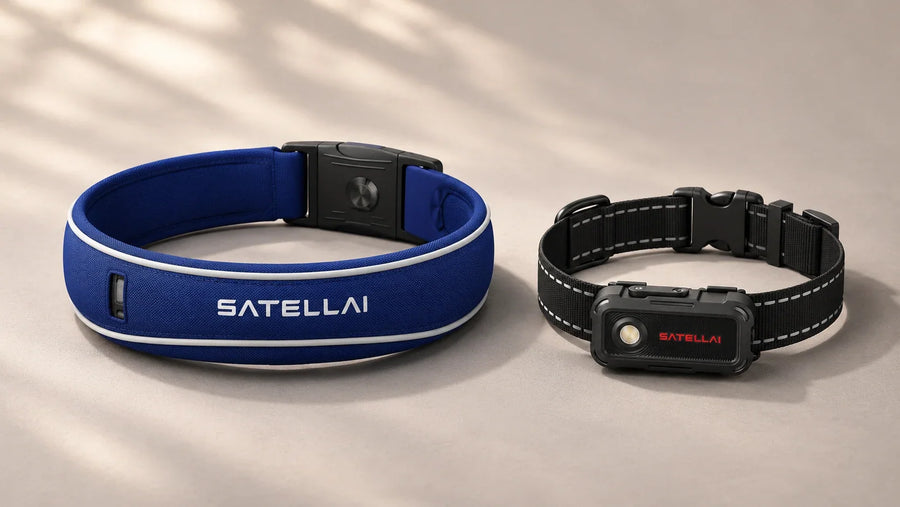
If you use a SATELLAI Collar, charge it and confirm the location connection before guests arrive. Tracking can support recovery after an escape. It doesn't prevent a door from opening or guarantee that a frightened dog will stay within a virtual boundary.
Traveling to Someone Else's Celebration
Ask the host about the dog's resting space before you leave. Find out whether there will be other animals, accessible pools, an unfenced yard, or guests who are uncomfortable around dogs. Bring familiar food, prescribed medication, bedding, identification, and walking equipment.
Inspect the actual setup on arrival. Don't rely on "the yard is enclosed" without checking the gate and fence. Keep the dog under physical control while you find the resting area. Use our outdoor safety guide for a quick arrival check.
If the gathering can't accommodate your dog's needs, arrange care elsewhere. For transport and accommodation planning, see SATELLAI's dog travel safety guide.
What Should You Do if Your Dog Eats Something Dangerous?
If your dog may have eaten a toxin, medication, battery, or dangerous object, contact your vet or an animal poison-control service immediately. Don't wait for the party to end or symptoms to appear. Do not induce vomiting unless a veterinary professional specifically directs you to do so. ASPCA: what to do if your pet is poisoned
Keep packaging and take a photo of the label if you can do so without delaying care. Be ready to describe the dog's weight, what may have been swallowed, the likely amount, when it happened, and any symptoms. Don't guess that a missing item was harmless because the dog seems normal.
Breathing difficulty, collapse, seizures, or serious injury requires emergency veterinary attention. Have someone else manage guests and secure the other animals while you arrange transport.
The Final Check Before Bed

Walk through the rooms once more. Remove leftover food, empty accessible trash, collect ribbons and small objects, and check that doors and gates are secure. Confirm that your dog has had their usual care and can settle in a familiar place.
Leave overnight guests a simple instruction: check with the caregiver before feeding, walking, or letting the dog outside. Clear instructions matter most when routines change.
Frequently Asked Questions
Can my dog have a holiday dinner plate?
Avoid a mixed plate of leftovers. Ingredients, bones, and richness can make it unsuitable. Stick with your dog's regular food and a small amount of treats you already know are suitable for them. Follow any diet restrictions from your vet.
Should I keep my dog in the same room as guests?
Only if your dog is comfortable and interactions are supervised. Provide a familiar retreat and let the dog leave. Participation isn't necessary for a good holiday.
Is a GPS collar enough to prevent holiday escapes?
No. Door control, secure gates, identification, and supervision come first. GPS is an additional location tool if separation occurs.
What should I save on my phone before the holiday?
Save your vet's holiday hours, the nearest open emergency hospital, current medication instructions, and a recent photo of your dog. Share the care plan with the person who will help you.
Sources and Editorial Notes
This article was prepared with AI assistance for SATELLAI, which sells dog-tracking products. Veterinary and public-health guidance is linked where it is discussed; product descriptions come from SATELLAI. The checklists and examples are practical planning aids created for this article, rather than clinical assessments or customer case reports. The cited organizations have not reviewed or endorsed this article.
This article has not been reviewed by a veterinarian. It provides general information; your vet can advise you on your dog's health and care. Sources were checked on November 2, 2026. The images are AI-generated illustrations of everyday care, not photographs of customers or clinical cases.