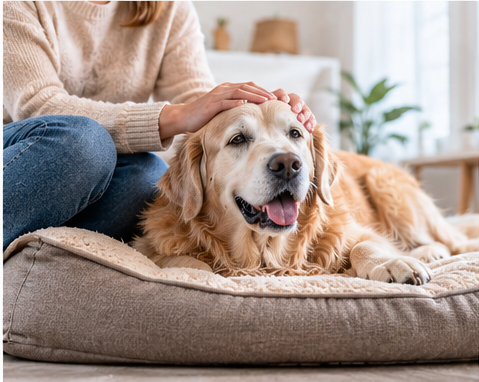
A crate may help a dog who already views it as a safe, comfortable resting place, but it does not treat separation anxiety. For a dog who panics when confined, closing the crate can intensify distress and create a risk of broken teeth, injured nails, or other escape-related injuries.
The right question is not simply, “Should I crate my dog when I leave?” It is: How does my dog actually respond to being alone, and does confinement make that response better or worse?
This guide explains how to distinguish separation anxiety from confinement anxiety, what to look for on video, when crate training may be appropriate, and when a room, exercise pen, pet sitter, veterinarian, or qualified behavior professional may be the safer choice.
Important: This article provides general educational information. Severe anxiety, self-injury, escape attempts, sudden behavior changes, or symptoms that may have a medical cause require professional veterinary guidance.

Quick Answer: Should You Crate a Dog With Separation Anxiety?
Do not use a crate as an automatic solution for separation anxiety.
- A crate may be suitable when the dog voluntarily enters it, rests with a loose body, eats normally, and remains calm with the door closed during short practice sessions.
- A crate is probably not suitable during absences when the dog pants heavily, drools, screams, bites the bars, claws at the door, repeatedly tries to escape, soils the crate despite being house-trained, or cannot settle.
- If you do not know what happens after you leave, record the first 30–60 minutes rather than judging from the condition of the room when you return.
- If the dog is at risk of injury, stop testing long absences and contact a veterinarian or qualified behavior professional.
The UC Davis School of Veterinary Medicine notes that crating may prevent damage to the home without reducing the dog’s anxiety—and may make some anxious dogs more distressed.
Separation Anxiety and Confinement Anxiety Are Not the Same
These terms can overlap, but they describe different triggers.
Separation Anxiety
Separation anxiety is distress associated with the absence of a particular person or with being left alone. A dog may struggle whether they are loose in the house, behind a baby gate, in a room, or inside a crate.
Possible signs include:
- Persistent barking, whining, or howling after departure
- Pacing, panting, trembling, drooling, or an inability to settle
- Destruction concentrated around doors, windows, or the owner’s belongings
- Indoor urination or defecation that occurs mainly during absences
- Refusing food that the dog normally enjoys
- Frantic greetings or difficulty calming after the owner returns
- Escape attempts or self-injury
The Merck Veterinary Manual explains that separation-related behavior usually needs to be distinguished from other causes, including incomplete house training, external triggers, noise sensitivity, boredom, and confinement anxiety.
Confinement Anxiety or Barrier Frustration
A dog with confinement anxiety becomes distressed when physically restricted. The trigger may be a closed crate, bedroom door, baby gate, exercise pen, or small room—even while the owner is still nearby.
A dog who whines outside your bedroom door but settles immediately after being allowed inside may be reacting to the barrier, seeking access, or protesting a familiar routine. That behavior alone does not prove separation anxiety.
Likewise, following you from room to room is not a diagnosis. Merck notes that dogs who closely follow family members are not necessarily at greater risk of separation anxiety than dogs who do not.
Why the Difference Matters
If the main trigger is being alone, changing from a crate to a room may not solve the underlying problem. If the main trigger is confinement, closing the crate can make the reaction dramatically worse.
The safest plan depends on the trigger—not on whether the dog can eventually become too tired to keep protesting.
How to Tell Whether the Crate Helps or Makes Things Worse
Set up a phone, pet camera, or other recording device and observe your dog during a short, safe practice departure. The American Veterinary Society of Animal Behavior recommends reviewing the early part of an absence because many dogs with separation anxiety show distress soon after the owner leaves.
Record more than vocalization. A quiet dog is not always a relaxed dog.
Signs the Crate May Be Functioning as a Safe Space
- The dog enters without being pushed or lured repeatedly
- Muscles appear loose rather than rigid
- The dog can take treats or work on a familiar food toy
- Breathing returns to normal after a brief transition
- The dog lies on one hip, rests their head, or falls asleep
- Brief whining decreases rather than escalating
- The dog is calm when released
Signs the Crate May Be Increasing Distress
- Panting when the room is not hot and exercise does not explain it
- Heavy drooling, trembling, wide eyes, or repeated lip licking
- Continuous pacing, circling, or shifting position
- Biting bars, bending wire, clawing, or pushing at doors
- Ignoring high-value food the dog normally eats
- Repeated elimination despite an appropriate potty break
- Vocalization that becomes more intense rather than settling
- Bloody gums, damaged nails, abrasions, or other injuries
Do not keep extending the session to see whether a panicking dog will eventually “get used to it.” Repeated exposure above the dog’s coping threshold can rehearse the fear instead of teaching safety.
Can a Crate Make Separation Anxiety Worse?
Yes, it can for some dogs.
A crate limits the dog’s options for increasing distance, changing location, checking exits, or choosing another resting place. For a dog who already fears confinement, that loss of control may intensify the response.
Humane World for Animals advises that a crate should not be treated as a remedy for separation anxiety. It may stop access to furniture or doors, but it does not address the emotional cause, and a distressed dog may be injured while trying to escape.
This does not mean crates are inherently harmful. Many dogs sleep comfortably in an open crate and choose it as a quiet retreat. The problem is using a closed crate to contain panic that has not been assessed or treated.
When Crate Training May Still Be Appropriate
Crate training may remain useful when:
- Your dog already relaxes in the crate while you are home
- The crate has never been used for punishment
- The dog can tolerate the closed door for short periods without escalating
- You are building duration gradually rather than testing a full workday
- The crate is large enough for normal standing, turning, stretching, and resting
- Bathroom, exercise, temperature, water, and medical needs are being met
- Video shows genuine resting rather than freezing or exhausted vigilance
Puppies may also use crates as part of house-training and sleep routines, but they need frequent bathroom breaks and developmentally appropriate expectations. SATELLAI’s new puppy guide covers early routines, safe spaces, training, and home preparation in more detail.
When You Should Not Leave the Dog Crated
Do not leave your dog alone in a closed crate when:
- They are actively trying to break out
- Previous sessions caused injury or damaged the crate
- They panic as soon as the door closes, even with you nearby
- They cannot eat, settle, or respond to familiar cues
- They have a medical condition that makes confinement or delayed bathroom access unsafe
- The environment could become dangerously hot or cold
- The crate or collar presents a snagging or entrapment risk
- You are using the crate to punish destruction, barking, or house soiling
If a collar, tag, or accessory could catch on the crate, ask your veterinarian or trainer how to manage identification safely during confinement. Do not improvise by attaching a leash inside the crate.
For dogs who remain calmer with more space, a thoroughly dog-proofed room or exercise pen may be an alternative. However, a larger area will not solve separation anxiety by itself; it is only useful if video shows that the different setup lowers distress.
How to Crate Train a Dog With Separation Anxiety
If your dog is currently comfortable around the crate and a professional has not advised against it, rebuild the skill in small stages. The goal is voluntary relaxation, not endurance.
Step 1: Start With an Open Door
Place the crate in a normal living area rather than isolating it immediately. Add safe bedding only if your dog does not shred or ingest it. Let your dog investigate without closing the door.
Reward voluntary choices such as looking inside, stepping in, turning around, or lying down. Do not push, drag, or trap the dog.
Step 2: Build Positive, Low-Pressure Associations
Offer meals, a familiar chew, or a food toy near the entrance and gradually move it farther inside. The item should be appropriate for your dog and safe for the level of supervision available.
If the dog stretches forward while keeping the back feet outside, grabs the food, and retreats, the step may be too difficult. Move the reward closer to the entrance.
Step 3: Introduce Tiny Door Movements
When your dog is relaxed inside, move the door slightly and reopen it. Progress to touching the latch, closing it for one second, and reopening it before the dog becomes worried.
Change one variable at a time. Do not increase closed-door duration, distance from the crate, and departure cues in the same session.
Step 4: Add Distance Before Real Departures
Take one step away, return, and reward calm behavior. Over multiple sessions, vary whether you sit down, move around the room, briefly disappear from view, or touch everyday departure items.
If your dog stops eating, becomes rigid, rushes the door, or begins escalating vocalization, return to an easier step.
Step 5: Practice Very Short Absences
Begin with an absence your dog can handle calmly—even if that is only a few seconds. Use video and return before distress begins. Increase duration unevenly: five seconds, three seconds, eight seconds, four seconds. Predictable increases can make each repetition feel harder.
For moderate or severe separation anxiety, the starting duration may be so short that a veterinarian or behavior professional should design the plan.
What to Do If Your Dog Cries in the Crate When Left Alone
First, determine what the crying means instead of applying one rule to every dog.
Check whether your dog:
- Needs a bathroom break
- Is too hot, cold, thirsty, uncomfortable, or in pain
- Is reacting to a noise, visitor, delivery, or outdoor animal
- Is giving a brief protest that quickly declines
- Is showing escalating fear or an escape attempt
Ignoring a few seconds of mild frustration during otherwise successful crate training is different from leaving a panicking dog to cry for a prolonged period. Do not punish, yell, hit the crate, use a bark collar, or add an aversive consequence to fear-related vocalization.
If crying builds into panting, drooling, frantic movement, biting, elimination, or self-injury, end the unsafe setup as calmly as possible and seek professional help before repeating it.
Build Alone-Time Skills Outside the Crate Too
A dog should not need to be physically exhausted every night before you can walk into another room. Exercise and play support wellbeing, but they do not teach the emotional skill of remaining calm during separation.
Practice ordinary independence while you are home:
- Reward the dog for resting on a bed while you move around
- Use a baby gate for very short, easy separations if the dog tolerates it
- Give attention at varied times instead of responding to every demand immediately
- Pair short absences with a safe, familiar enrichment activity
- Keep departures and returns calm and predictable
- Maintain appropriate exercise, sniffing, sleep, meals, and bathroom routines
If a closed bedroom door triggers whining but the dog remains calm when you leave through the front door, the issue may be access or barrier frustration rather than classic separation anxiety. Test assumptions with video instead of labeling the behavior from one moment.
Dogs may also dig, scratch, or chew around barriers when anxious or frustrated. SATELLAI’s guide to why dogs dig and how to redirect the behavior explains several possible motivations.
Can Activity Tracking Help You Understand Alone-Time Behavior?
Activity and rest data can add context when you are not home. For example, repeated periods of elevated movement during a time when your dog normally rests may prompt you to review camera footage and look for pacing, environmental triggers, or difficulty settling.
The SATELLAI Collar Go combines GPS location, escape alerts, and activity and rest insights. However, a smart collar cannot diagnose separation anxiety or tell you why activity changed. Use trends as a reason to observe more closely and share relevant information with your veterinarian—not as proof of a behavioral disorder.
For crate sessions, also consider physical safety. Do not leave a wearable device, tag, or attachment on a confined dog if it could catch on the crate.
When to Contact a Veterinarian or Behavior Professional
Arrange professional help when:
- Your dog injures themselves or damages barriers trying to escape
- Distress begins before you leave and escalates rapidly
- The dog cannot tolerate even very short absences
- Behavior changes suddenly, especially in an older dog
- House soiling, appetite changes, pain, cognitive changes, or medical symptoms are present
- You cannot safely prevent long, distressing absences during training
- Previous training attempts have made the behavior worse
A veterinarian can evaluate medical contributors and discuss whether referral to a veterinary behaviorist or another qualified professional is appropriate. Medication may be part of a veterinarian-directed plan for some dogs, but it should not be started, stopped, or adjusted without veterinary guidance.
Common Crate and Separation-Anxiety Mistakes
Using the Crate Only When Leaving
If the crate predicts isolation every time, the dog may become worried as soon as they are placed inside. Include calm, short sessions while you remain home.
Moving Too Fast
Going from a few minutes to several hours tests the dog rather than trains them. Progress should be based on relaxed behavior, not a calendar.
Assuming Silence Means Calm
A dog may freeze, remain rigid, or watch the exit without vocalizing. Review body language and the full recording.
Trying to “Cry It Out” During Panic
Prolonged panic is not a productive training repetition. Reduce the difficulty and get professional help when the dog cannot remain below their distress threshold.
Punishing the Evidence
Destruction, drool, or house soiling found after an absence happened earlier. Punishment after you return will not explain the desired behavior and may add fear to departures or reunions.
Assuming Another Dog Will Fix It
Some dogs are distressed by being completely alone, while others are distressed by the absence of a specific person. A second pet is not a reliable treatment and creates an additional long-term responsibility.
Frequently Asked Questions
Should I crate a dog with separation anxiety?
Only if the dog is already comfortable in the crate and video shows that confinement does not increase distress. A crate can manage the environment, but it does not treat separation anxiety. Do not crate a dog who makes frantic escape attempts or injures themselves.
Can a crate make separation anxiety worse?
Yes. Dogs with confinement anxiety may panic more intensely in a closed crate. Warning signs include heavy panting, drooling, escalating vocalization, bar biting, frantic digging, elimination, and escape-related injury.
Why does my dog cry when I close the bedroom door?
The dog may want access to you, dislike the barrier, anticipate a routine, need something, or experience anxiety. If the behavior occurs only at a particular door and stops immediately when access is restored, it does not by itself confirm separation anxiety.
Should I ignore my dog crying in the crate?
First rule out bathroom, medical, temperature, comfort, and safety needs. Brief mild protest is different from escalating panic. Do not leave a dog to continue if crying is accompanied by frantic escape behavior, heavy panting, drooling, or self-injury.
How long does crate training take for a dog with separation anxiety?
There is no reliable universal timeline. Progress depends on the dog’s history, triggers, health, current response to confinement, and the duration they can tolerate without distress. Severe cases need an individualized professional plan.
Is a dog-proofed room better than a crate?
It may be better for a dog who is distressed by tight confinement but calmer with more space. Use video to compare responses. A room will not resolve separation anxiety if the owner’s absence—not the crate—is the main trigger.
Can a GPS or activity collar diagnose separation anxiety?
No. Activity data can show changes in movement or rest patterns, but it cannot determine the emotional or medical cause. Combine the data with video, context, and veterinary or behavioral assessment.
Final Takeaway
A crate should be a place where a dog can relax—not a container used to outlast panic. Some dogs with separation-related problems are comfortable in a crate, while others become significantly more distressed when confined.
Observe what happens after you leave, distinguish separation anxiety from confinement anxiety, practice below your dog’s distress threshold, and stop using any setup that creates frantic escape behavior or injury risk. When the reaction is intense, sudden, or difficult to manage safely, involve a veterinarian or qualified behavior professional early.