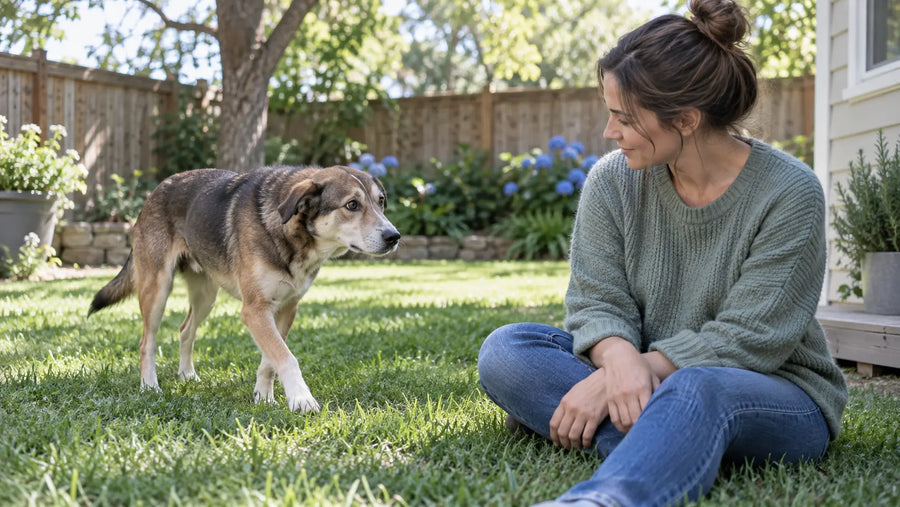
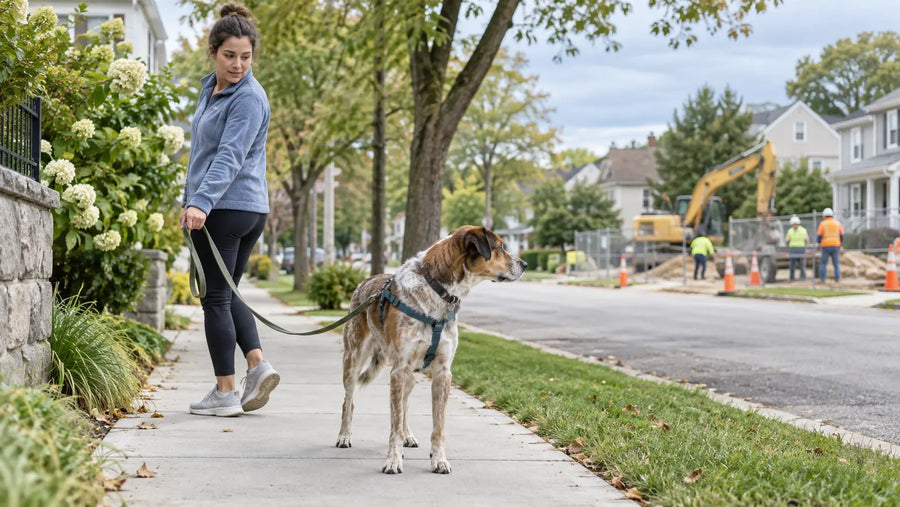
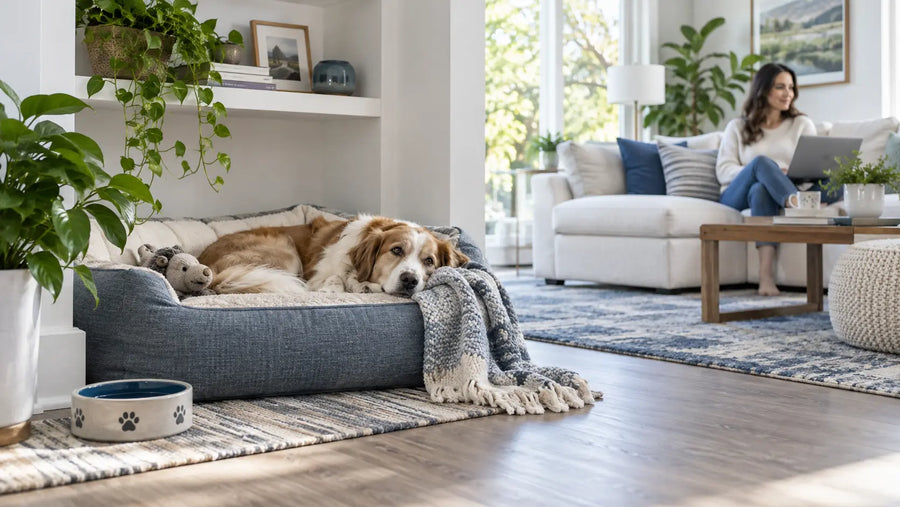
A dog’s emotional wellbeing is supported by a daily life that feels safe, understandable, and appropriate for that individual dog.
Physical exercise matters, but it is only one part of the picture. Dogs also need adequate rest, opportunities to use natural behaviors, comfortable social connection, predictable care, and the ability to move away from situations that feel overwhelming.
No single behavior proves that a dog is emotionally healthy or unhappy. A quiet dog is not necessarily content, and an energetic dog is not automatically thriving. The most useful approach is to understand your dog’s normal patterns and notice meaningful changes in behavior, sleep, appetite, activity, social interaction, and recovery after stressful events.
Quick answer: You can support your dog’s emotional wellbeing by creating a predictable routine, providing appropriate physical and mental activity, protecting uninterrupted rest, allowing safe choices, building low-pressure social connection, reducing repeated fear, and responding early to changes from the dog’s normal behavior.
What Does Emotional Wellbeing Mean for a Dog?
Emotional wellbeing does not mean that a dog must feel relaxed or excited every minute. Dogs naturally experience frustration, uncertainty, arousal, fear, and disappointment.
The greater concern is whether the dog can cope with ordinary challenges and return to a comfortable baseline afterward.
A dog with reasonably supported emotional wellbeing is generally able to:
- Rest without remaining constantly alert
- Show interest in food, play, movement, or exploration
- Communicate discomfort and move away when necessary
- Recover after manageable excitement or stress
- Interact with familiar people without persistent pressure
- Follow a daily rhythm that includes activity and downtime
- Use normal behaviors such as sniffing, chewing, searching, and playing
These behaviors vary with age, health, temperament, previous experience, and environment. The goal is not to compare your dog with every other dog. It is to understand what comfort and engagement normally look like for your dog.
1. Build a Predictable Daily Routine
Predictability helps a dog understand what is likely to happen next. Meals, bathroom breaks, walks, play, training, social time, and rest do not need to occur at the exact same minute every day, but a recognizable rhythm can reduce unnecessary uncertainty.
For example, a dog may learn that a morning bathroom break is followed by breakfast and a period of rest. An afternoon walk might be followed by water, a chew, and quiet time. These patterns make daily life easier to anticipate.
A useful routine should still have some flexibility. A dog that becomes distressed whenever dinner is ten minutes late may need gradual practice with small, manageable variations.
Major changes should be introduced gradually when possible. Moving home, returning to office work, adding a new pet, welcoming a baby, or changing a walking schedule can affect behavior even when the change is positive.

2. Balance Physical Activity With Recovery
Appropriate physical activity supports mobility, exploration, sleep, and healthy daily rhythms. However, more exercise is not automatically better.
A dog that is repeatedly pushed into intense activity may become overtired, physically uncomfortable, or increasingly difficult to settle. Puppies, senior dogs, dogs with medical conditions, and dogs returning from injury need activity suited to their current capacity.
A balanced plan might include:
- Comfortable walks matched to the dog’s fitness
- Time to sniff rather than walking only for speed or distance
- Short play sessions with natural pauses
- Low-impact exploration for older or less mobile dogs
- Recovery time after exciting outings
Watch what happens after exercise. Healthy activity should generally help a dog settle. Persistent pacing, stiffness, limping, heavy panting, irritability, or difficulty resting may indicate that the activity was too intense or that a medical issue needs attention.
3. Provide Mental Enrichment Without Creating Frustration
Mental enrichment gives dogs suitable opportunities to sniff, search, learn, chew, investigate, and solve simple problems.
Useful options include food searches, sniff-focused walks, reward-based training, toy rotation, interactive play, safe chewing, and beginner-friendly puzzle feeders.
Enrichment should match the individual dog. A complicated puzzle that causes repeated failure is not automatically better than an easy search game. Likewise, taking a nervous dog to a crowded festival does not become enrichment simply because the environment is new.
Begin with activities your dog can understand and complete successfully. If the dog walks away, becomes tense, bites the object intensely, or repeatedly looks to you for help, make the activity easier.
For additional ideas, see these simple mental enrichment activities for dogs.

4. Protect Your Dog’s Rest
Dogs need downtime as well as stimulation. A dog that is repeatedly touched, moved, called, photographed, or approached while resting may struggle to relax fully.
Provide at least one comfortable resting location where household members leave the dog alone. The area should be away from constant foot traffic and should not become a place where children follow the dog for interaction.
Some dogs prefer an open bed with a view of the room. Others rest better in a quieter corner. A crate may be comfortable for a dog that has a positive history with it, but confinement should not be assumed to calm every dog. Dogs with confinement-related distress may become more frightened in a closed crate.
Rest patterns can also provide useful information. A dog that suddenly stops sleeping comfortably, repeatedly changes position, begins wandering at night, or avoids a familiar bed may be experiencing pain, temperature discomfort, noise sensitivity, digestive problems, or another change worth investigating.
5. Give Your Dog Safe Choices
Choice helps reduce unnecessary social and environmental pressure. This does not mean removing all household rules. It means allowing the dog some control where doing so is safe.
Examples include allowing your dog to choose:
- Whether to approach an unfamiliar visitor
- Where to rest among several safe options
- Whether to continue being petted
- Which suitable toy to engage with
- Which safe direction to explore during part of a walk
- Whether to move away from a nonessential interaction
Pay attention when a dog turns away, steps back, closes their mouth, lowers their body, freezes, or tries to leave. These signals may indicate that the dog needs more space.
Forcing contact can teach a dog that subtle communication does not work. Respecting early signals makes it less likely that the dog will need to escalate to barking, growling, snapping, or frantic escape behavior.
6. Build Connection Without Demanding Constant Interaction
Dogs are social animals, but healthy connection does not require continuous touching or entertainment.
Many dogs benefit from simply sharing space with a trusted person. A dog may rest nearby while the owner works, check in briefly during a walk, or bring a toy when ready to play.
Useful ways to build connection include:
- Short reward-based training sessions
- Calm walks with time to investigate smells
- Interactive play that includes pauses
- Gentle handling when the dog remains comfortable
- Consistent responses to the dog’s communication
- Quiet time together without requiring engagement
Not every dog enjoys hugging, close face-to-face contact, crowded dog parks, or attention from strangers. Affection should be evaluated from the dog’s response, not only from human intention.
If your dog’s behavior changes after spending long periods alone, read about the differences between possible loneliness, boredom, and separation-related distress.
7. Reduce Repeated Exposure to Overwhelming Situations
A dog does not need to confront every fear directly. Repeated exposure at an intensity that causes panic, escape attempts, freezing, or refusal of food may increase sensitivity instead of building confidence.
When possible, begin with environmental management:
- Walk during quieter hours
- Create distance from unfamiliar dogs
- Use curtains or visual barriers around busy windows
- Ask visitors to ignore the dog initially
- Provide a quiet resting area during gatherings
- Avoid forcing greetings or physical handling
Gradual desensitization and counterconditioning may help with some fears, but the dog must remain at an intensity where they can notice the trigger without becoming overwhelmed. Severe fear, aggression, self-injury, or panic should be addressed with professional guidance.
The American Veterinary Society of Animal Behavior recommends reward-based methods for dog training and behavior modification.
8. Learn Your Dog’s Baseline and Watch for Changes
Your dog’s baseline is their usual pattern of activity, appetite, sleep, bathroom habits, social behavior, movement, and response to familiar situations.
A single quiet afternoon may mean very little. A sustained change across several days is more informative.
Keep notes when you notice:
- Less interest in normal walks or play
- Unusual hiding or clinginess
- Changes in sleep or nighttime movement
- Difficulty settling after ordinary events
- Increased sensitivity to touch or handling
- Repeated pacing, vocalization, or escape behavior
- Changes in appetite, thirst, or bathroom habits
A wearable device may provide supporting information about activity, rest, or location patterns, but it cannot identify an emotion or diagnose a condition. For example, the SATELLAI Collar Go can help owners review activity and health-related patterns alongside their direct observations.
Lower activity could reflect a quiet day, hot weather, soreness, illness, a schedule change, or poor device fit. The information is a reason to look more closely—not proof that a dog is anxious, depressed, or unwell.
A Simple Weekly Wellbeing Check
Once a week, consider these questions:
- Is my dog eating, drinking, sleeping, and moving normally?
- Does my dog have daily opportunities to sniff and explore?
- Can my dog rest without frequent interruption?
- Does my dog have comfortable ways to move away?
- Are walks and activities appropriate for current health and age?
- Has recovery after exciting or stressful events changed?
- Have I noticed a new pattern rather than one isolated behavior?
This is not a diagnostic test. Its purpose is to notice meaningful changes early and adjust the environment when appropriate.
When to Contact a Veterinarian or Behavior Professional
Behavior and physical health overlap. Pain, digestive problems, skin discomfort, endocrine changes, sensory loss, neurologic conditions, medication effects, and age-related changes can all influence behavior.
Arrange a veterinary assessment when a behavioral change is sudden, persistent, worsening, or accompanied by physical symptoms.
Seek prompt professional help if your dog:
- Stops eating or drinking normally
- Appears painful or unusually sensitive to touch
- Cannot settle or sleep
- Panics when left alone
- Attempts to escape and becomes injured
- Shows sudden or escalating aggression
- Withdraws from activities they normally enjoy
- Shows confusion, weakness, breathing difficulty, or neurologic symptoms
The Merck Veterinary Manual emphasizes the importance of considering medical contributors, including pain, when assessing behavior changes.
Frequently Asked Questions
How can I improve my dog’s emotional wellbeing?
Provide a predictable routine, suitable physical activity, mental enrichment, uninterrupted rest, safe choices, and comfortable social connection. Watch for changes from your dog’s normal behavior and seek professional help when distress is persistent or severe.
How can I tell if my dog is emotionally healthy?
There is no single test. Look at whether your dog can rest, engage with normal activities, communicate discomfort, recover after manageable stress, and maintain relatively stable sleep, appetite, movement, and social behavior.
Does more exercise always make a dog happier?
No. Exercise should match the dog’s age, health, fitness, and temperament. Excessive or highly arousing activity can contribute to fatigue, discomfort, or difficulty settling.
Can dogs have bad mental health days?
Dogs can have quieter or more unsettled days because of changes in sleep, activity, weather, routine, physical comfort, or the environment. One unusual day is less informative than a persistent change from the dog’s baseline.
Can a smart collar detect anxiety or depression in dogs?
No. A smart collar may record activity, rest, or location patterns, but those measurements cannot diagnose an emotional or medical condition. Combine data with direct observation and veterinary advice when changes persist.
The Bottom Line
Supporting dog emotional wellbeing is not about keeping a dog constantly busy or preventing every moment of uncertainty. It is about creating a life in which the dog’s needs are met, communication is respected, challenges remain manageable, and recovery is possible.
Build a predictable rhythm. Balance activity with rest. Provide suitable ways to sniff, learn, play, and choose. Pay attention to changes from your dog’s normal behavior, and involve a veterinarian or qualified behavior professional when the problem is sudden, persistent, severe, or unsafe.
Sources
- American Veterinary Society of Animal Behavior: Position Statements
- Merck Veterinary Manual: Behavior Problems of Dogs
- VCA Animal Hospitals: Enrichment, Predictability and Scheduling