Blue and yellow are good starting colors for dog toys. Try blue on grass or tan ground, and yellow on a blue rug. The best choice depends on the background: a toy your dog can easily tell apart from the ground will usually be easier to find.
That bright red ball may catch your eye at the store, then seem to disappear for your dog in the backyard. Color can help explain why. Dogs have a more limited color range than most people, so a toy that stands out to you may blend in for them.
You can use that knowledge to make fetch less frustrating. Start with where you play, then consider the toy's size, shape, and intended use.
Best Dog Toy Colors for Different Backgrounds
Dogs can distinguish blue from yellow, while red and green are harder to tell apart. Veterinary ophthalmologists explain the underlying color-vision difference.
The suggestions below apply that principle to everyday play areas. They are starting points to try, not results from a head-to-head test of dog toys.
| Where you play | Color to try | What else to check |
|---|---|---|
| Green grass | Blue | Choose an open landing area with short grass |
| Dry grass or tan sand | Blue | Make sure the toy isn't partly buried or hidden |
| Blue rug or blanket | Yellow | Clear away other toys that make it harder to spot |
| Dark floor | Light blue or yellow | Check whether the toy's outline stands out in the room's usual light |
| Pale floor | Darker blue | Avoid matching the toy to the floor |
| Patterned carpet or fallen leaves | A solid color that stands out in that spot | Try a less cluttered area if the toy keeps getting lost |
For a color chart and a fuller explanation, read what colors dogs can see.

Best Color Ball for Dogs on Grass
A blue ball is a reasonable first choice for lawn fetch. Red and orange may look bright to you without standing out as clearly to your dog.
But color only helps if there's enough of the ball to see. Long grass can cover its outline. A small dip in the yard can hide it. Your dog may also miss where it landed.
Start with a short roll into open ground. If your dog can follow it and find it after it stops, gradually add distance. If the search keeps interrupting the game, try a clearer area before throwing farther.
Can dogs see red toys or orange balls?
Yes. They can still see the shape, brightness, and movement. The color may simply provide less contrast against certain backgrounds.
If your dog finds a favorite red ball easily, there's no reason to replace it based on color alone. A different color is worth trying when finding the current toy has become a recurring problem.
Blue vs. Yellow Dog Toys: Which Should You Choose?
For grass or tan ground, start with blue. Against blue fabric, start with yellow. If you use several play areas, having both gives you options.
Keep three questions separate:
- Can your dog find it? Watch what happens once the toy stops moving.
- Does your dog enjoy it? A familiar smell, squeaker, or texture may matter more than color.
- Is it appropriate? The toy needs to fit your dog's size and the way they play.
Color matters to dogs, but that doesn't make it the whole story. In a 2013 study of eight dogs, the dogs generally used learned color cues in a visual-choice task. The study supports dogs' ability to use color; it didn't establish a favorite toy color or test retail products.
What About Frisbees and Flying Discs?
The best color frisbee for dogs depends on both the flight path and the landing area. A disc may pass in front of the sky, trees, and buildings before it reaches the ground.
Blue or yellow is worth trying, but don't assume either is best against every backdrop. A disc with large contrasting sections is another option to observe. Tiny decorative patterns may look colorful without making the disc easier for your dog to track.
Choose a disc made for dogs and start with easy ground-level games or low, controlled throws. A visible color doesn't make a difficult catch appropriate for your dog.
Why Can't My Dog Find Their Ball?
Look at when your dog loses track of it. That often gives you a better next step than buying another toy right away.
| What happens | What to check | What to try |
|---|---|---|
| Your dog runs past the ball | Did they see where it landed? | Shorten the throw and make sure they're watching |
| The ball gets lost in the grass | Is most of it covered? | Move to short grass or a clear patch |
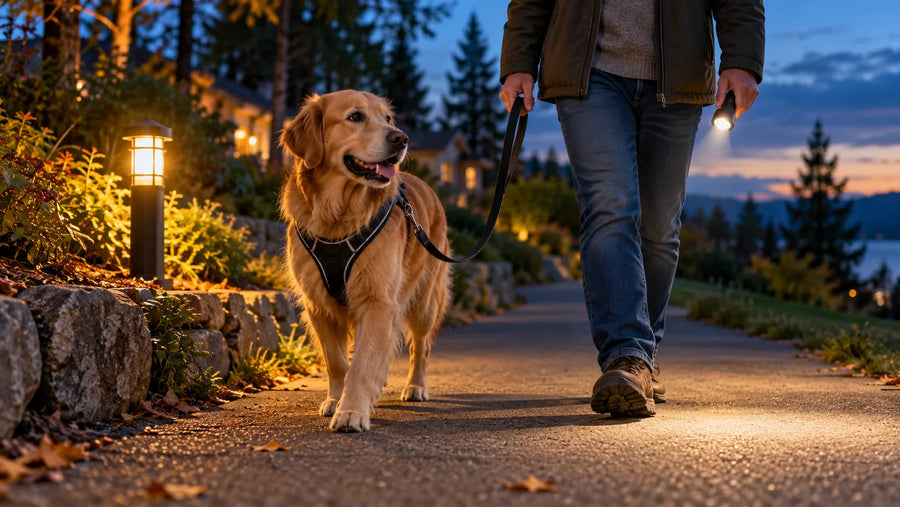
| Finding it gets harder at dusk | Has the light changed? | Move somewhere well lit or finish the game |
| Your dog finds it but leaves it there | Have they learned to bring it back, and do they still want to play? | Reward a short return or offer a break |
| Your dog starts sniffing elsewhere | Are they distracted or losing interest? | Pause and let them choose whether to rejoin |
| The problem is new and happens in several places | Are familiar objects or routes also becoming difficult? | Call your veterinarian |
If your dog needs help, walk closer and show them the search area. Repeating the same long throw into the same patch of grass usually won't make the next search easier.
How to Tell Whether a New Toy Is Easier to Find
Keep the first few games simple. Use the same familiar area and roughly the same short distance. Give your dog a chance to watch each toy land, and notice how easily they find it after it stops.
Don't read too much into one choice. A new toy may smell different, bounce differently, or be more exciting than an old one. What you're looking for is a more enjoyable game in that setting, rather than proof of a color preference.
Check Fit and Condition Before You Buy

Color comes after the basics. PDSA's veterinary guidance on choosing a ball emphasizes the right size, suitable material, and regular checks for damage.
Choose a ball that can't fit entirely inside your dog's mouth but is still comfortable to carry. Follow the manufacturer's size and use guidance, supervise play, and replace toys that crack, tear, or shed pieces.
A fetch toy isn't automatically suitable for chewing. Build in breaks, too; an excited dog may keep chasing after the game has become tiring. SATELLAI's active dog care guide covers balancing activity with rest.
Frequently Asked Questions
What color toys can dogs see best indoors?
Try a color that stands out against your floor or rug. Yellow may work well on blue fabric, while a darker blue toy may be easier to spot on a pale floor. Check it in your normal room lighting.
Are multicolored dog toys easier to find?
Sometimes large contrasting sections may help. More colors don't automatically make a toy more visible, especially if most of it blends into the background.
Should I replace all my dog's red toys?
No. Keep using toys your dog finds easily and enjoys, as long as they're in good condition and appropriate for play. Try another color when you notice a problem.
Will blue or yellow help after dark?
A toy still needs enough light to be seen. Change the lighting or end the game rather than relying on color. Read more about how dogs see in the dark.